次世代定序 (Next-generation sequencing, NGS)
概念與用途
- 又稱大規模平行定序 (massively parallel sequencing),近年徹底改變研究與診斷領域:可描繪癌症的基因組樣貌 (genomic landscapes),並協助找出孟德爾遺傳病 (Mendelian heritable diseases) 的致病基因。
- 應用極具彈性,可:定序整個基因組/外顯子體 (exome)/任一子集 (DNA) 的變異、提供 DNA 拷貝數資訊、定序整個轉錄體 (transcriptome) 或子集、辨識易位 (translocations)、呈現基因表現量、使用新鮮或 FFPE 材料。
- 缺點:需複雜的生物資訊學 (bioinformatic) 判讀,且資料儲存需求龐大。
技術原理
- 以雜交捕捉 (hybrid capture) 或擴增子 (amplicon based) 技術定序 DNA 或 RNA(RNA 先反轉錄為 cDNA)。
- 範圍:整個基因組(約 3 billion base pairs)→ 全部編碼基因(exome,約佔基因組 1%、約 30 million base pairs,即約 20,000 個基因、180,000 個外顯子)→ 轉錄體及其子集。
- 流程:片段化 DNA 建構定序文庫 → 數百萬條 DNA 股同步定序(皆使用矽微晶片同步記錄)→ 以電腦演算法比對公認參考基因組以辨識差異。
- 因 DNA 片段分開排比,可非常精確量化突變(等位基因頻率,allelic frequencies)。
- 癌症廣泛定序時,常需同時定序正常(非腫瘤)DNA(取自淋巴球或正常組織),以辨識腫瘤特有的變化。
成本與臨床應用
- 首個人類基因組:動用全球 20 個中心數百名人員、耗資 $2.7 billion、歷時逾十年,2003 年完成。
- 如今:整個基因組可在數天內、由單人以少於 $1000 完成定序(但徹底判讀仍複雜得多)。
- 臨床上多檢測較小基因組合,範圍約 10 到數百個基因。
- 真正具臨床可採取行動性 (clinically actionable) 的基因僅少數;檢視較大基因組合有助癌症分子分類,並指引臨床試驗選擇。
- 有眾多資料庫協助判讀複雜結果並判定臨床意義;使用明確命名法 (unambiguous nomenclature) 對溝通結果(癌症與遺傳病)很重要。
圖
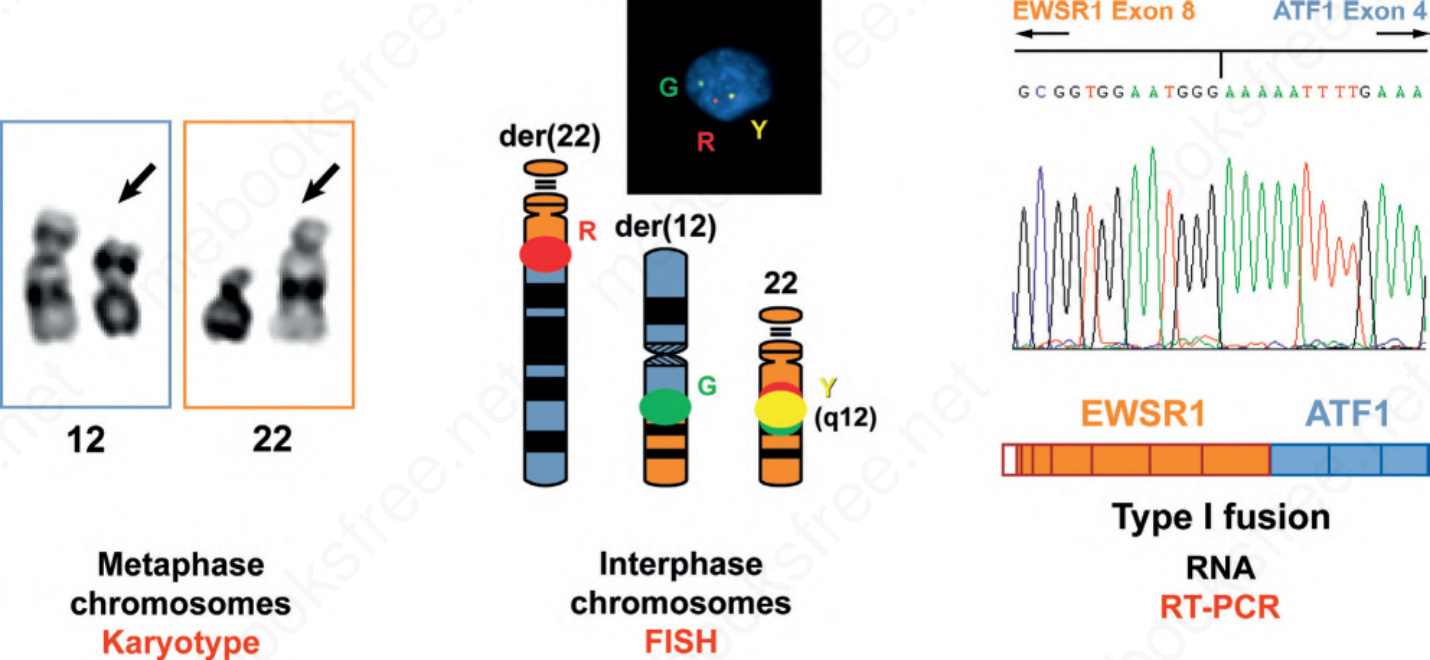
圖 2-30:偵測反覆性易位的多種模式。傳統核型分析以中期染色體展開,藉分帶(染色)技術偵測易位及其他結構性異常;FISH 以較不凝縮的間期染色體偵測重排或擴增;RT-PCR 可偵測融合 RNA 轉錄本所涉的精確外顯子。三者皆為呈現染色體易位的有效方法,但各適用於不同樣本類型並提供不同資訊。
Fig. 2.30 Multiple modalities for detection of recurrent translocations. Traditional karyotypes use metaphase chromosomes spreads to detect translocations and other structural genetic aberrations using banding (staining) techniques. FISH uses less condensed interphase chromosomes to detect rearrangements or amplifications. RT-PCR can detect the precise exons involved in a fusion RNA transcript. Each is a valid method for demonstrating chromosomal translocations, but each has applicability to different sample types and provides different information.
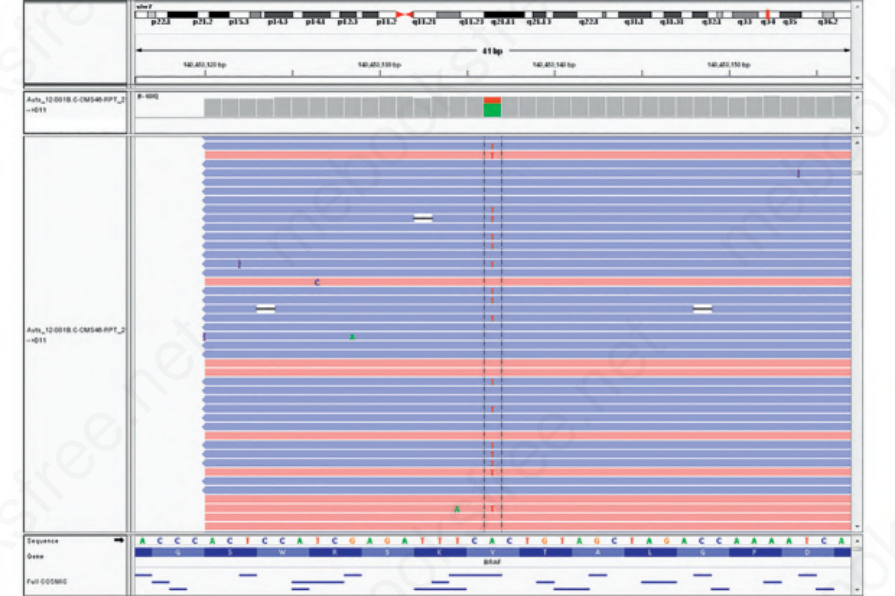
圖 2-31:整合式基因組檢視器 (integrated genome viewer, IGV) 對 melanoma 中 BRAF V600E 突變的呈現。顯示由 NGS 雙向定序(正股與反股,藍與紅)的個別 DNA 股,故可測定精確的變異等位基因頻率 (variant allele frequency)。
Fig. 2.31 Integrated genome viewer (IGV) depiction of a BRAF V600E mutation in melanoma. Note that the display shows individual DNA strands sequenced in both directions (forward and reverse strands, blue and red) by NGS sequencing. Thus the precise variant allele frequency can be determined.