疾病定義與分類
- 斑丘疹型皮膚肥大細胞增多症 (maculopapular cutaneous mastocytosis)/色素性蕁麻疹 (urticaria pigmentosa) 是肥大細胞增多症 (mastocytosis) 最常見的表現,占皮膚型病例的 80%,發生率約為每 1 : 1000–1 : 8000 活產嬰兒。
臨床特徵 (Clinical Features)
- 本病最常見於兒童,無性別偏好。病灶可在出生時即出現,或於出生後第一年內出現。
- 病灶為搔癢性、紅斑性或紅棕色、圓形至卵圓形的斑 (macules)、丘疹 (papules) 與斑塊 (plaques),直徑常可達 2–3 cm(圖 29.348 與圖 29.349)。
- 病灶主要分布於軀幹,但任何部位(包括黏膜)皆可能受侵犯。
- Darier 徵象 (Darier sign) 具特徵性地呈陽性,患者可能出現全身性皮膚劃紋症 (generalized dermographism)。偶爾會發生水皰;罕見情況下水皰可能呈全身性,而類似原發性或後天性水皰性皮膚病 (bullous dermatosis)。
- 在成人,病灶較常呈散播性、色素沉著更深,且傾向呈斑狀 (macular)(圖 29.350)。可能出現毛細血管擴張 (telangiectasia),故有「持久發疹性斑狀毛細血管擴張 (telangiectasia macularis eruptiva perstans)」之名。
治療與預後 (Treatment & Prognosis)
- 多數兒童期病例會於青春期之前或期間自行緩解。成人病例傾向持續存在,且應始終排除全身性肥大細胞增多症 (systemic mastocytosis)。
- 即使存在全身性肥大細胞增多症 (systemic mastocytosis),其病程仍傾向為惰性 (indolent),對存活率並無影響。
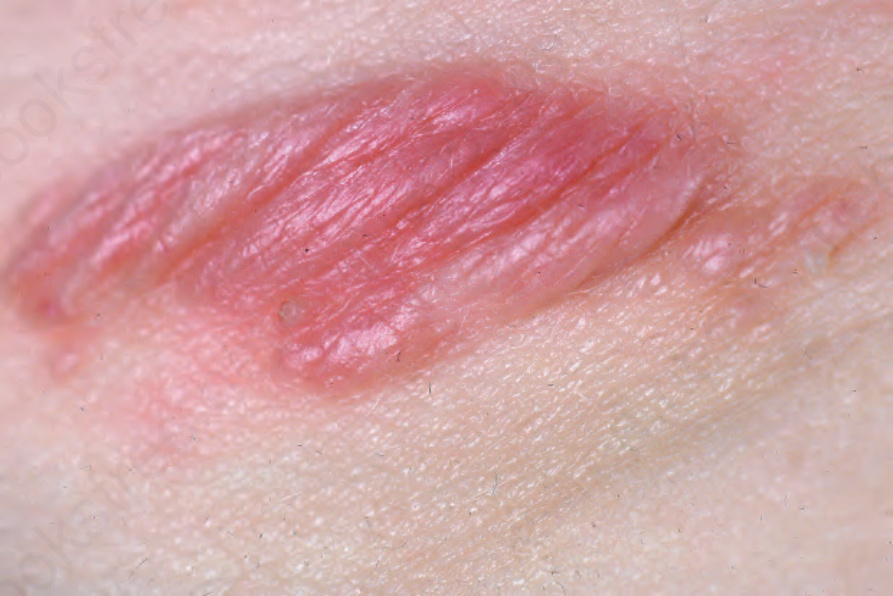
圖 29.347:肥大細胞瘤 (mastocytoma):一名兒童身上的水腫性紅斑性斑塊。From the collection of the late N.P. Smith, MD, the Institute of Dermatology, London, UK.
Fig. 29.347 Mastocytoma: edematous, erythematous plaque in a child. From the collection of the late N.P. Smith, MD, the Institute of Dermatology, London, UK.
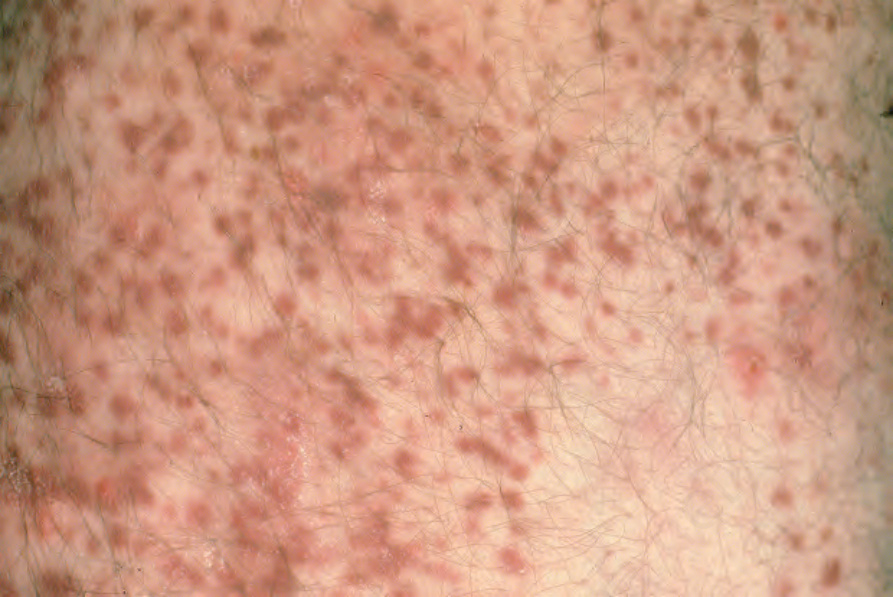
圖 29.348:色素性蕁麻疹 (urticaria pigmentosa):可見眾多棕色斑與丘疹。From the collection of the late N.P. Smith, MD, the Institute of Dermatology, London, UK.
Fig. 29.348 Urticaria pigmentosa: numerous brown macules and papules are present. From the collection of the late N.P. Smith, MD, the Institute of Dermatology, London, UK.
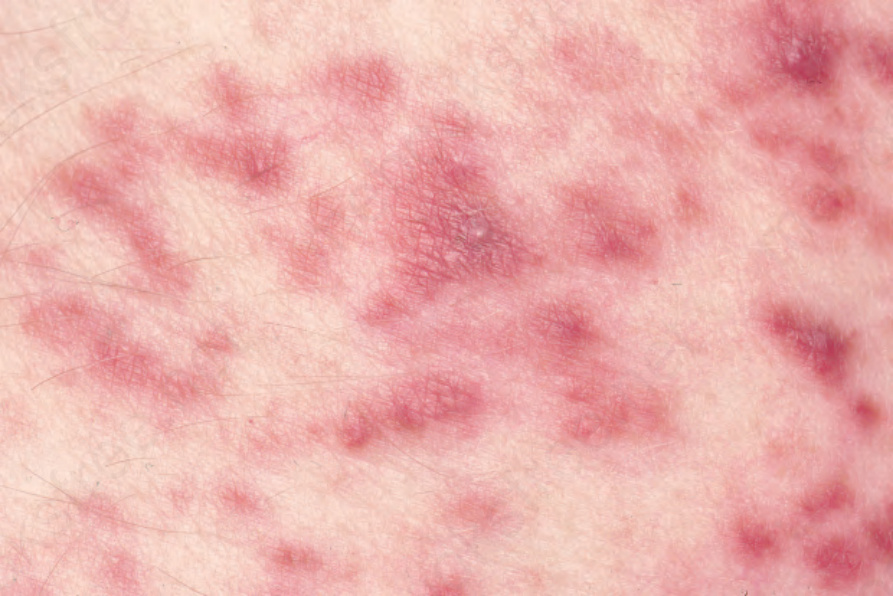
圖 29.349:色素性蕁麻疹 (urticaria pigmentosa):在此例中,斑與丘疹呈紅斑性。From the collection of the late N.P. Smith, MD, the Institute of Dermatology, London, UK.
Fig. 29.349 Urticaria pigmentosa: in this example, the macules and papules are erythematous. From the collection of the late N.P. Smith, MD, the Institute of Dermatology, London, UK.
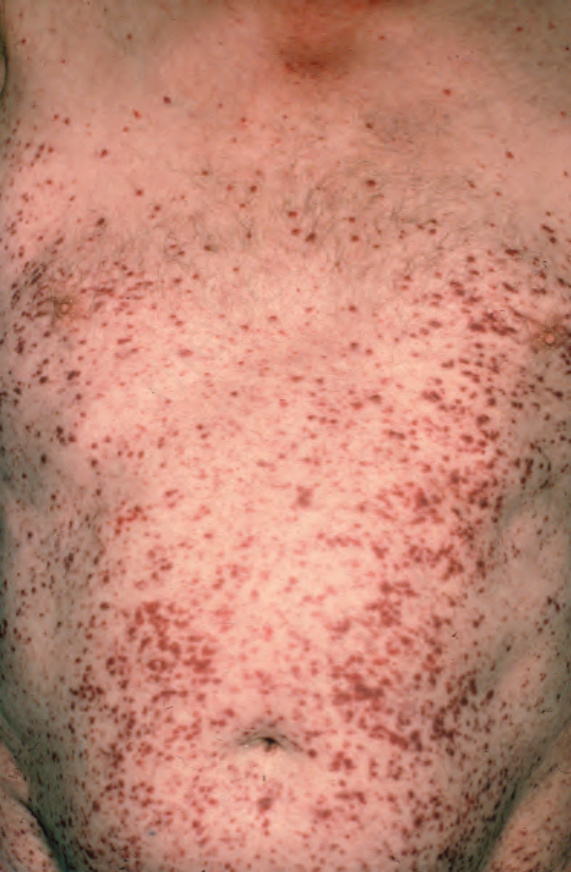
圖 29.350:色素性蕁麻疹 (urticaria pigmentosa):注意病灶呈全身性分布。From the collection of the late N.P. Smith, MD, the Institute of Dermatology, London, UK.
Fig. 29.350 Urticaria pigmentosa: note the generalized distribution of the lesions. From the collection of the late N.P. Smith, MD, the Institute of Dermatology, London, UK.