親毛囊性蕈樣黴菌病 (Folliculotropic Mycosis Fungoides)
臨床特徵 (Clinical Features)
親毛囊性蕈樣黴菌病 (folliculotropic mycosis fungoides, folliculotropic MF) 是 MF 一種罕見、在生物學上具獨特性的變異型,特徵為由腦回狀 (cerebriform) T 細胞構成的毛囊浸潤,且常伴有表皮的倖免 (sparing)。雖然部分病例與毛囊黏蛋白沉積症 (follicular mucinosis) 有關,但此特徵並非診斷的必要條件,1–3 儘管早期的報告曾建議應將具有與不具有此特徵的淋巴瘤分開看待。4–6 本病曾以不同名稱被描述,包括 follicular MF、5–10 pilotropic MF、4,11 folliculotropic MF、2 以毛囊黏蛋白沉積症為表現的 MF (MF presenting with follicular mucinosis)、12 MF 相關性毛囊黏蛋白沉積症 (MF-associated follicular mucinosis)、13 以及伴脫髮的基底樣毛囊淋巴樣增生 (basaloid folliculolymphoid hyperplasia with alopecia)。14
folliculotropic MF 通常對治療較為頑固,完全緩解率較低。然而,即使在一開始就採取更積極的治療,預後仍然不佳,1 並且腫瘤細胞生物學上可能存在內在差異,從而影響預後。14,16
follicular MF 在中年至老年男性中較為常見。1–3 它好發於頭頸部,特別是臉部與頭皮,雖然軀幹上也經常可見病灶。1–3 四肢亦可能受侵犯。多數病人以斑片 (patches)、斑塊 (plaques) 或群聚性丘疹 (grouped papules) 表現 (Figs 29.69–29.73)。1–3 也可能遇到腫瘤期 (tumor stage) 的病灶。2,3 劇烈搔癢 (intense pruritus) 與脫髮 (alopecia) 很常見。較少見的是痤瘡樣 (acneiform) 病灶,如類粉刺囊腫 (comedone-like cysts)、膿皰 (pustules) 或粟粒疹 (milia)。1,3 部分病人以尖刺狀角化 (spiky keratosis) 表現。在伴有汗腺受侵犯的病灶中,少汗 (hypohydrosis) 也可能是一項特徵。15 黏蛋白漏 (mucinorrhea) 與紅皮症 (erythroderma) 則罕見。3
將 folliculotropic MF 區分為一個特定疾病實體的主要理由,在於它比典型 MF 更難治療,疾病進展的發生率較高,且預後較差。早期的 folliculotropic MF 其無進展存活率、無病存活率與整體存活率均顯著差於典型 MF,且其結果更接近於腫瘤期 MF 所見。1–3,16,17 這在某種程度上可能是因為 folliculotropic MF 通常對治療較為頑固、完全緩解率較低之故。
組織學特徵與致病機轉 (Histologic Features and Pathogenesis)
folliculotropic MF 的致病機轉尚不清楚,雖然有推測認為親毛囊性 (folliculotropism) 是透過毛囊上皮表現的細胞間黏附分子 1 (intracellular adhesion molecule 1, ICAM-1) 與淋巴樣細胞表現的淋巴球功能相關抗原 (lymphocyte function-associated antigen, LFA-1) 所媒介。4 基因表現譜分析 (gene expression profiling) 研究亦顯示,folliculotropic MF 病例傾向表現與發炎及與表皮增生有關之路徑相關的基因,並與預後不佳的進展期典型 MF 病例聚為一群。14
此變異型的決定性組織學特徵是毛囊上皮被中至大型腦回狀細胞 (medium to large cerebriform cells) 所浸潤 (Figs 29.74–29.81)。1,3 受侵犯的毛囊內可有不同程度的酸性黏多醣 (acid mucopolysaccharides) 聚積(即毛囊黏蛋白沉積症 follicular mucinosis),但常為缺如。1,3 其他組織學特徵包括基底樣毛囊增生 (basaloid follicular hyperplasia)、肉芽腫性發炎 (granulomatous inflammation)、毛囊內及周圍大量嗜酸性球 (eosinophils),以及毛囊囊狀變化 (follicular cystic change),甚至形成表皮樣囊腫 (epidermoid cysts) 與類粉刺病灶 (comedone-like lesions)。1,16,17 basaloid follicular hyperplasia 是指由毛囊延伸而出的基底樣細胞增生,或是毛囊完全轉化為基底樣並伴有非典型淋巴球浸潤。1,18 granulomatous inflammation 通常繼發於毛囊破裂。其他非特異性的變化亦可見到,包括嗜中性球膿皰性病灶 (neutrophilic pustular lesions)、親汗腺性 (syringotropism)、毛囊上皮或表皮明顯的介面性皮膚炎 (interface dermatitis),以及侵犯非毛囊上皮的親表皮現象 (epidermotropism)。16,17 母細胞 (blast cells) 數量眾多的情形並不少見,且部分病例可見大細胞轉化 (large cell transformation)。1,3
folliculotropic mycosis fungoides 中的腫瘤性淋巴球通常具有 T-helper 表型 (phenotype)。當有母細胞 (blast cells) 存在時,這些細胞常為 CD30 陽性。1,3
鑑別診斷 (Differential Diagnosis)
folliculotropic MF 必須與毛髮扁平苔癬 (lichen planopilaris)、假性淋巴瘤性毛囊炎 (pseudolymphomatous folliculitis)、嗜酸性球性毛囊炎 (eosinophilic folliculitis)、毛囊性淋巴瘤樣丘疹病 (follicular lymphomatoid papulosis),以及毛囊黏蛋白沉積症/黏蛋白性脫髮 (follicular mucinosis/alopecia mucinosa) 相鑑別。5
在 lichen planopilaris 中,可見帶狀浸潤 (bandlike infiltrate)、明顯的膠樣小體 (colloid bodies),且缺乏非典型親毛囊性淋巴球。要將 folliculotropic MF 與 pseudolymphomatous folliculitis 區分可能有困難。在後者中,毛囊呈活化外觀 (activated appearance),無毛囊破壞,且病灶傾向為單發並會自發消退。19 雖然 PCR 原先被認為顯示多株性 (polyclonal) 的基因重排型態,但已有「株性假性淋巴瘤性毛囊炎 (clonal pseudolymphomatous folliculitis)」的病例被描述。20 follicular mucinosis 可能為偶然出現,或出現於諸如 Ofuji 病與 HIV 相關病例的 eosinophilic folliculitis 等情況中,但這些情況並不存在非典型親毛囊性淋巴球。21,22 在區分 follicular lymphomatoid papulosis 與 folliculotropic MF 時,臨床特徵更有助益,特別是出現成批 (crops) 自發消退的丘疹。2
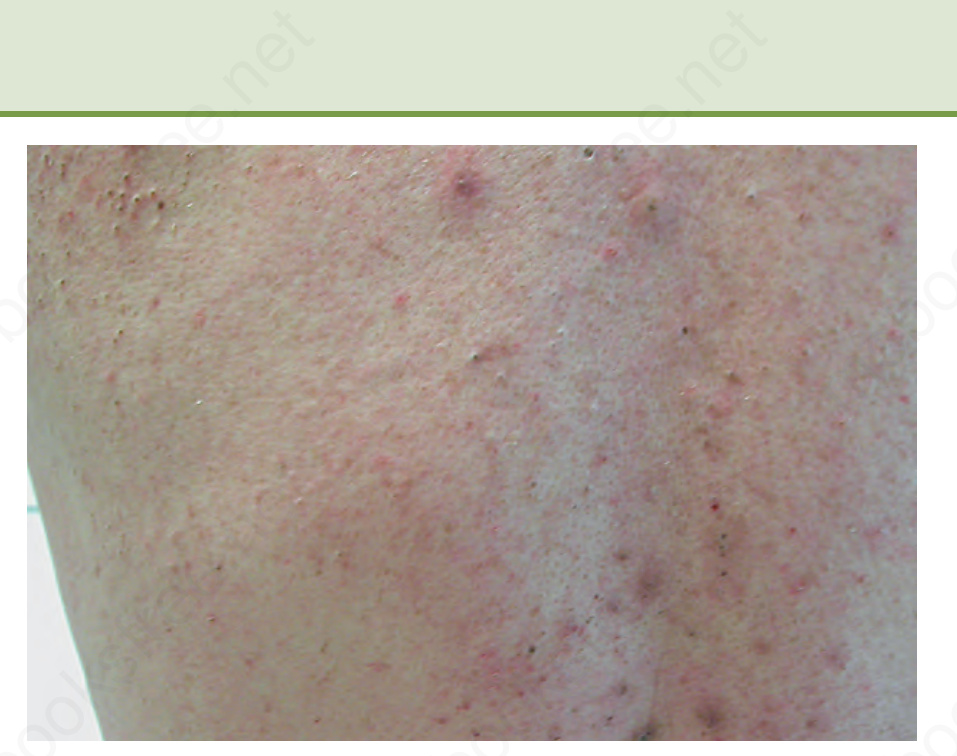
圖 29-69:親毛囊性蕈樣黴菌病 (folliculotropic mycosis fungoides):此病人腹部出現一大片鱗屑性斑片。
Fig. 29.69 Folliculotropic mycosis fungoides: this patient shows a large abdominal scaly patch. By courtesy of H. Naeem, MD, Harvard Medical School, Boston, USA.
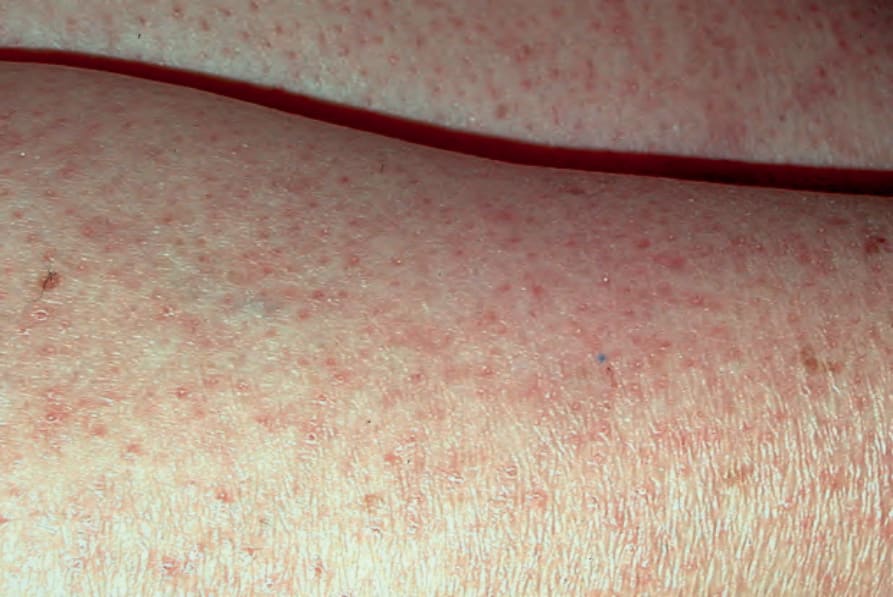
圖 29-70:親毛囊性蕈樣黴菌病 (folliculotropic mycosis fungoides):雙腿上出現毛囊性病灶。
Fig. 29.70 Folliculotropic mycosis fungoides: follicular lesions are present on the legs. By courtesy of H. Naeem, MD, Harvard Medical School, Boston, USA. Reproduced from Liu V and McKee PH. Cutaneous T-cell Lymphoproliferative disorders: approach for the surgical pathologist and clarification of confused issues. Advances in Anatomic Pathology. 2002, 9:79–100, with permission from Lippincott Williams & Wilkins.
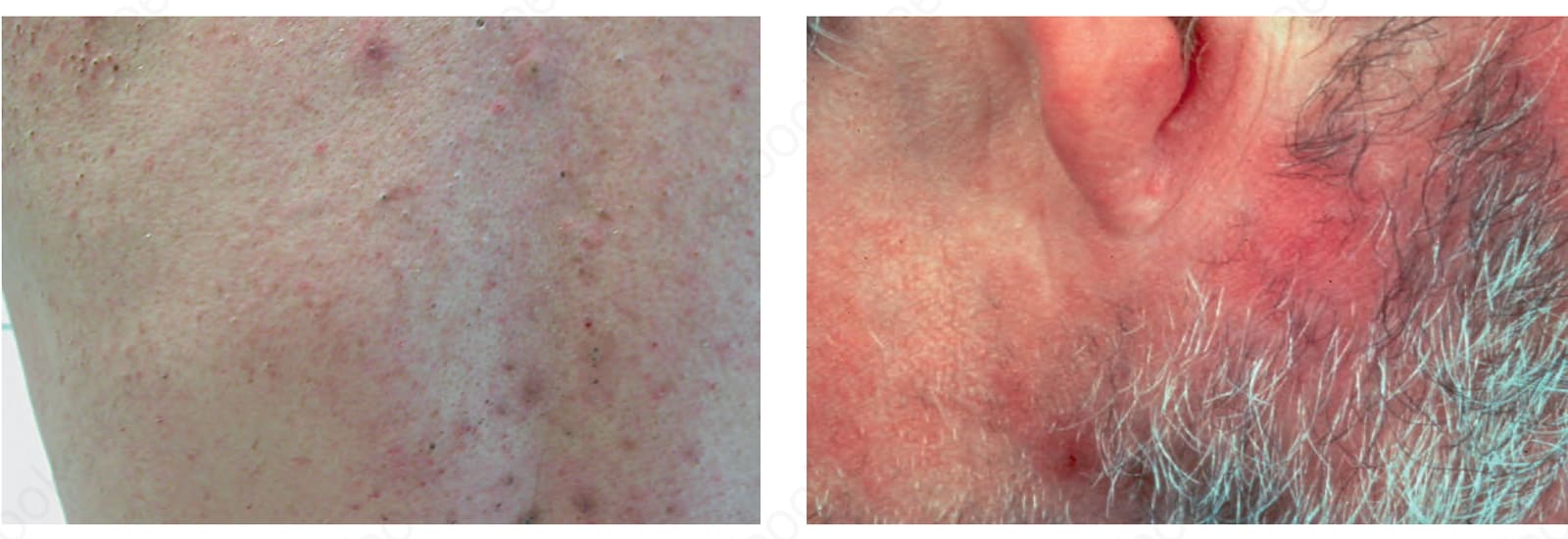
圖 29-71:親毛囊性蕈樣黴菌病 (folliculotropic mycosis fungoides):鬍鬚區與頸部出現紅斑性病灶。此病人合併有 mycosis fungoides。
Fig. 29.71 Folliculotropic mycosis fungoides: erythematous lesions are present in the beard area and on the neck. The patient had associated mycosis fungoides. By courtesy of the Institute of Dermatology, London, UK.
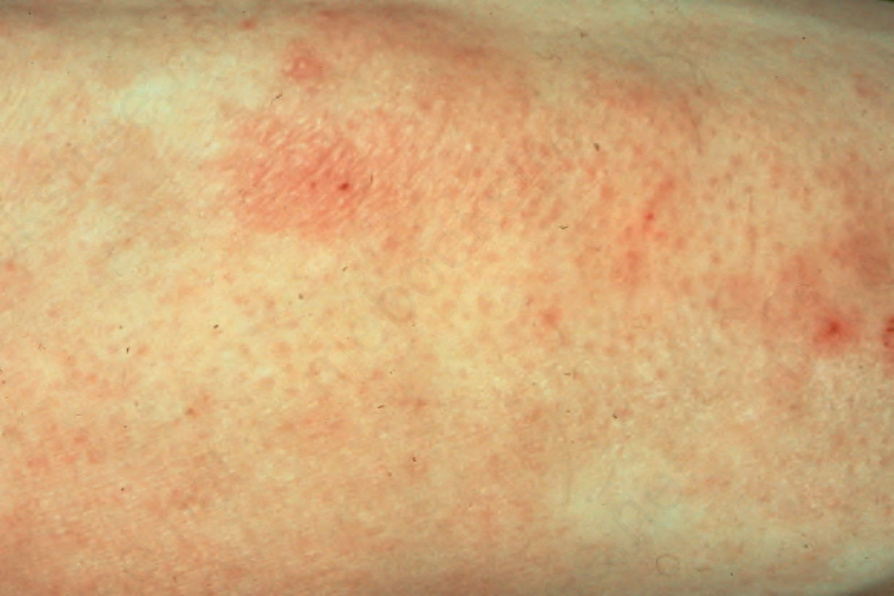
圖 29-72:親毛囊性蕈樣黴菌病 (folliculotropic mycosis fungoides):出現群聚性毛囊性丘疹。此病人合併有 mycosis fungoides。
Fig. 29.72 Folliculotropic mycosis fungoides: grouped follicular papules are present. The patient had associated mycosis fungoides. By courtesy of the Institute of Dermatology, London, UK.
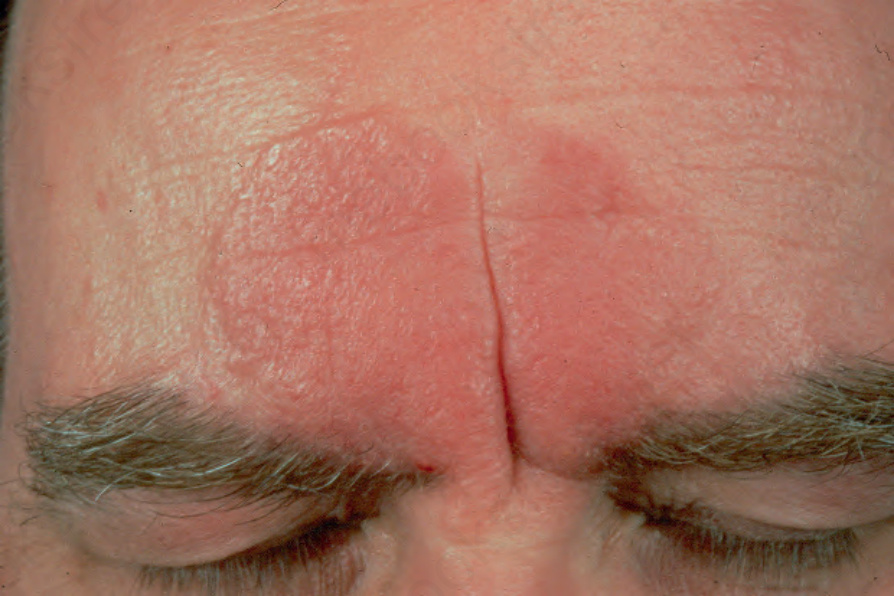
圖 29-73:親毛囊性蕈樣黴菌病 (folliculotropic mycosis fungoides):mycosis fungoides 相關性紅斑性斑塊。
Fig. 29.73 Folliculotropic mycosis fungoides: mycosis fungoides-associated erythematous plaque. By courtesy of the Institute of Dermatology, London, UK.
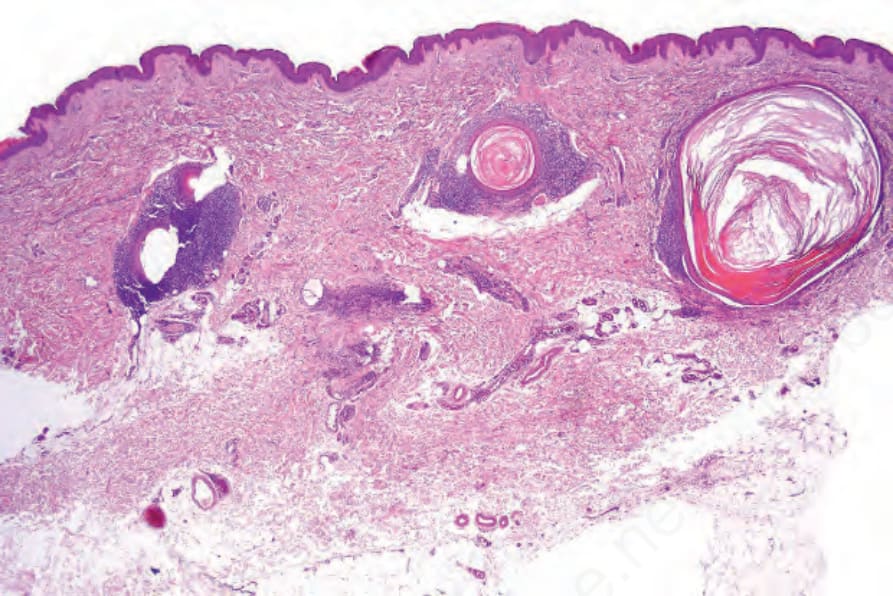
圖 29-74:親毛囊性蕈樣黴菌病 (folliculotropic mycosis fungoides):掃描視野顯示以毛囊為中心的淋巴樣浸潤 (folliculocentric lymphoid infiltrate)。
Fig. 29.74 Folliculotropic mycosis fungoides: scanning view showing a folliculocentric lymphoid infiltrate.
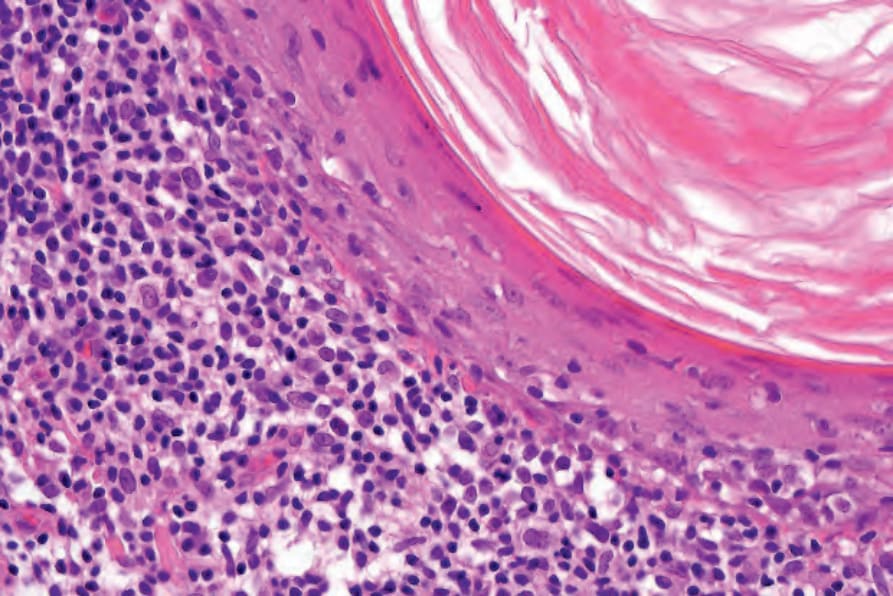
圖 29-75:親毛囊性蕈樣黴菌病 (folliculotropic mycosis fungoides):注意包繞毛囊的非典型淋巴球。
Fig. 29.75 Folliculotropic mycosis fungoides: note the atypical lymphocytes investing the follicle.
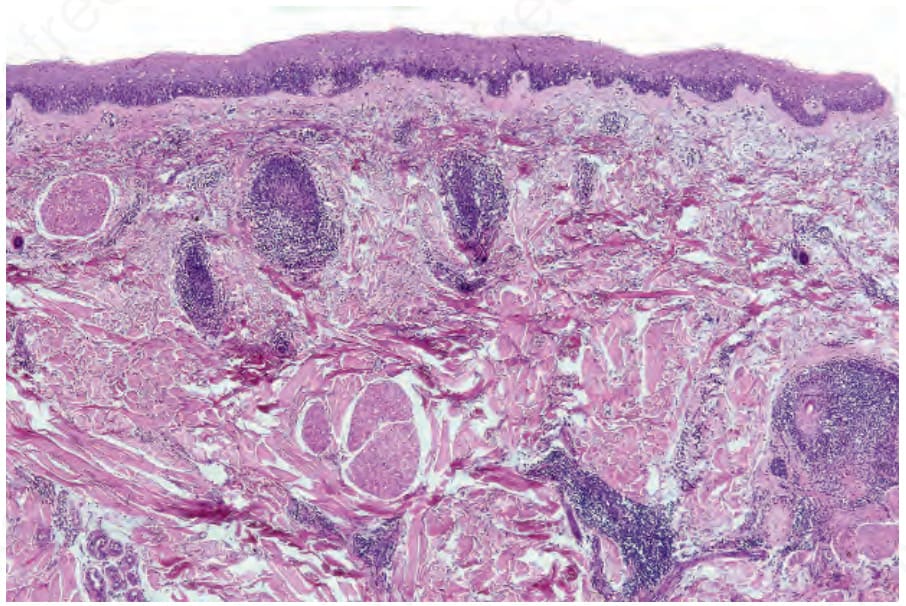
圖 29-76:親毛囊性蕈樣黴菌病 (folliculotropic mycosis fungoides):此檢體取自腿部。毛囊被非典型淋巴樣浸潤所包鞘 (ensheathed)。
Fig. 29.76 Folliculotropic mycosis fungoides: this specimen comes from the leg. The follicles are ensheathed by an atypical lymphoid infiltrate.
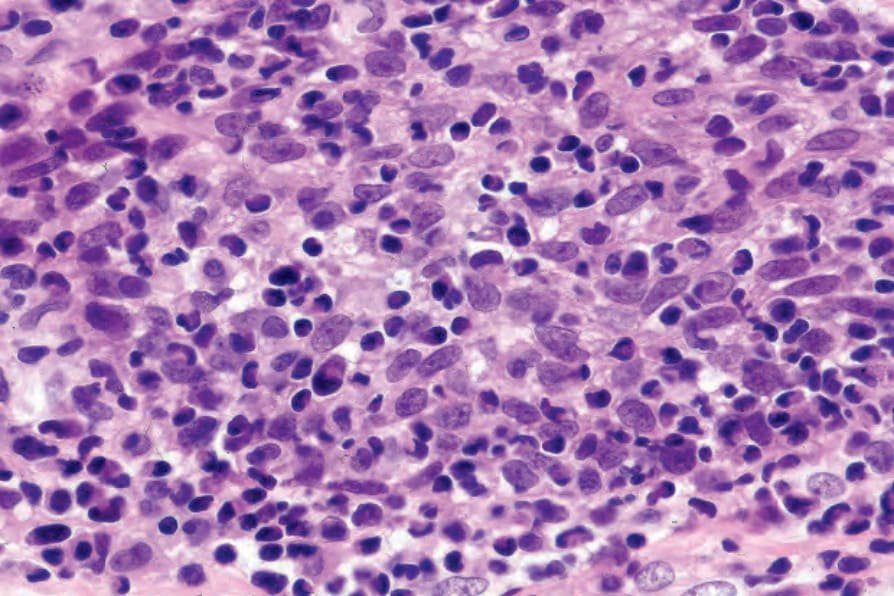
圖 29-77:親毛囊性蕈樣黴菌病 (folliculotropic mycosis fungoides):毛囊上皮被非典型淋巴球所浸潤。
Fig. 29.77 Folliculotropic mycosis fungoides: the follicular epithelium is infiltrated by atypical lymphocytes.
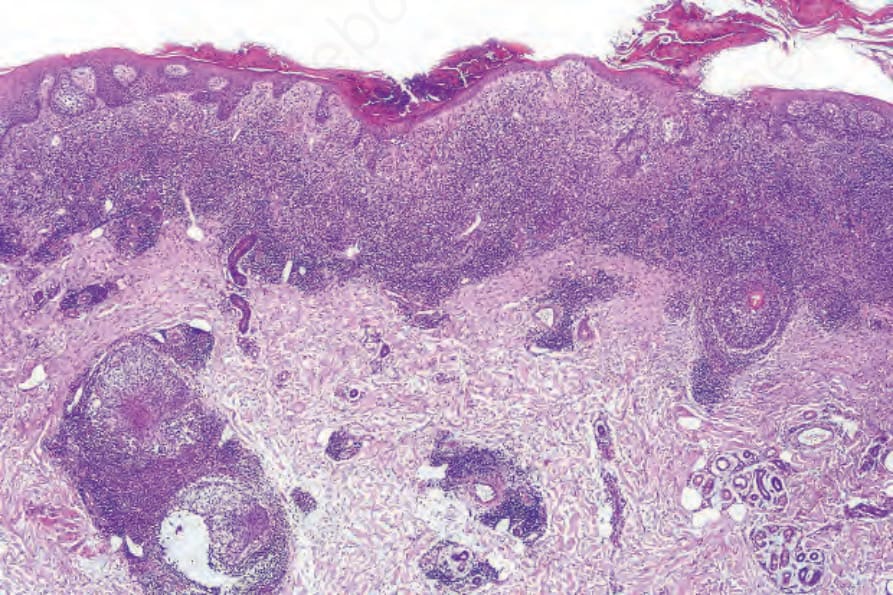
圖 29-78:親毛囊性蕈樣黴菌病 (folliculotropic mycosis fungoides):除了表淺帶狀浸潤之外,尚有毛囊受侵犯。
Fig. 29.78 Folliculotropic mycosis fungoides: in addition to a superficial bandlike infiltrate, there is follicular involvement.
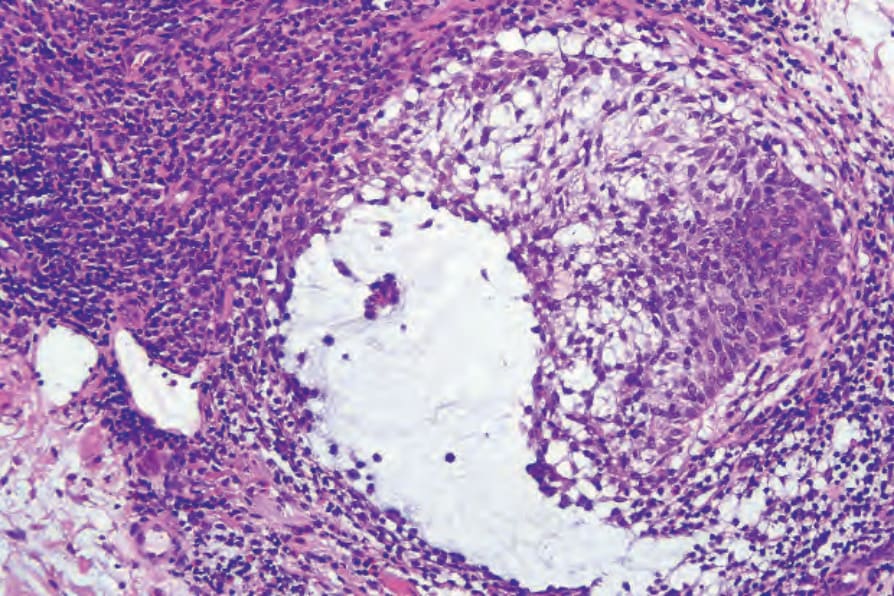
圖 29-79:親毛囊性蕈樣黴菌病 (folliculotropic mycosis fungoides):有顯著的毛囊黏蛋白沉積症 (follicular mucinosis)。
Fig. 29.79 Folliculotropic mycosis fungoides: there is striking follicular mucinosis.