臨床特徵 (Clinical Features)
- 巨大型多毛『泳褲樣』痣 (giant hairy ‘bathing-trunk’ nevi) 定義為直徑達 20 cm 或以上的先天性黑色素細胞痣 (congenital melanocytic nevi)。在新生兒中,身體上大於 6 cm、頭部上大於 9 cm 的黑色素細胞痣即被視為巨大型。
- 巨大型痣約發生於 1:20 000 的新生兒。男女比例相同,多數出現於頭部、頸部與軀幹。
- 視其確切位置,這類痣曾被描述為『泳褲樣 (bathing-trunk)』、『背心樣 (vest)』、『肩袖樣 (shoulder-sleeve)』、『長襪樣 (stocking)』或『手套樣 (glove)』痣 (Figs 25.211–25.213)。常伴有衛星病灶 (satellite lesions)。
- 巨大型多毛痣的顏色變化從深棕色到黑色不等。雖然出生後數週其顏色可能變亮,但在多數例子中,顏色終生維持不變。巨大型痣的自發性消退 (spontaneous regression) 屬例外。
- 巨大型多毛痣的家族性發生罕見,可能與多基因性類顯性遺傳 (polygenic paradominant inheritance) 有關。
- 一種促結締組織增生性、無毛、色素減退痣 (desmoplastic hairless hypopigmented nevus) 為巨大型痣的一種變異型,以質地堅硬、缺乏毛髮以及進行性色素喪失為特徵。腦回狀巨大型先天性痣 (cerebriform giant congenital nevus) 則以病灶呈腦回狀 (cerebriform) 或迴旋狀 (gyrate) 的表面型態為特徵,並好發於頭皮的頂區 (parietal) 與枕區 (occipital)。
- 所幸巨大型痣極為罕見,因為除了它們可能造成的毀容與心理創傷外,還伴有顯著的黑色素瘤 (melanoma) 發生風險 (3.8–18%)。惡性變化通常發生於青春期之前,並曾被報導於出生時即已存在。對軸位 (axial) 病灶有顯著的好發傾向。
- 出現於頭皮、頸部與後正中線 (posterior midline) 的巨大型先天性痣可能伴有軟腦膜侵犯 (leptomeningeal involvement)(軟腦膜或神經皮膚神經嵴源性錯構瘤,leptomeningeal or neurocutaneous neurocristic hamartoma),甚至 Spitz nevus 樣區域。曾有併存皮下室管膜瘤 (subcutaneous ependymoma) 的描述。Desmoplastic hairless hypopigmented nevus 以明顯的真皮纖維化 (dermal fibrosis)、病灶內黑色素細胞 (melanocytes) 進行性消失,以及發育不全或缺如的毛囊 (hair follicles) 與皮脂腺 (sebaceous glands) 為特徵。
組織病理特徵 (Histopathology)
- 惡性轉化 (malignant transformation) 特別發生於痣的真皮成分 (dermal component),除了呈現典型的黑色素瘤樣形態外,腫瘤亦可顯示惡性神經鞘瘤樣 (malignant nerve-sheath tumor-like) 與退行發育 (anaplastic) 特徵。
- 亦曾有小細胞變異型 (small cell variants) 與異源性病灶 (heterologous foci) 的描述,包括橫紋肌肉瘤樣 (rhabdomyosarcomatous) 與脂肪肉瘤樣 (liposarcomatous) 分化。
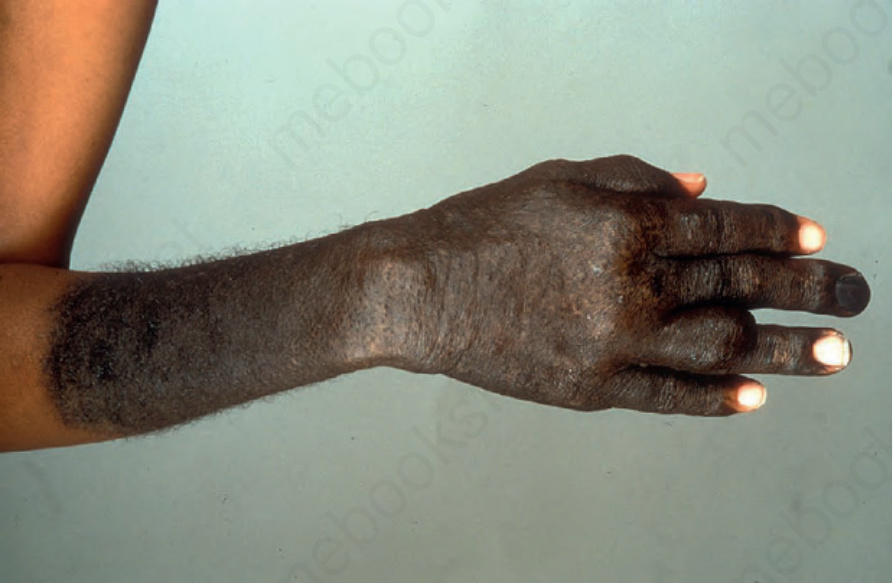
圖 25-211:巨大型先天性黑色素細胞痣 (giant congenital melanocytic nevus):此例中,痣呈手套樣 (glove) 分布。By courtesy of the Institute of Dermatology, London, UK.
Fig. 25.211 Giant congenital melanocytic nevus: in this example, the nevus has a glove distribution. By courtesy of the Institute of Dermatology, London, UK.
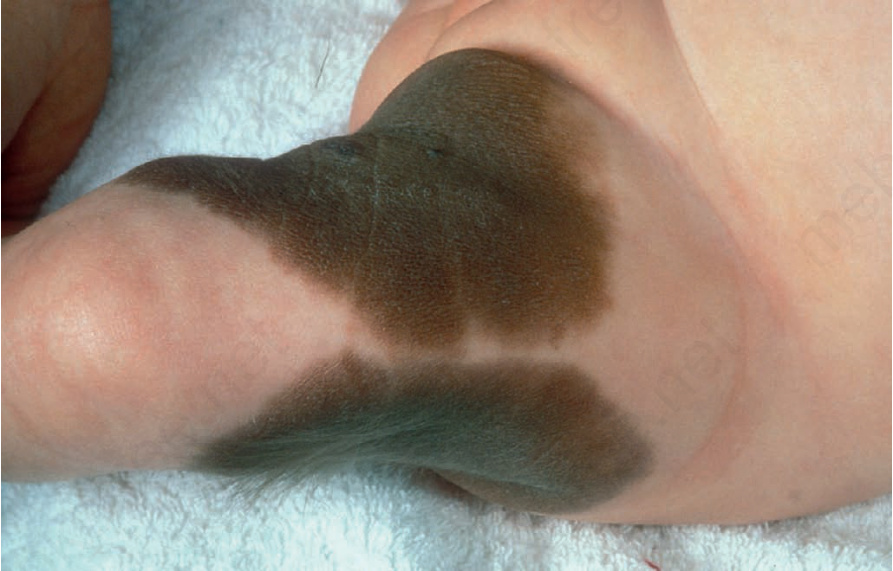
圖 25-212:巨大型先天性黑色素細胞痣 (giant congenital melanocytic nevus):這類病灶極具毀容性,常是父母極度擔憂的來源。By courtesy of the Institute of Dermatology, London, UK.
Fig. 25.212 Giant congenital melanocytic nevus: these lesions are very disfiguring and often a source of great concern to the parents. By courtesy of the Institute of Dermatology, London, UK.