PUVA 與日曬機雀斑樣痣 (PUVA and Sunbed Lentigines)
臨床特徵 (Clinical Features)
長期 psoralen 光化學療法 (PUVA) 可能併發各種皮膚色素變化,包括程度不一的色素增多與色素減退、類白斑 (vitiligo-like) 表現,以及多發性雀斑樣痣 (lentigines)。PUVA 雀斑樣痣 (lentigines) 具劑量依賴性,呈不規則、細小的棕黑色斑 (macule),特別好發於肩部、上背部與四肢 (Fig. 25.13)。病灶常為多發。男性受影響的比例高於女性,第 I 與第 II 型膚質 (skin types I and II) 尤其有風險。曾偶有報導在使用日曬機 (sunbeds) 進行人工曬黑後的病人身上出現類似病灶,其中包含一名系統性紅斑性狼瘡 (systemic lupus erythematosus) 病人。病灶在停止治療後傾向消退。已有報導指出 PUVA lentigines 會發生於蕈狀肉芽腫 (mycosis fungoides) 病灶處,以及正常皮膚與白斑性皮膚 (vitiliginous skin) 上。此外,用於早期蕈狀肉芽腫病人的窄波段紫外線 (narrow band ultraviolet B) 會在受累與未受累皮膚誘發 lentigines,且其發生時間遠較 PUVA 治療後更早、累積劑量更低。然而,其 lentigines 的發生頻率低於 PUVA 治療後所出現者。
致病機轉與組織學特徵 (Pathogenesis and Histologic Features)
已證實在 33% 的 PUVA lentigines 中存在 T1799 BRAF 突變。
組織學上,PUVA lentigines 呈現多樣化的特徵。在某些病灶中,基底細胞 (basal cell) 色素增加但黑色素細胞 (melanocyte) 數目並未增加,類似雀斑 (ephelis);而另一些則類似雀斑樣痣 (lentigines),伴有明顯的表皮突 (rete ridge) 延長與黑色素細胞數目增加 (Fig. 25.14)。已有描述黑色素細胞核異型性 (melanocytic nuclear atypia),包括核增大、多形性 (pleomorphism) 與染色質深染 (hyperchromasia)、多核化 (multinucleation),以及巨大黑色素體 (giant melanosomes)。PUVA lentigines 與黑色素瘤 (melanoma) 的發生之間似乎並無任何關聯。
眼睛(第 I 與第 II 型膚質)並出現在日光損傷皮膚 (solar-damaged skin) 的背景上,呈通常為單發、不規則、網狀的黑色斑,帶有絲狀或串珠樣外觀(令人聯想到墨漬)(Fig. 25.15)。雖然這些特徵在臨床上可能令人擔憂,但病灶完全為良性。墨漬雀斑樣痣 (ink spot lentigo) 極少數情況下可在斑痣 (nevus spilus) 的背景上發生。
也可能有時觀察到表皮異常,包括角化不良 (dyskeratosis) 與類光化性角化症 (actinic keratosis-like) 的特徵。
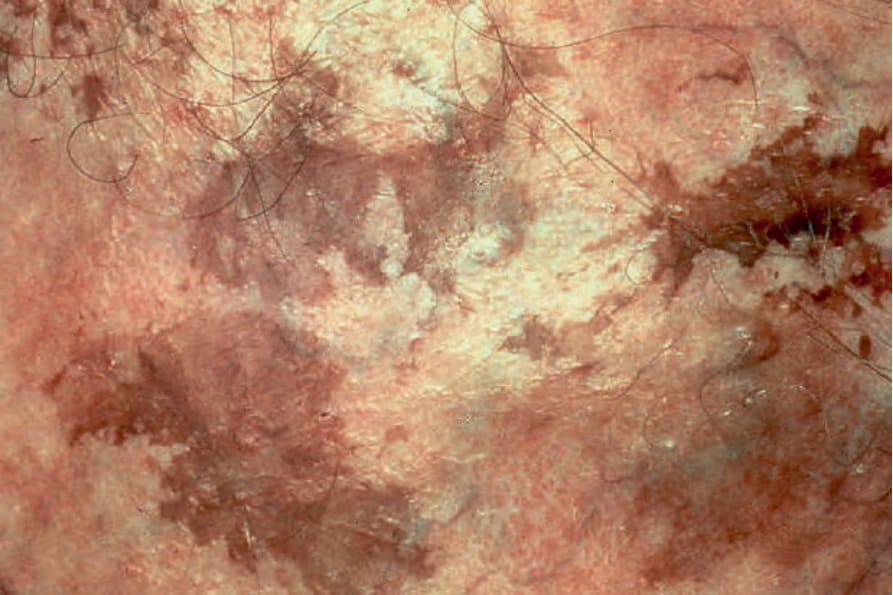
圖 25-13:PUVA 雀斑樣痣 (PUVA lentigines):在程度不一的色素減退與色素增多背景上可見多發性雀斑樣痣 (lentigines)。承蒙英國倫敦皮膚科研究所 (Institute of Dermatology, London, UK) 提供。
Fig. 25.13 PUVA lentigines: multiple lentigines are evident against a background of variable hypo- and hyperpigmentation. By courtesy of the Institute of Dermatology, London, UK.
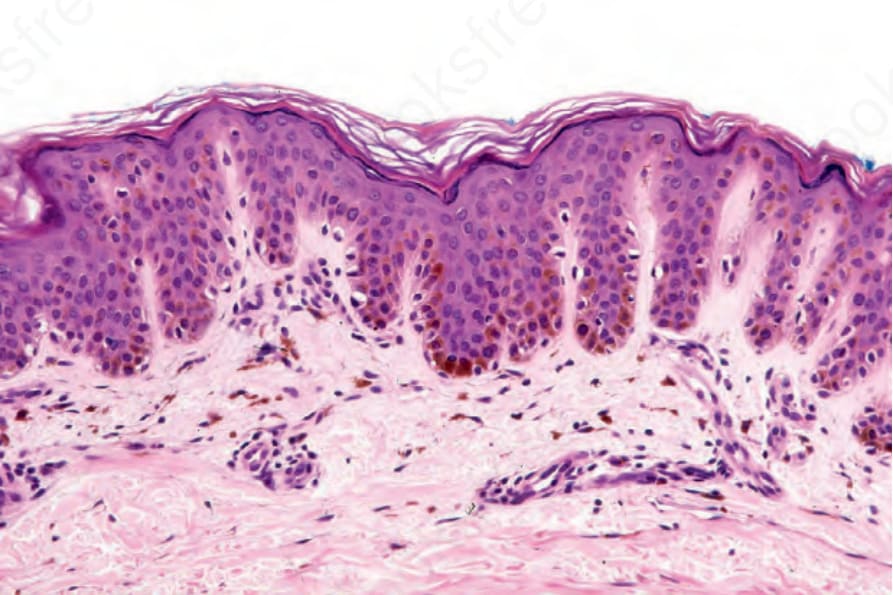
圖 25-14:PUVA 雀斑樣痣 (PUVA lentigo):其特徵與單純性雀斑樣痣 (lentigo simplex) 無法區分。
Fig. 25.14 PUVA lentigo: the features are indistinguishable from a lentigo simplex.
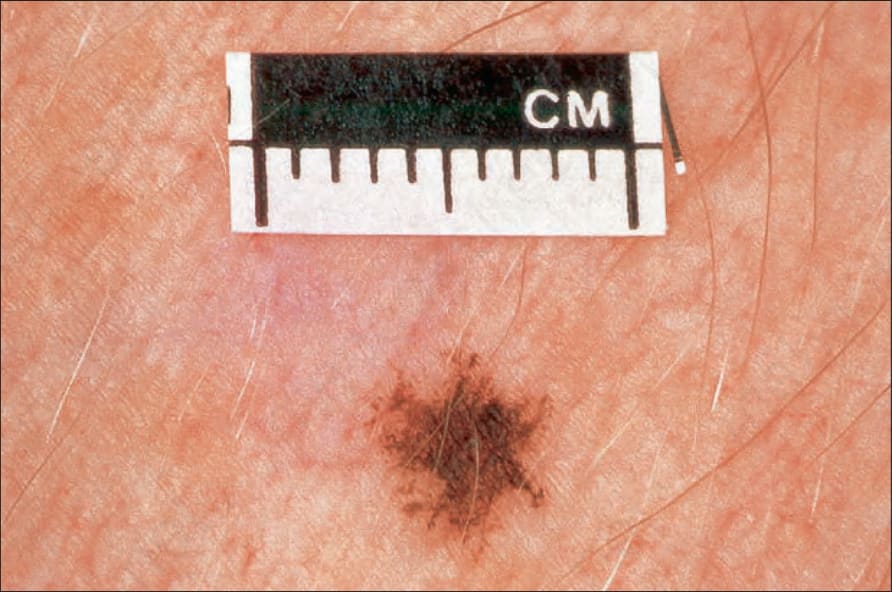
圖 25-15:墨漬雀斑樣痣 (ink spot lentigo):此為一典型極不規則的色素斑 (pigmented macule)。承蒙英國倫敦皮膚科研究所 (Institute of Dermatology, London, UK) 提供。
Fig. 25.15 Ink spot lentigo: this is a typical extremely irregular pigmented macule. By courtesy of the Institute of Dermatology, London, UK.