結節性脆髮症 (Trichorrhexis Nodosa)
臨床特徵 (Clinical Features)
- 結節性脆髮症 (trichorrhexis nodosa) 是最常見的髮幹缺陷。它主要見於主訴頭髮脆弱、易斷裂的病人,並非一種特定疾病。此缺陷源自加諸於髮幹的創傷,可為先天性或由後天性疾病所致。遺傳型與遺傳性皮膚病 (genodermatoses) 及代謝疾病有關,創傷型則與機械性及化學性創傷的損害有關。
- 此病表現為髮幹近端或遠端出現串珠樣增厚 (beaded thickening)。這些變化類似附著於髮幹上的微小球體或塵粒,並代表斷裂 (fractures)(Fig. 22.171)。
| 疾病 (Disease) | 受影響基因 (Affected gene) | 編碼蛋白的功能 (Role of encoded protein) | 毛髮表型 (Hair phenotype) |
|---|---|---|---|
| Monilethrix | hHb6 或 hHb | 毛髮角蛋白 (結構蛋白) | 在光學顯微鏡下呈串珠樣外觀、纖細脆弱的毛髮 |
| Netherton’s syndrome | SPINK5 | 絲胺酸蛋白酶抑制劑 LEK1 | 髮幹分化缺陷(‘bamboo hair’ 竹節狀髮) |
| Generalized atrichia with papular lesions | Hairless (HR) | 推定的轉錄因子 | 第一次出生後毛髮生長週期失敗 |
| Human nude | WHN | 轉錄因子 | 髮幹無法從皮膚露出 |
| X-linked hypohidrotic ectodermal dysplasia | Ectodysplasin (EDN) | 細胞間訊息分子 | 毛髮稀疏 |
| Autosomal hypohidrotic ectodermal dysplasia | Ectodysplasin receptor (EDN) | ||
| Ectodermal dysplasia/familial incontinentia pigmenti | Ectodysplasin 之受體 | 毛髮稀疏 | |
| IKK-gamma (NEMO) | 活化轉錄因子 NF-kB 所需之激酶 | 毛髮稀疏 | |
| Naxos disease | Plakoglobin | 黏附分子 | Woolly hair(羊毛狀髮) |
| Ectodermal dysplasia/skin fragility syndrome | Plakoglobin 1 | 橋粒黏附分子 | 毛髮稀疏 |
| Menke’s disease | ATP7a | 銅轉運型 P-type ATPase | 脫髮;毛髮質地異常 |
| Tricho-rhino-phalangeal syndrome type I | TRPS I | 鋅指蛋白,推定的轉錄因子 | 頭皮毛髮稀疏且不馴 |
| X-linked dominant chondrodysplasia puntata | EBP | Δ(8), Δ(7) sterol isomerase emopamil-binding protein | 毛髮粗糙、脫髮 |
| Giant axonal neuropathy | Gigaxonin (GAN) | 不明 | 捲曲或扭結狀毛髮 |
*Cheng, A.S., Bayliss, S.J. (2008). The genetics of hair shaft disorders. J Am Acad Dermatol, 59, 1–22.
Trichorrhexis invaginata
Tapered fracture Trichorrhexis nodosa Trichoptilosis Monilethrix
1111 Fractures of the hair shaft
Trichoclasis Trichoschisis Peripilar cast Trichonodosis
Pili torti Pili multigemini Pili multi-bifurcati Pili bi-bifurcati
Pili bifurcati
- 此病的遠端型 (distal form) 非常常見,常源自頭髮的一般性風化 (weathering)。它出現於所有種族,尤以留長髮者為甚。
- 近端型結節性脆髮症 (proximal trichorrhexis nodosa) 有兩種型別:一種變異型僅見於非洲裔病人,表現為頭皮、髭部、鬍鬚區或陰部的脫髮斑塊。它一般伴隨其他磨損變化 (wear-and-tear changes),如分岔髮 (split ends, trichoptilosis)。
- 第二種變異型則少見得多,包含髮幹的先天性與遺傳性缺陷,其中最重要者為 TTD(見下文)。這些病人的異常毛髮對日常磨損與輕微創傷高度易感,極易斷裂。髮幹的其他異常也常並存。毛髮如此容易斷裂,以致即使是短髮者也會出現脫髮區域。結節性脆髮症已被發現與外胚層缺陷及多種遺傳症候群有關,包括 Netherton、Basex-Dupré-Christol、Menkes、Kabuki 與 Tay 症候群。與 trichorrhexis nodosa 相關的代謝疾病為尿素循環異常,如精胺酸琥珀酸尿症 (argininosuccinic aciduria) 與瓜胺酸血症 (citrullinemia)。其他曾報導的代謝疾病為後天性或先天性的生物素 (biotin) 與鋅 (zinc) 代謝缺陷。Trichorrhexis nodosa 亦曾被發現與許多其他病況有關,包括無法治療的嬰兒腹瀉、tricho-hepato-enteric syndrome、粒線體疾病 (mitochondrial diseases)、trichorrhexis invaginata、monilethrix、pseudomonilethrix、pili torti、pili annulati、外胚層發育不良 (ectodermal dysplasia)、giant axonal neuropathy、甲狀腺功能低下 (hypothyroidism)、腎上腺腦白質失養症 (adrenoleukodystrophy)、陶瓷直髮夾的不當使用、梳髮習慣、毛髮移植,以及在 tumor necrosis factor-α inhibitor 治療之後。
Box 22.2 Hair shaft diseases
髮幹斷裂 (Fractures of the hair shaft):Trichorrhexis nodosa、Trichothiodystrophy、Trichoschisis and trichoclasis、Trichorrhexis invaginata、Tapered fracture、Trichoptilosis
髮幹不規則 (Irregularities of the hair shaft):Uncombable hair syndrome、Pili bifurcati、Pili multigemini、Trichostasis spinulosa、Pili annulati、Monilethrix、Bubble hair
髮幹捲曲與扭轉 (Hair shaft coiling and twisting):Pili torti、Woolly hair、Acquired progressive kinking of the hair、Trichonodosis、Circled and rolled hair
髮幹上的外來物質 (Extraneous matter on the hair shaft):Hair casts
致病機轉與組織學特徵 (Pathogenesis and Histologic Features)
- 顯微鏡檢查顯示,除了串珠狀區域外髮幹正常,在串珠狀區域處皮質 (cortex) 已穿透角質層細胞 (cuticular cells) 而疝出 (herniated)(見 Fig. 22.1)。後者呈碎裂狀,且在許多病例中完全缺失。在保存良好、毛髮尚未完全斷裂的檢體中,其外觀讓人聯想到兩支以其鬃毛相接的破舊油漆刷 (Figs 22.172 與 22.173)。
鑑別診斷 (Differential Diagnosis)
- 髮幹斷裂 (hair shaft fractures) 可見於多種其他病況,包括 trichoschisis、trichoclasis、trichorrhexis invaginata、tapered fracture 與 trichoptilosis。常需廣泛的臨床與實驗室檢查方能確立正確診斷。遠端型可類似頭皮屑 (dandruff)、毛周鞘管 (peripilar casts) 與蝨病 (pediculosis)。在這些病例中,鑑別診斷可藉由毛髮的顯微鏡檢查輕易做出。
1112 Diseases of the hair
- ……嗜中性球減少症 (neutropenia) 與智能障礙)以及 Tay(魚鱗癬樣紅皮症、髮幹異常、智能與身體發育遲緩)、Sabinas 與 Pollitt 症候群。
- 也曾記載有不伴隨任何相關神經外胚層缺陷之偶發性 TTD 病例。此病況亦可表現出泌尿系統畸形與原發性高尿鈣症 (primary hypercalciuria)、鐵母細胞性貧血 (sideroblastic anemia)、高嗜酸性球症候群 (hypereosinophilic syndrome)、先天性心臟病與 beta-thalassemia。
致病機轉與組織學特徵 (Pathogenesis and Histologic Features)
- 患有 TTD 並具光敏感性的病人,其 DNA 核苷酸切除修復 (DNA nucleotide excision repair, NER) 機制存在缺陷。NER 路徑涉及至少 28 個基因,並與 DNA 修復及轉錄相關聯。三個 NER 基因屬於基礎轉錄因子 (basal transcription factor) TFIIH 的一部分。
- 有三種體染色體隱性症候群與 NER 缺陷相關:光敏感型 TTD、著色性乾皮症 (xeroderma pigmentosum, XP) 與 Cockayne syndrome。TTD 源自 XPB、XPD 或 TTD-A 基因的突變。這三個基因編碼出屬於基礎轉錄因子 TFIIH 一部分的蛋白,包括 XPB 與 XPD,即可切除並修復 DNA 的解旋酶 (helicases)。
- 一般認為 XP 的臨床特徵與 NER 基因修復功能的突變相關聯,而影響 NER 基因轉錄相關功能的突變則導致 TTD 表型。TTD 病人並無如 XP 病人所見之罹癌易感性增加(1000 倍風險增加)。
- TTD 的診斷可藉由證明暴露於紫外光後存在 DNA 修復缺陷來確認。約半數病人可辨識出紫外光損傷 DNA 之切除修復異常。
- TTD 病人的毛髮顯示硫鍵 (sulfur bonds) 喪失,其特徵為胱胺酸 (cystine) 濃度顯著下降。毛髮的硫與胱胺酸含量約減少 50%。角質層細胞 (cuticular cells) 變得脆弱,容易斷裂並形成脆髮結節 (trichorrhectic nodules)(Fig. 22.174)。髮幹呈扁平狀,伴有 trichoschisis 及角質層的缺失或不足。以偏振光 (polarized light) 檢查對於觀察因皮質毛纖維 (cortical pilar fibers) 起伏所致的典型明暗交替帶狀型態至關重要。其外觀類似虎尾 (tiger’s tail)(Fig. 22.175)。
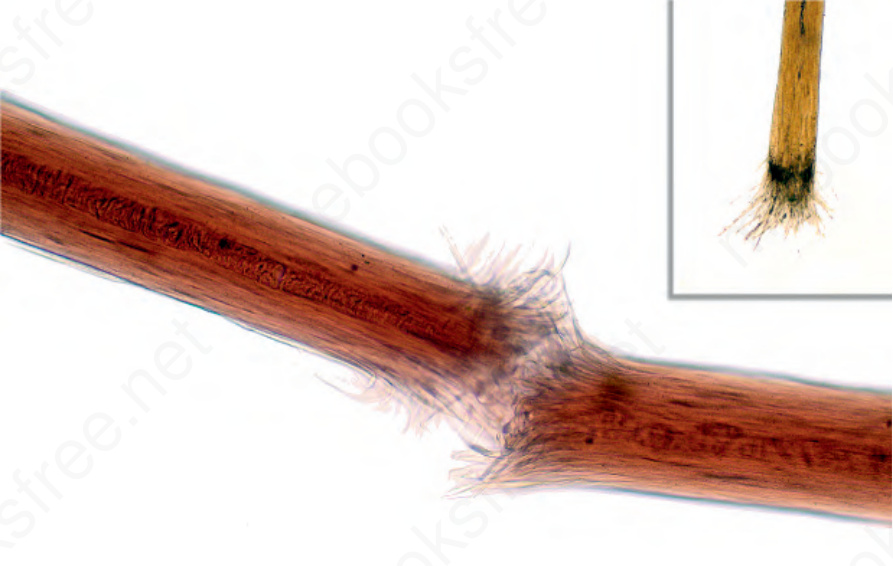
圖 22-1:髮幹檢體。結節性脆髮症 (trichorrhexis nodosa)。檢體不可用拉扯牽引方式採取,而應以近端剪取。否則檢體將如右上角所示僅顯示遠端。Courtesy of J.C. Garcés, MD, Hospital Luis Vernaza, Guayaquil, Ecuador.
Fig. 22.1 Hair shaft sample. Trichorrhexis nodosa. The sample must not be taken using pull traction but rather by cutting it proximally. Otherwise, the sample will only show the distal end as shown in the upper right-hand corner. Courtesy of J.C. Garcés, MD, Hospital Luis Vernaza, Guayaquil, Ecuador.
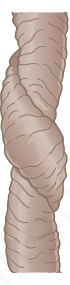
圖 22-170:髮幹缺陷 (hair shaft defects)。
Fig. 22.170 Hair shaft defects.
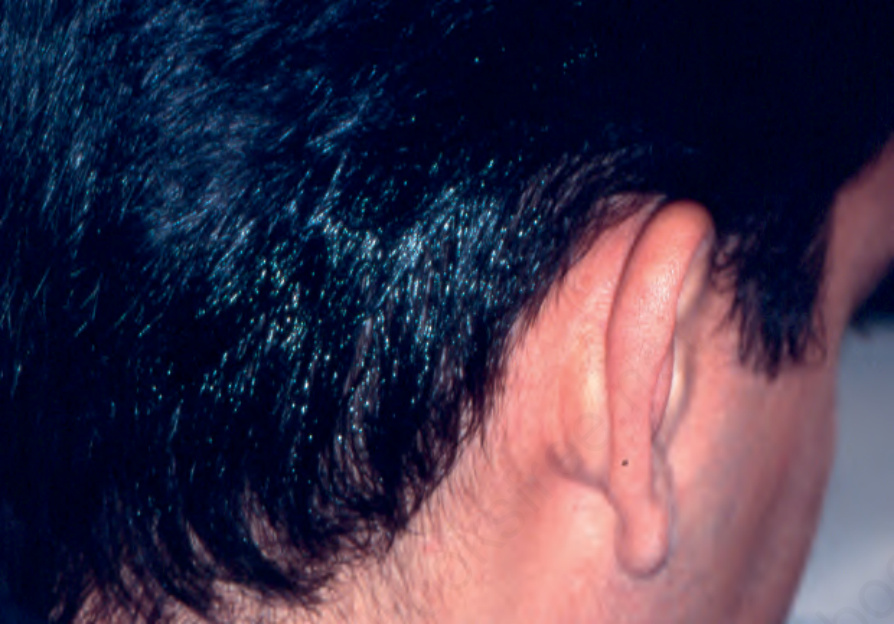
圖 22-171:結節性脆髮症 (trichorrhexis nodosa):局部型的範例。Courtesy of P. Reygagne, MD, Centre Sabouraud, Paris, France.
Fig. 22.171 Trichorrhexis nodosa: example from a localized form. Courtesy of P. Reygagne, MD, Centre Sabouraud, Paris, France.
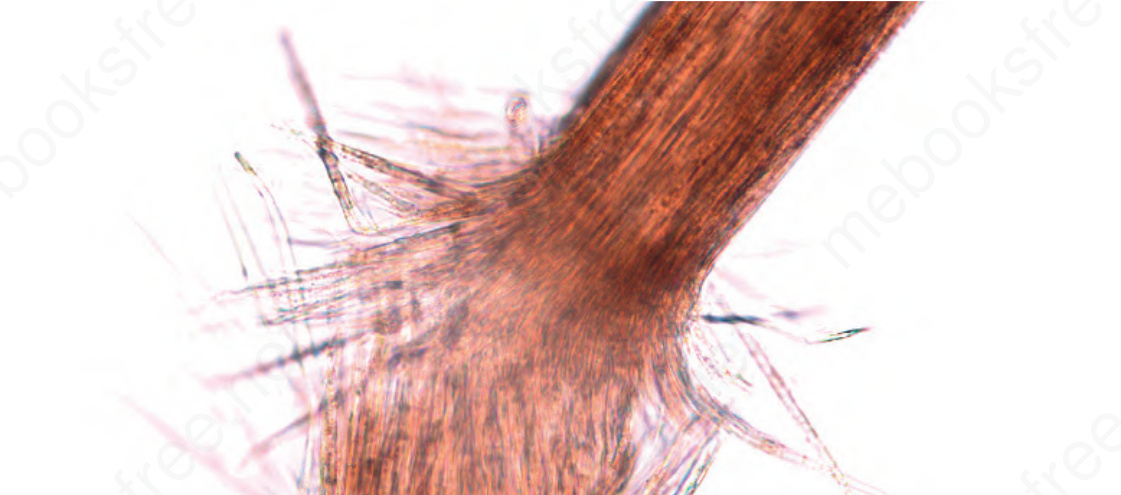
圖 22-172:結節性脆髮症 (trichorrhexis nodosa):典型結節,由皮質纖維 (cortical fibers) 斷裂並從破裂的角質層 (cuticle) 突出所致。
Fig. 22.172 Trichorrhexis nodosa: typical node as a result of fracture of cortical fibers protruding through a broken cuticle.
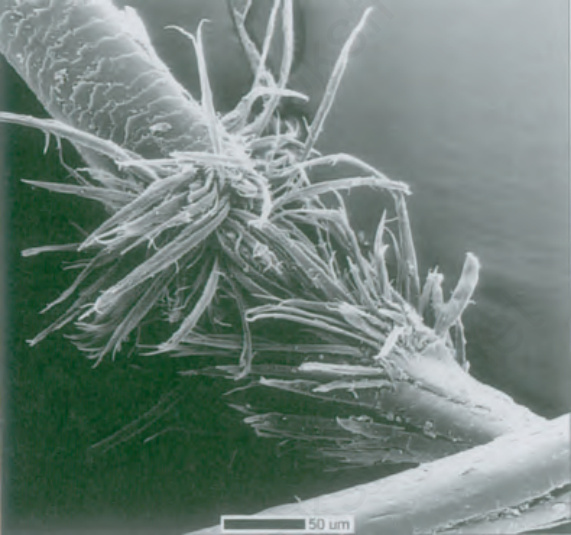
圖 22-173:結節性脆髮症 (trichorrhexis nodosa):其特徵被比喻為以其鬃毛相接的乾燥油漆刷。此病況常為創傷所致。Reproduced with permission from Hordinsky, M.E., Sawaya, M.E., Scher, R.K. (eds) (2000) Atlas of hair and nails. Philadelphia: Saunders.
Fig. 22.173 Trichorrhexis nodosa: the features are likened to dried paintbrushes joined by their hair. The condition is commonly the result of trauma. Reproduced with permission from Hordinsky, M.E., Sawaya, M.E., Scher, R.K. (eds) (2000) Atlas of hair and nails. Philadelphia: Saunders.
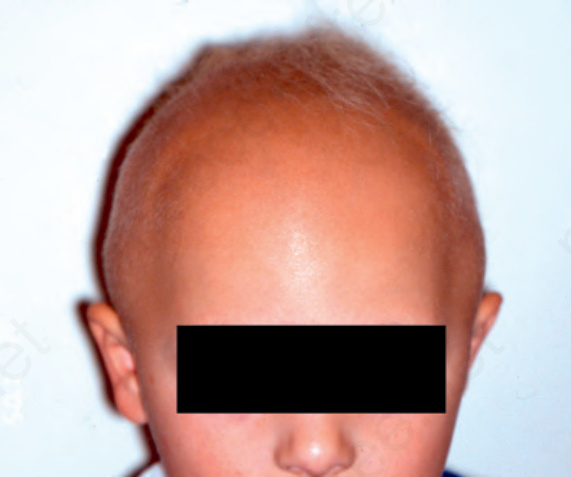
圖 22-174:毛髮硫營養不良症 (trichothiodystrophy):注意稀疏、短小且碎裂的毛髮。Courtesy of P. Reygagne, MD, Centre Sabouraud, Paris, France.
Fig. 22.174 Trichothiodystrophy: note the sparse, short, and fragmented hairs. Courtesy of P. Reygagne, MD, Centre Sabouraud, Paris, France.
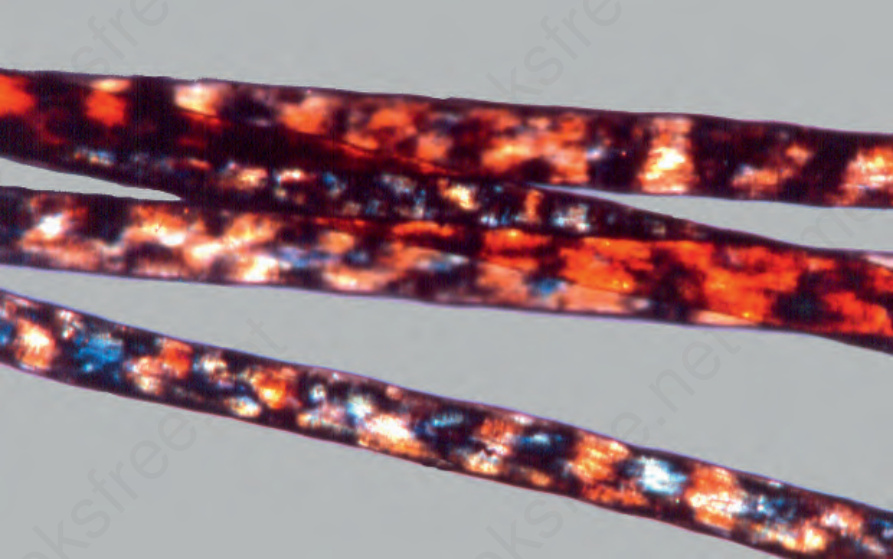
圖 22-175:毛髮硫營養不良症 (trichothiodystrophy):偏振光下髮幹典型的虎尾外觀 (tiger tail appearance)。Courtesy of P. Reygagne, MD, Centre Sabouraud, Paris, France.
Fig. 22.175 Trichothiodystrophy: typical tiger tail appearance in hair shafts under polarized light. Courtesy of P. Reygagne, MD, Centre Sabouraud, Paris, France.
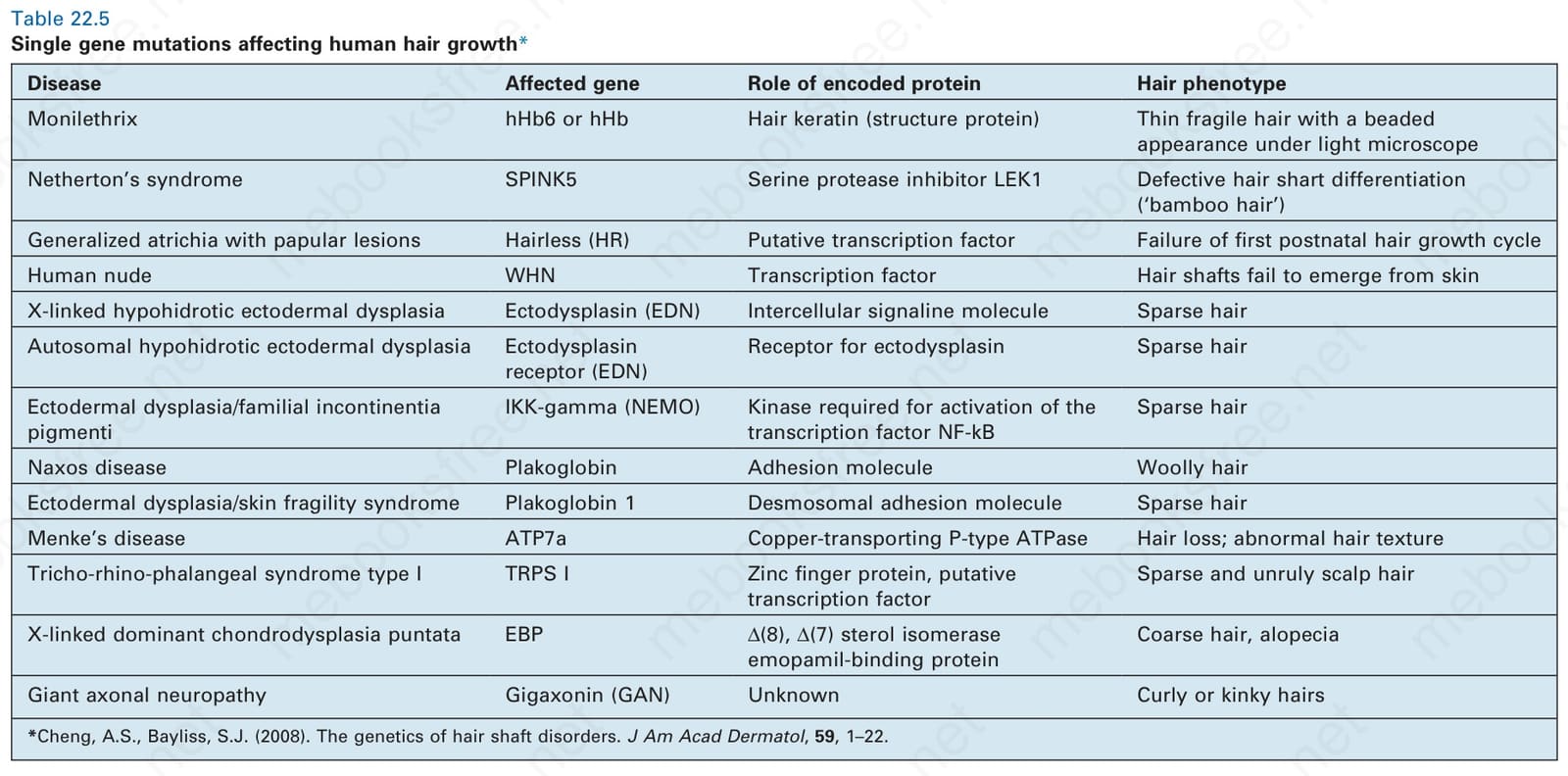
表 22-5:影響人類毛髮生長的單一基因突變 (single gene mutations affecting human hair growth)。
Table 22.5 Single gene mutations affecting human hair growth*