臨床特徵 (Clinical Features)
- 鏈格孢菌 (Alternaria) 是一種色素性真菌 (pigmented fungus),屬於異質性的暗色絲孢黴菌群 (phaeohyphomycete group)。
- 它與輕微外傷時的接種感染有關,常見於免疫功能低下的宿主,尤其是因醫源性免疫抑制的器官移植受者 (organ transplant recipients)。
- 其他已報告的臨床情境包括潛在血液惡性腫瘤 (hematological malignancy)、全身性皮質類固醇治療 (systemic corticosteroid therapy)、Cushing disease 以及 AIDS。
- 免疫功能正常的個體 (immunocompetent individuals) 極少受到影響。
- 患者表現為位於暴露皮膚表面的潰瘍、紅斑性斑疹與丘疹、膿疱及結節,有時帶有結痂 (crusted) 或呈疣狀 (verrucous) (Fig. 18.357)。
- 也可能出現帶有膿疱的大型潰瘍性斑塊 (large ulcerated plaques)。
- 病灶可見於手背、手指、肘部、膝部、面部及足背。
- 已有報告呈孢子絲菌病樣分布 (sporotrichoid distribution) 的皮膚病灶。
- 病灶偶爾會自發性消退;否則對抗黴菌藥物 (antimycotic drugs) 反應良好,僅留下輕微疤痕。
致病機轉與組織學特徵 (Pathogenesis and Histologic Features)
- Alternaria spp. 廣泛存在於土壤與植物中,最常經由木刺 (wood splinters) 接種至皮膚。
- 在組織中,此真菌呈現為直徑 5–7 µm 的色素性分隔菌絲 (pigmented septate hyphae),伴隨直徑 3–10 µm(範圍 5–20 µm)的開放、圓形體 (open, rounded bodies) (Fig. 18.358)。
- 它們可游離存在,或見於組織細胞 (histiocytes) 或巨細胞 (giant cells) 內。
- 真皮可見一種發炎浸潤,通常由混合性嗜中性球與肉芽腫性反應 (mixed neutrophil and granulomatous reaction) 組成。
- 可能出現數量不定的微膿瘍 (microabscesses)。
- 雖然表皮變化通常不明顯,但部分病例可見偽上皮瘤樣增生 (pseudoepitheliomatous hyperplasia)。
鑑別診斷 (Differential Diagnosis)
- Alternariosis 容易與 blastomycosis 混淆,尤其當組織切片中缺乏色素性菌絲形態 (pigmented hyphal forms) 時。
- 然而,培養此微生物 (culture) 及/或 PCR 研究應有助於更明確的診斷。
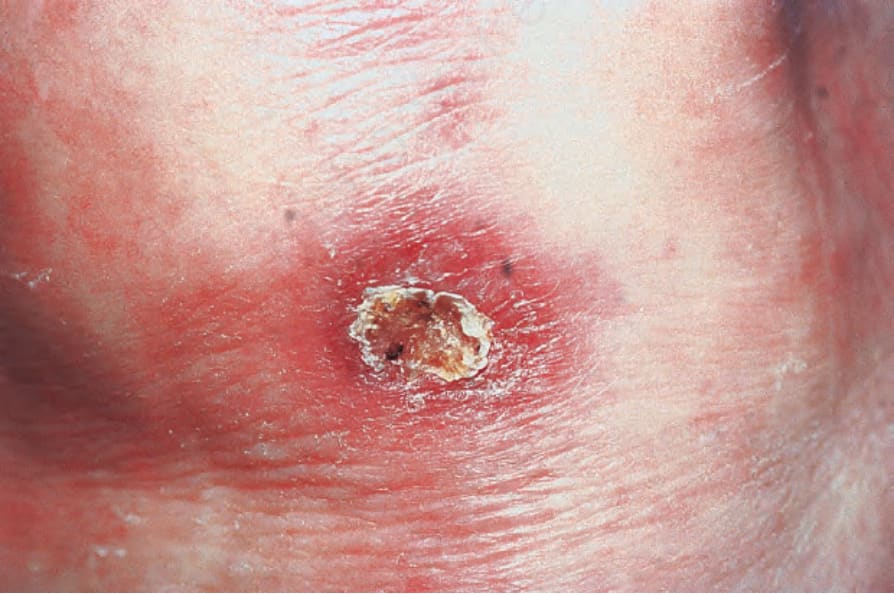
圖 18-357:皮膚鏈格孢菌病 (cutaneous alternariosis):拇指底部的結痂性潰瘍 (crusted ulcer)。承蒙英國 Bridgend,Bridgend General Hospital 的 S.W. Lanigan, MD 提供。
Fig. 18.357 Cutaneous alternariosis: crusted ulcer at the base of the thumb. By courtesy of S.W. Lanigan, MD, Bridgend General Hospital, Bridgend, UK.
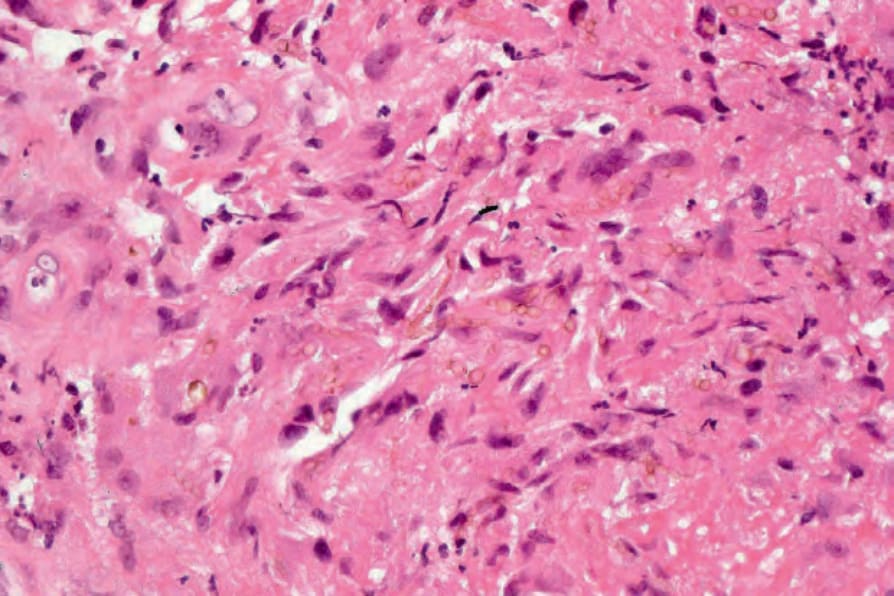
圖 18-358:皮膚鏈格孢菌病 (cutaneous alternariosis):注意此 hematoxylin and eosin 染色切片中的酵母菌形態 (yeast forms)。
Fig. 18.358 Cutaneous alternariosis: note the yeast forms in this hematoxylin and eosin stained section.