疾病定義與分類
-
尋常疣 (common wart,verruca vulgaris) 是由人類乳突瘤病毒 (human papillomavirus, HPV) 感染所致 (Fig. 18.1)。HPV 是 papovavirus 科的一種 DNA 病毒。目前已知的 HPV 基因型超過 200 種,依其 DNA 同源性 (DNA hybridization) 的程度加以分類 (Table 18.1)。一個 HPV 型要被視為「新」型,其特定基因組區域的序列必須與任一已知 HPV 型相比呈現超過 10% 的差異性。已有針對完整病毒所製造的單株抗體 (monoclonal antibodies),可辨識個別 HPV 型別;而針對病毒成分的抗體則僅具群組特異性 (group specific) (Fig. 18.2)。分子病理學的進展帶來更佳且更具特異性的 HPV 偵測與分類方法,包括原位聚合酶連鎖反應 (in situ polymerase chain reaction, PCR)、非同位素原位雜交 (nonisotopic in situ hybridization, NISH)、滾環擴增 (rolling circle amplification) 與次世代定序 (next-generation sequencing)。共有五個屬 (genera),即 α、β、γ、µ 與 ν。α HPV 型主要為黏膜趨向性 (mucosotropic),並常依其與癌症發生的關聯而分類為低風險 (low-risk)(例如 HPV6、HPV11)或高風險 (high-risk)(例如 HPV16、HPV18),相關癌症包括子宮頸與肛門生殖器腫瘤 (anogenital neoplasms) 以及部分口腔癌 (carcinomas of the oral cavity)。雖然其他四個屬也與皮膚感染有關,但在疣狀表皮發育不良 (epidermodysplasia verruciformis, EV) 的情境下,與非黑色素瘤皮膚癌 (nonmelanoma skin cancer) 的病因發病機轉 (etiopathogenesis) 特別相關的是 β HPV 型。
-
乳突瘤病毒 (papillomaviruses) 體積小、無套膜 (nonenveloped) 且呈二十面體對稱 (icosahedral symmetry),含有由約 8000 個鹼基對 (base pairs) 組成的環狀雙股 DNA。病毒顆粒的直徑
| HPV 型 | 相關臨床病灶 |
|---|---|
| 1 | 深部蹠疣 (deep plantar warts)、尋常疣 (common warts) |
| 2 | 尋常疣 (common warts)、扁平疣 (flat warts) |
| 3 | 扁平疣 (flat warts) |
| 4 | 尋常疣 (common warts)、蹠疣 (plantar warts) |
| 5 | 疣狀表皮發育不良 (epidermodysplasia verruciformis, EV) |
| 6 | 生殖器疣 (genital warts)、喉乳突瘤 (laryngeal papilloma) |
| 7 | 屠夫疣 (butcher warts) |
| 8 | EV |
| 9 | EV、角化棘皮瘤 (keratoacanthoma) |
| 10 | 扁平疣 (flat warts) |
| 11 | 喉乳突瘤 (laryngeal papillomas)、生殖器疣 (genital warts) |
| 12 | EV |
| 13 | 局灶性上皮增生 (focal epithelial hyperplasia) |
| 14, 15 | EV |
| 16 | 生殖器疣 (genital warts)、鮑溫樣丘疹病 (bowenoid papulosis)、子宮頸發育異常 (cervical dysplasia)、子宮頸癌 (cervical carcinoma)、指(趾)部、鱗狀細胞癌 (squamous cell carcinoma)、非生殖器鮑溫氏病 (nongenital Bowen disease) |
| 17 | EV |
| 18 | 生殖器疣 (genital warts)、鮑溫樣丘疹病 (bowenoid papulosis)、子宮頸發育異常 (cervical dysplasia)、子宮頸癌 (cervical carcinoma) |
| A | |
| 19–25 | EV、角化棘皮瘤 (keratoacanthoma) |
| 26–29 | 尋常疣 (common warts)、扁平疣 (flat warts) |
| 30 | 喉癌 (laryngeal carcinoma)、生殖器疣 (genital warts) |
| 31–32 | 生殖器疣 (genital warts)、鮑溫樣丘疹病 (bowenoid papulosis)、子宮頸發育異常 (cervical dysplasia)、子宮頸癌 (cervical carcinoma) |
| 33 | 子宮頸癌 (cervical carcinoma) |
| 34 | 鮑溫樣丘疹病 (bowenoid papulosis)、鮑溫氏病 (Bowen disease) |
| 35 | 子宮頸發育異常 (cervical dysplasia)、子宮頸癌 (cervical carcinoma) |
| 36 | EV |
| 37 | EV、角化棘皮瘤 (keratoacanthoma) |
| 38 | EV |
| B | |
| 39 | 鮑溫樣丘疹病 (bowenoid papulosis)、子宮頸癌 (cervical carcinoma) |
| 41 | 扁平疣 (flat warts) |
| 42 | 生殖器疣 (genital warts)、鮑溫樣丘疹病 (bowenoid papulosis)、子宮頸發育異常 (cervical dysplasia)、子宮頸癌 (cervical carcinoma) |
| 43, 44 | 生殖器疣 (genital warts)、喉乳突瘤 (laryngeal papillomas) |
| 46, 47 | EV |
| 48 | 鮑溫樣丘疹病 (bowenoid papulosis)、鮑溫氏病 (Bowen disease) |
| 49, 50 | EV |
| 51–54 | 生殖器疣 (genital warts)、鮑溫樣丘疹病 (bowenoid papulosis)、子宮頸發育異常 (cervical dysplasia)、子宮頸癌 (cervical carcinoma) |
| 55 | 生殖器疣 (genital warts)、喉乳突瘤 (laryngeal papillomas) |
經 Melton, J.L. 與 Rasmussen, J.E. (1991) Dermatologic Clinics, 9, 219–233 授權重製。
-
約為 55 nm,含 72 個殼粒 (capsomeres)。HPV 基因組分為三個功能區:晚期區 (late region)、早期區 (early region),以及一個非編碼的 1000 鹼基對上游調控區 (upstream regulatory region, URR)。URR 位於 E6 開放讀框 (open reading frame, ORF) 緊鄰的上游,含有調控所有 ORF 表現的序列,包括啟動子元件 (promoter elements) 與轉錄增強子序列 (transcriptional enhancer sequences)。表現的訊息 RNA (messenger RNAs) 超過 20 種,通常以分化特異性 (differentiation-specific) 與細胞特異性 (cell-specific) 的方式表現。早期區的基因 (E1、E2、E4、E5、E6、E7) 負責轉錄、複製與細胞轉化 (cellular transformation)。E4 ORF 在已分化的 HPV 感染上皮細胞中高度表現。某些形式的 E4 編碼一種能破壞細胞角蛋白網絡 (cytokeratin network) 的蛋白質,造成挖空現象 (koilocytosis)。E4 ORF 是不同 HPV 型之間差異性最大的區域。每一種病毒基因型最常在特定解剖部位的病灶中被偵測到,或呈現特殊的組織學特徵。
-
人類的 HPV 感染會造成多種皮膚病灶,包括 verruca vulgaris、絲狀疣 (filiform warts)、扁平疣 (verruca plana)、蹠疣 (plantar warts)、肛門生殖器疣 (anogenital warts) 與鮑溫樣丘疹病 (bowenoid papulosis)。黏膜病灶包括口腔疣與尖型濕疣 (condylomata)、局灶性上皮增生 (focal epithelial hyperplasia) 或 Heck disease、鼻與結膜乳突瘤 (nasal and conjunctival papillomas)、喉乳突瘤病 (laryngeal papillomatosis) 與子宮頸病灶。HPV 感染可無症狀或形成帶原狀態 (carrier status)。一項研究顯示,皮膚 HPV 感染常在健康皮膚上持續存在數年之久,且此持續存在似乎與年齡、性別、疣的病史、免疫抑制治療或 HPV 型別無關。
臨床特徵 (Clinical Features)
-
Common warts 由 HPV 型別 1、2、4、7 與 26–29 所引起。在免疫抑制病人中,HPV 亞型 75、76 與 77 可能具致病性。曾有報導一例與 HPV 57 型感染相關、廣泛且頑固的 verrucae。罕見情況下,與生殖器疣相關的 HPV 亞型如 6 與 11 也曾在兒童的 common warts 中被發現。HPV16 為一具致癌潛能的常見生殖器 HPV 型,在一系列 45 名免疫功能正常 (immunocompetent) 的非生殖器皮膚疣病人中,於 6.6% 的病灶中被偵測到。反之,verrucae vulgaris 有時也可能出現在外陰部 (vulva)。此類病例曾被偵測到 HPV 2 型。值得注意的是,這些「非性病性 (nonvenereal)」生殖器病灶可能發生在 5 歲以下的女孩,因若被錯誤地在臨床或組織學上診斷為尖型濕疣 (condylomata acuminata),可能引發性虐待 (sexual abuse) 的指控。
-
疣是非常常見的病灶,尤其在兒童。成人也經常受影響。在一項針對 2180 名成人的調查中,3.5% 有疣。屠夫與屠宰場工人的風險增加。Common warts 可發生於皮膚任何部位、任何年齡的人,但最常見於手背、手指,以及幼童的膝部,於該處呈現為堅實的角化丘疹 (keratotic papules),直徑 1–10 mm (Fig. 18.3)。柯氏現象 (Koebnerization) 常見(因此手指上會出現對吻病灶 kissing lesions)。在其他部位,它們可能更呈絲狀 (filiform) 且較不堅實 (Fig. 18.4)。後者特別見於嘴唇、鼻孔與眼瞼。也曾有巨大甲周 (giant periungual) 病灶的描述。疣也可能表現為皮角 (cutaneous horn)。它們持續存在數個月至數年不等,且常自發性消退 (regress spontaneously),尤其在兒童。
-
慢性免疫抑制病人(例如腎臟移植後)常有大量的疣 (Fig. 18.5)。慢性化與病灶數目增加有關。在人類免疫缺乏病毒 (human immunodeficiency virus, HIV) 陽性病人及腎臟移植後,也曾描述由 HPV5 所致的 EV 樣病灶 (EV-like lesions)。其他免疫抑制病人(例如非何杰金氏淋巴瘤 non-Hodgkin lymphoma、白血病 leukemia、何杰金氏淋巴瘤 Hodgkin lymphoma 與 HIV 感染)也可見大量疣。在後天免疫缺乏症候群 (acquired immunodeficiency syndrome, AIDS) 病人中,疣可能在抗反轉錄病毒治療 (antiretroviral therapy, ART) 後消退。
致病機轉與組織學特徵 (Pathogenesis and Histologic Features)
-
在皮膚中,病毒顆粒 (virions) 的明顯標的是附屬器間 (inter-appendageal) 表皮以及毛囊膨大部區 (bulge region) 的幹細胞。HPV 病灶的原位雜交 (in situ hybridization) 研究顯示,表皮中的病毒 DNA 合成發生在淺層棘細胞層 (superficial prickle cell layer),而完整病毒組裝與殼蛋白 (capsid) 製造則發生在顆粒細胞層 (granular cell layer)。HPV DNA 曾在距離病毒相關病灶達 15 mm 處看似正常的皮膚中被證實存在。HPV 須在分化極佳的上皮中才能生長,這或可解釋培養 HPV 的困難,以及宿主對病灶的清除為何可能曠日廢時。一般推測,對於位於淺層、無直接血液供應的病原體或變異細胞,免疫機制較為無效。
-
HPV 病灶的消退 (regression) 通常為自發性,但可能須歷時數年才發生。細胞媒介免疫 (cell-mediated immunity) 在促成消退中似乎相當重要,因為在此階段可見淋巴球浸潤疣的上皮。消退的其他特徵包括基底細胞液化變性 (liquefactive basal cell degeneration)、表皮變性 (epidermal degeneration) 與血管栓塞 (vascular thrombosis)。類鐸受體 (Toll-like receptors, TLRs) 已被確認在病毒辨識與啟動抗病毒宿主免疫反應中扮演重要角色。TLR3、TLR9、干擾素-β (interferon-beta, IFN-β) 與腫瘤壞死因子-α (tumor necrosis factor-alpha, TNF-α) 似乎在皮膚對 HPV 感染的先天免疫反應 (innate immune response) 中扮演重要角色。Langerhans 細胞與 Langerhans 樣樹突細胞 (Langerhans-like dendritic cells) 可能發揮直接的抗病毒活性。此作用透過 TLR(如 TLR3)的表現而促成,後者進而可能觸發 IFN 誘導性趨化因子 (IFN-inducible chemokines) 的釋放,包括 CXCL9,一種由 IFN-γ 誘導的單核因子 (monokine)。
-
在未受侵犯的表皮中。可見明顯的顆粒細胞層 (granular cell layer),其內含有不規則的嗜鹼性透明角質顆粒 (keratohyalin) 之放大團塊 (Fig. 18.7)。這些在乳突瘤狀 (papillomatotic) 上皮乳頭之間的凹陷處最易見到。在表皮上層可見具有顯著空泡化細胞質 (vacuolated cytoplasm) 與小而固縮 (pyknotic) 細胞核的大型細胞(挖空細胞 koilocytes)(Fig. 18.8)。然而,挖空細胞更常見於生殖器疣(見下文)。結締組織與迂曲的小血管可侵入絲狀突起 (filiform projections) (Fig. 18.9)。在某些病例中,HPV 對毛囊淺部的侵犯會造成與毛根鞘瘤 (trichilemmoma) 或倒生性毛囊角化症 (inverted follicular keratosis) 完全相同的局灶性變化。然而,並非如先前所推測,所有這些病灶都是由 HPV 所誘發。
-
在疣消退之後,個體通常對進一步的 HPV 感染具免疫力。具有細胞媒介免疫缺陷的病人——無論是原發性或後天性、醫源性 (iatrogenic) 或病毒誘發 (HIV/AIDS)——特別容易發生疣,這些疣傾向不會自發性消退,且可能是特別頑固的治療難題。
-
HPV 的傳播是透過在輕微創傷處密切接觸而接種 (inoculation) 受感染的脫屑細胞 (desquamated cells);因此 common warts 最常見於手部。甲周疣 (periungual warts) 特別與咬指甲 (nail biting) 有關,而蹠疣 (plantar warts) 則特別與長時間浸泡於水中有關。
-
Common warts 呈現絲狀棘層肥厚 (filiform acanthosis),在外生性 (exophytic) 部分的尖端上方有垂直分層的角化不全 (vertical tiers of parakeratosis) (Fig. 18.6)。同時也有顯著的正角化過度 (orthokeratosis)。棘層肥厚向下延伸形成曲線狀的深部邊界 (curvilinear deep margin),並使鄰近的表皮突 (rete ridges) 呈彎曲變形
-
一般的 common warts 僅在極例外的情況下與原位或侵襲性鱗狀細胞癌 (in situ or invasive squamous cell carcinoma) 相關。HPV16 曾與甲周鮑溫氏病 (periungual Bowen disease) 及鱗狀細胞癌相關。HPV 在皮膚腫瘤形成 (cutaneous neoplasia) 中的角色於 Chapter 22 進一步討論。分子研究指出,皮膚 HPV 感染與太陽紫外線輻射 (solar ultraviolet radiation) 共同作為非黑色素瘤皮膚癌演進過程中的致癌輔因子 (carcinogenic cofactor)。
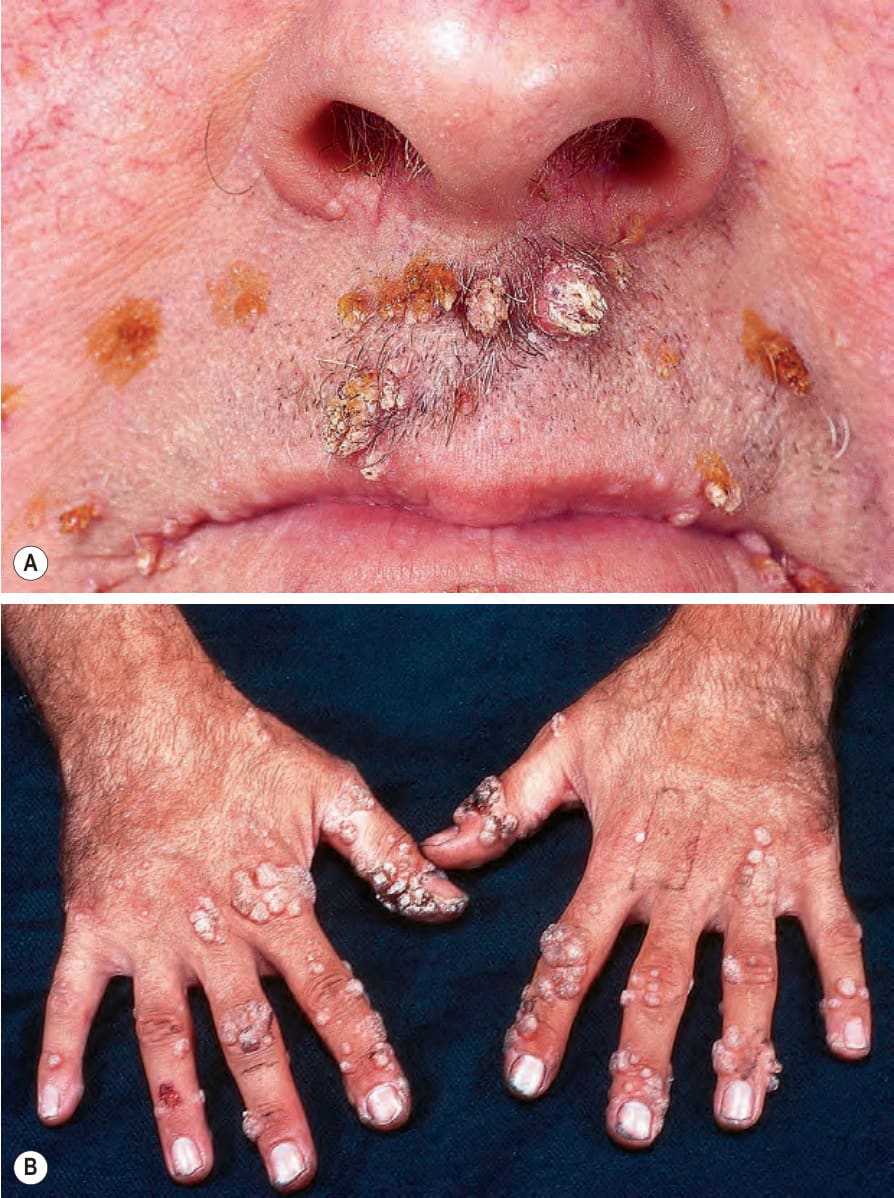
圖 18-1:病毒疣 (viral warts):(A) 極為常見,可侵犯任何部位;(B) 病灶常為多發性。(A) 由 the Institute of Dermatology, London, UK 提供;(B) 由 J.C. Pascual, MD, Alicante, Spain 提供。
Fig. 18.1 Viral warts: (A) these are exceedingly common and may affect any site; (B) lesions are frequently multiple. (A) By courtesy of the Institute of Dermatology, London, UK; (B) By courtesy of J.C. Pascual, MD, Alicante, Spain.
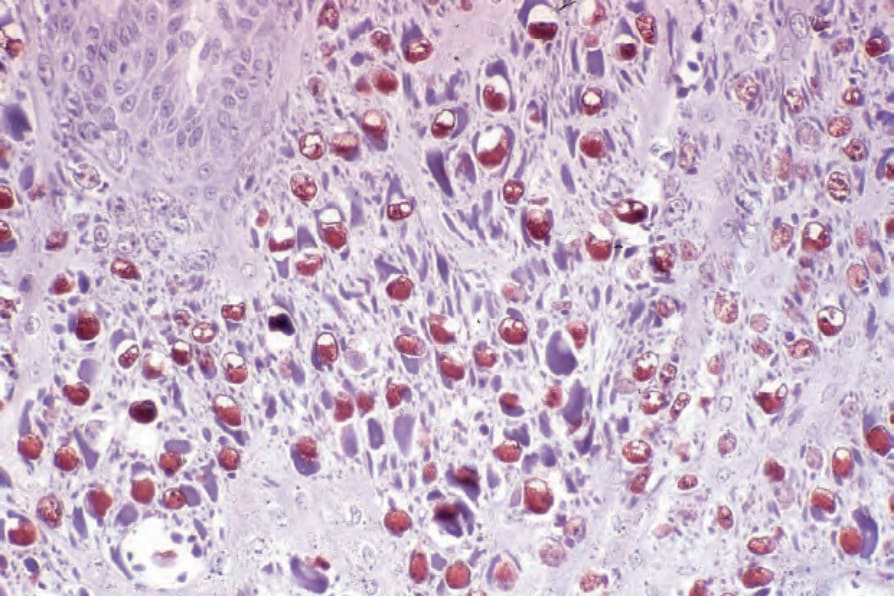
圖 18-2:Verruca vulgaris:注意此切片以過氧化酶標記之抗 papilloma virus 抗血清 (peroxidase-labeled antiserum) 染色後,細胞核呈陽性標記。
Fig. 18.2 Verruca vulgaris: note the positive labeling of the nuclei in this section stained with a peroxidase-labeled antiserum to papilloma virus.
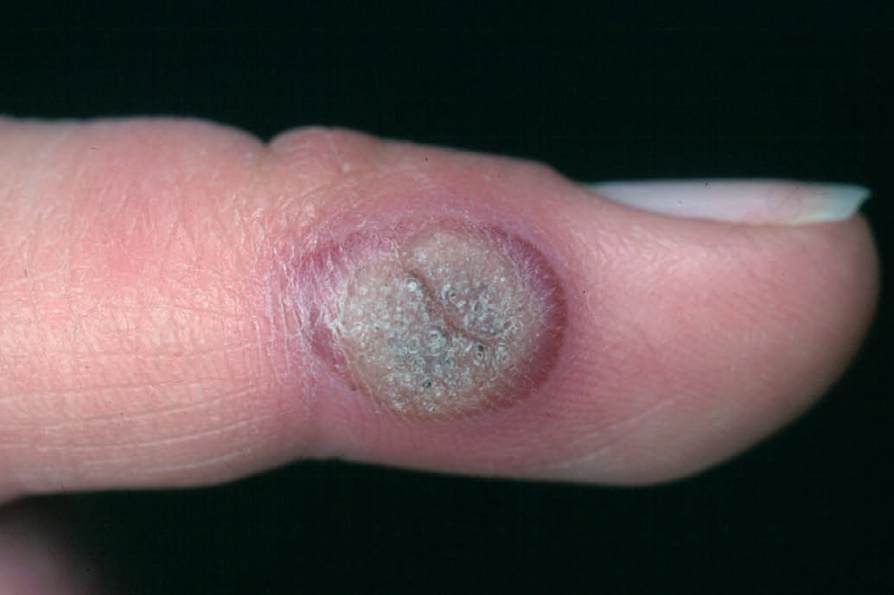
圖 18-3:Verruca vulgaris:verrucae 最常見於手部與手指。取自已故 N.P. Smith, MD 之收藏,the Institute of Dermatology, London, UK。
Fig. 18.3 Verruca vulgaris: verrucae are most commonly seen on the hands and fingers. From the collection of the late N.P. Smith, MD, the Institute of Dermatology, London, UK.
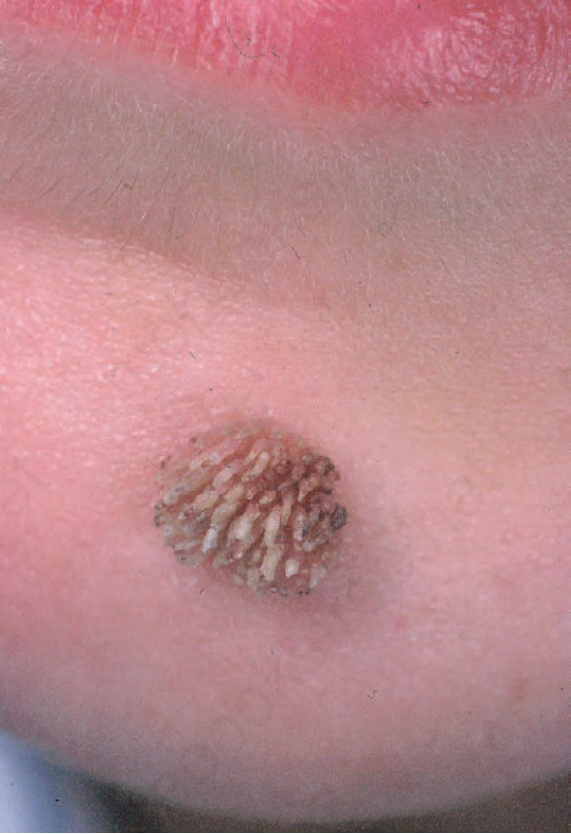
圖 18-4:絲狀疣 (filiform wart):此變異型最常發生於顏面與腋窩周圍。取自已故 N.P. Smith, MD 之收藏,the Institute of Dermatology, London, UK。
Fig. 18.4 Filiform wart: this variant occurs most often on the face and around the axillae. From the collection of the late N.P. Smith, MD, the Institute of Dermatology, London, UK.
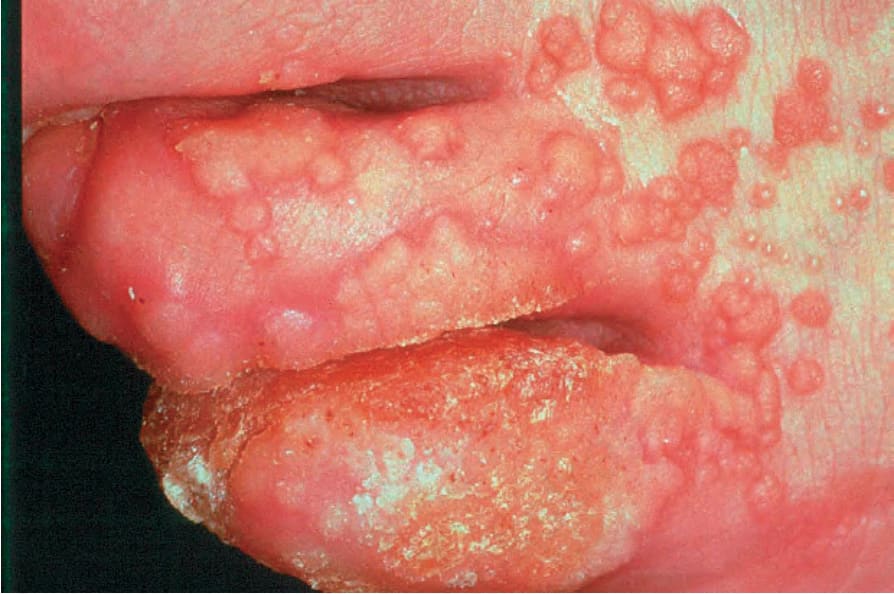
圖 18-5:Verruca vulgaris:以如此大量病灶呈現時,應考慮免疫抑制 (immunosuppression) 的可能性。由 the Institute of Dermatology, London, UK 提供。
Fig. 18.5 Verruca vulgaris: presentation with such large numbers of lesions raises the possibility of immunosuppression. By courtesy of the Institute of Dermatology, London, UK.
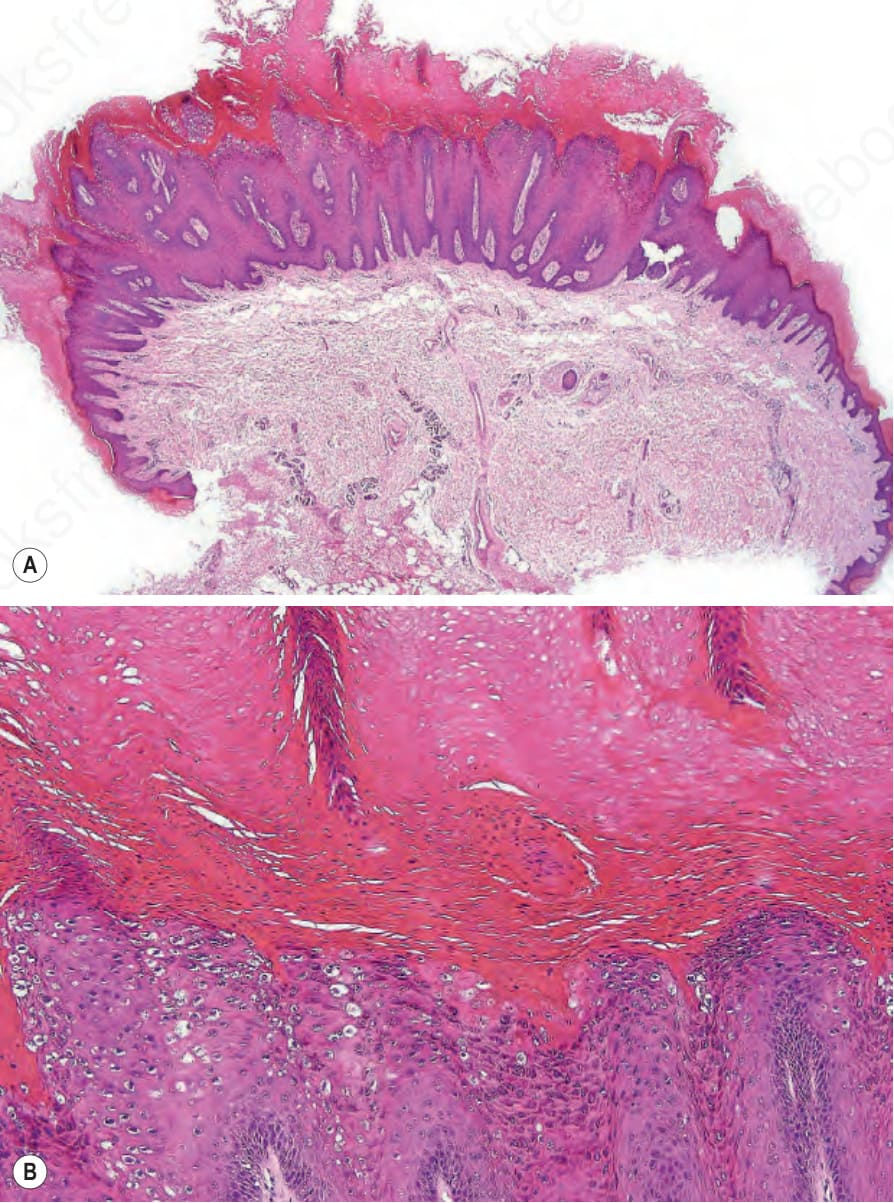
圖 18-6:Verruca vulgaris:(A) 注意角化過度 (hyperkeratosis) 與乳突瘤病 (papillomatosis);(B) 常有顯著的角化不全 (parakeratosis),典型呈垂直分層 (vertical tier) 排列。挖空細胞 (koilocytes) 明顯可見。
Fig. 18.6 Verruca vulgaris: (A) note the hyperkeratosis and papillomatosis; (B) there is often marked parakeratosis typically arranged as a vertical tier. Koilocytes are conspicuous.
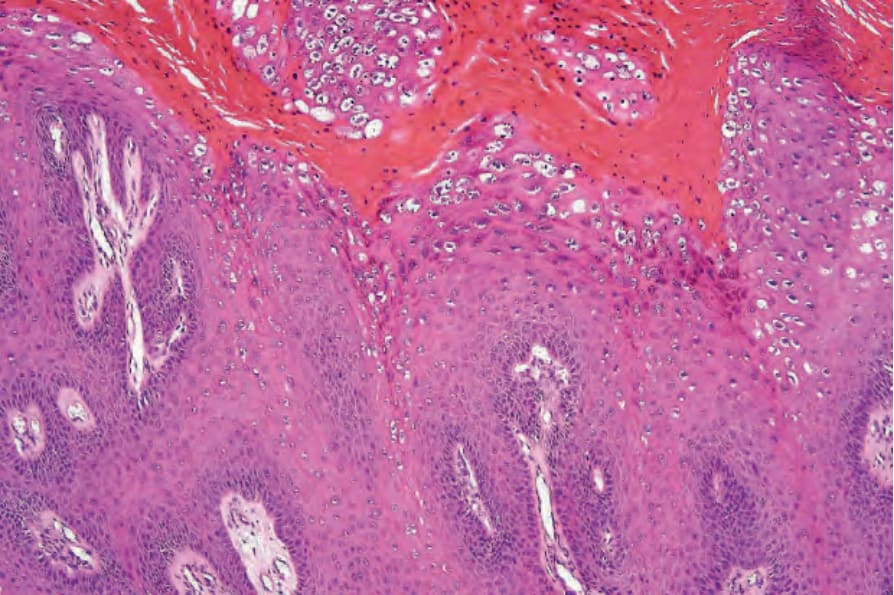
圖 18-7:Verruca vulgaris:具有放大且不規則之透明角質顆粒 (keratohyalin granules) 的大型空泡化細胞 (vacuolated cells) 為其特徵。
Fig. 18.7 Verruca vulgaris: large vacuolated cells with enlarged and irregular keratohyalin granules are characteristic.
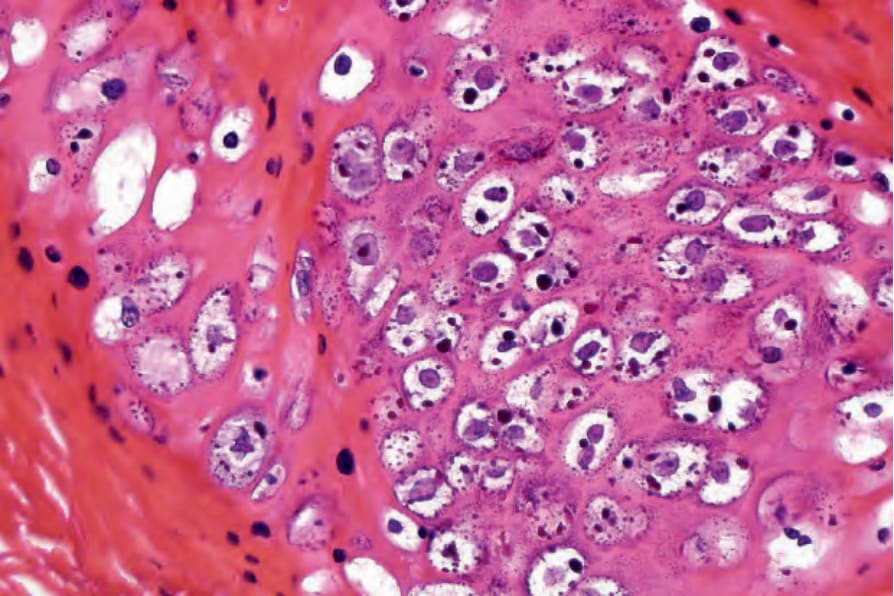
圖 18-8:Verruca vulgaris:挖空細胞 (koilocytes) 的高倍視野。
Fig. 18.8 Verruca vulgaris: high-power view of koilocytes.
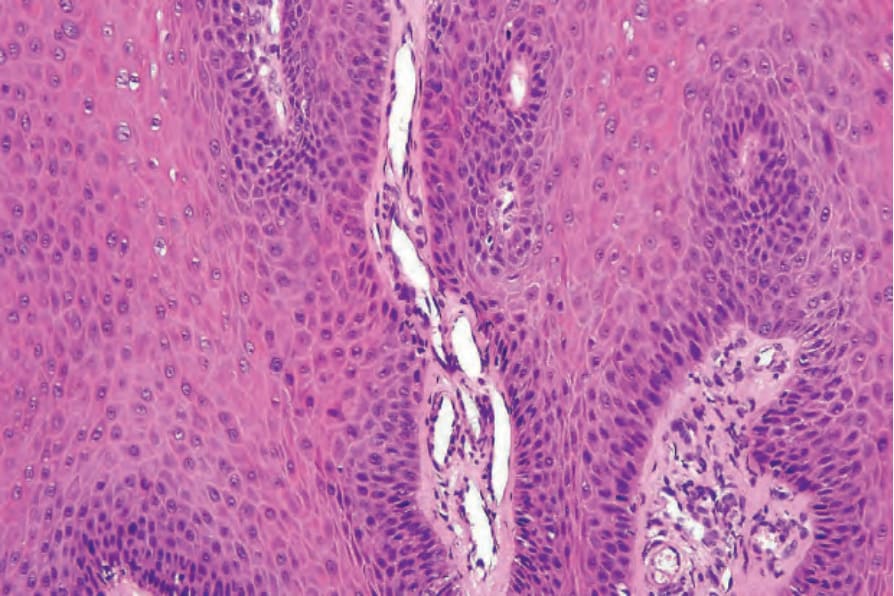
圖 18-9:Verruca vulgaris:乳頭狀突起 (papillary projection) 的核心含有明顯擴張的微血管環 (dilated capillary loops)。
Fig. 18.9 Verruca vulgaris: the core of the papillary projection contains conspicuous dilated capillary loops.
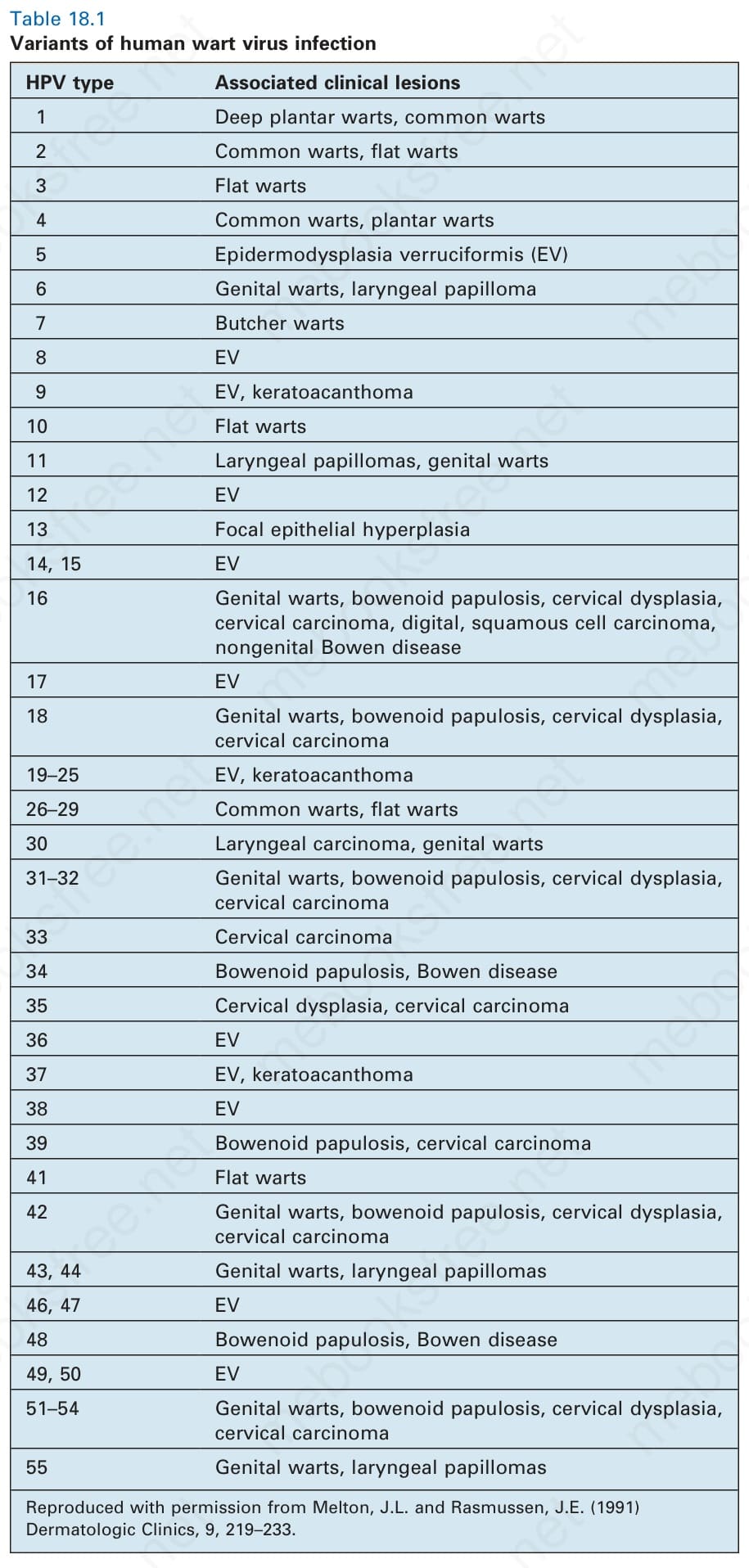
表 18-1:人類疣病毒感染的變異型 (variants of human wart virus infection)。
Table 18.1 Variants of human wart virus infection