臨床特徵 (Clinical Features)
- 在腸道型克隆氏病 (intestinal Crohn disease) 的病人中,約 30% 會出現肛門生殖器 (anogenital) 病灶,其可能由活動性腸道疾病直接蔓延而來,或發生於遠離任何腸胃道病灶之部位(即所謂的「轉移性疾病 (metastatic disease)」),例如顏面與四肢 (Figs 12.72–12.75)。
- 皮膚侵犯在結腸型疾病 (colonic disease) 的病人較為常見(高達 80%),而肛門生殖器疾病可能在出現腸胃道疾病證據前數年即已表現。
- 外陰水腫 (vulval edema) 可能是唯一的表現,且偶爾呈單側性。
- 克隆氏病可侵犯陰莖與陰囊,表現為陰莖陰囊淋巴水腫 (penoscrotal lymphedema)。然而更常見的情形是,本病與糜爛 (erosions)、潰瘍 (ulceration)、膿瘍 (abscesses)、皮膚贅瘤 (skin tags)、竇道 (sinus) 與瘻管形成 (fistula formation) 相關。
- 病灶在罕見情況下可類似化膿性汗腺炎 (hidradenitis suppurativa) 與壞疽性膿皮症 (pyoderma gangrenosum)。
- 沿皮膚皺褶分布的深裂隙(「刀切徵 (‘knife-cut’ sign)」)為一項特徵性表現。
- 任何年齡的克隆氏病病人(包括兒童)皆可能出現肛門生殖器侵犯。
- 口腔侵犯包括水腫、裂隙形成 (fissuring) 與黏膜「鵝卵石樣變化 (‘cobblestoning’)」。曾有一名病人表現為「轉移性」克隆氏病合併口腔上皮內 IgA 膿疱症 (oral intraepithelial IgA pustulosis)。
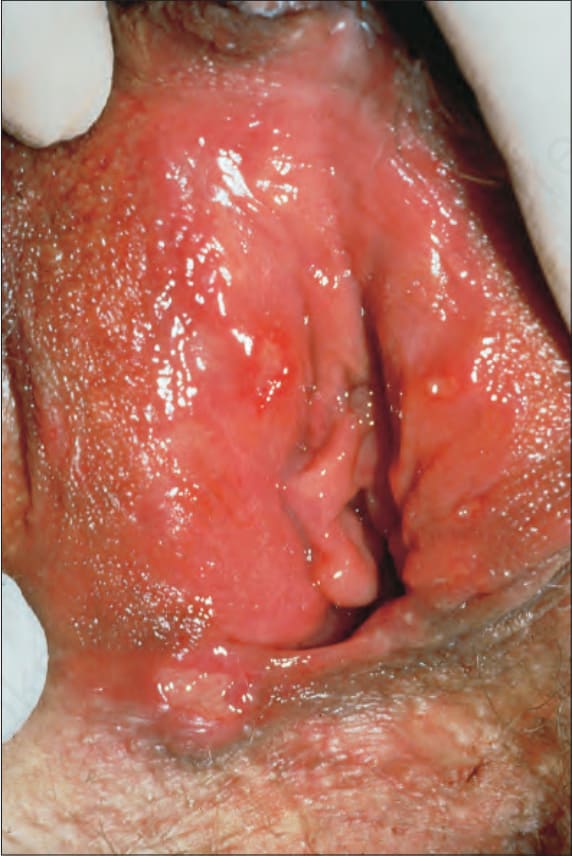
圖 12-72:外陰克隆氏病 (Vulval Crohn disease):可見強烈的紅斑,並出現多處前庭糜爛 (vestibular erosions)。By courtesy of the Institute of Dermatology, London, UK.
Fig. 12.72 Vulval Crohn disease: there is intense erythema and multiple vestibular erosions are present. By courtesy of the Institute of Dermatology, London, UK.
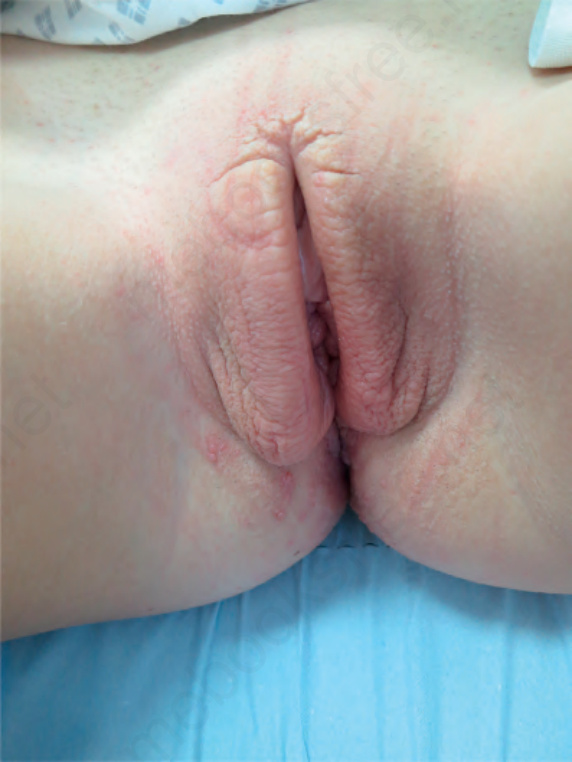
圖 12-73:外陰克隆氏病 (Vulval Crohn disease):此病人有顯著的水腫 (edema),此為其表現特徵。
Fig. 12.73 Vulval Crohn disease: in this patient, there is marked edema which is the presenting feature.
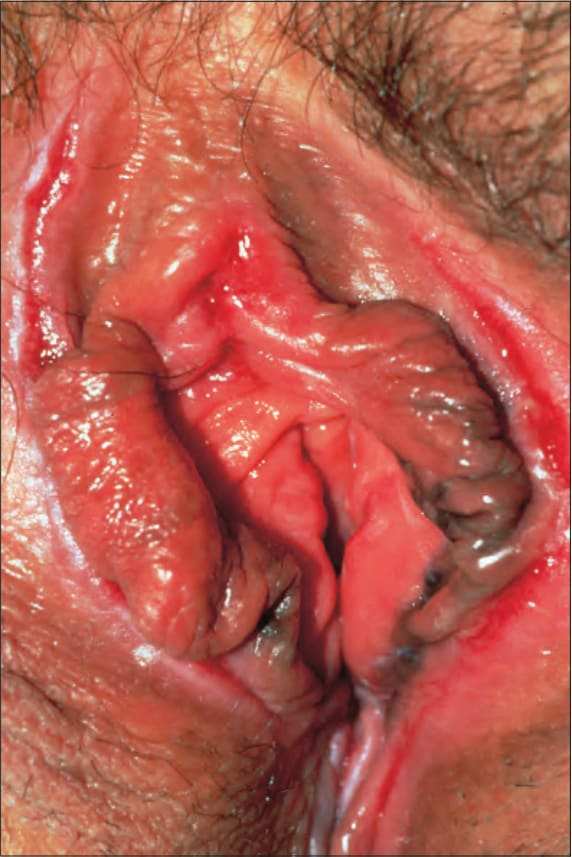
圖 12-74:外陰克隆氏病 (Vulval Crohn disease):注意其紅斑 (erythema)、水腫 (edema) 與糜爛 (erosions)。By courtesy of the Institute of Dermatology, London, UK.
Fig. 12.74 Vulval Crohn disease: note the erythema, edema, and erosions. By courtesy of the Institute of Dermatology, London, UK.
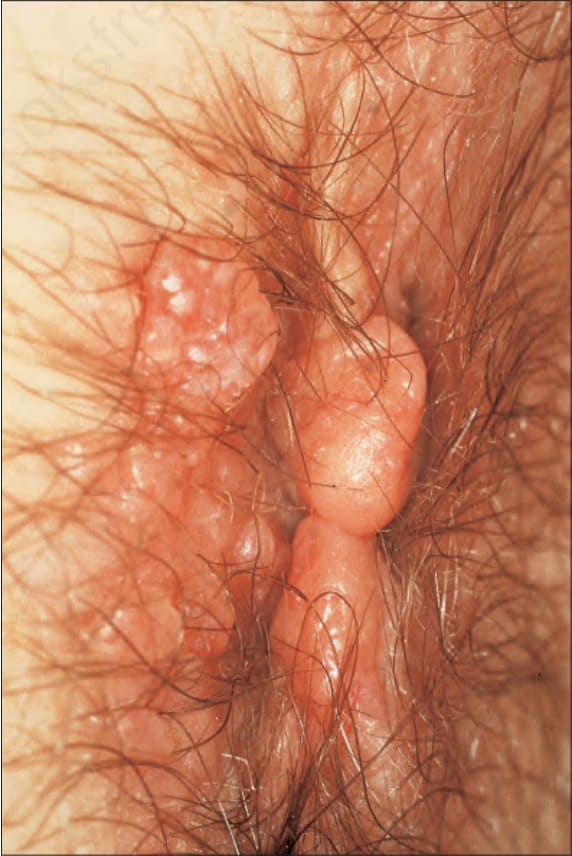
圖 12-75:肛周克隆氏病 (Perianal Crohn disease):可見多處呈現大量水腫 (massive edema) 的皮膚贅瘤 (skin tags)。By courtesy of the Institute of Dermatology, London, UK.
Fig. 12.75 Perianal Crohn disease: multiple skin tags showing massive edema are present. By courtesy of the Institute of Dermatology, London, UK.
組織病理特徵 (Histologic Features)
- 組織學特徵包括皮膚與深層組織的廣泛壞死 (extensive necrosis),且依病程的病因不同,可能發現更具特異性的變化。
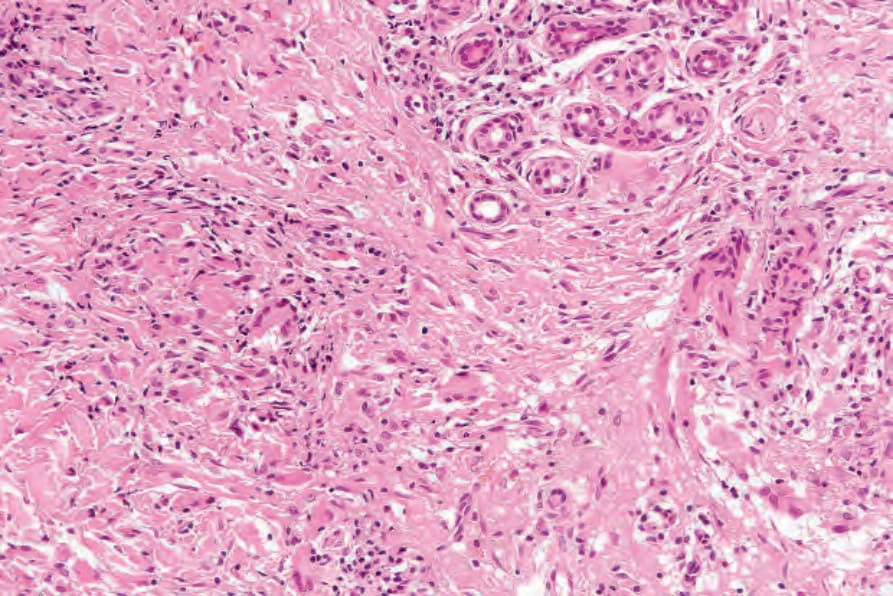
圖 12-76:外陰克隆氏病 (Vulval Crohn disease):可見界線不清的肉芽腫性浸潤 (granulomatous infiltrate),於深層網狀真皮 (deep reticular dermis) 內伴有明顯的巨細胞 (giant cells)。
Fig. 12.76 Vulval Crohn disease: there is an ill-defined granulomatous infiltrate with conspicuous giant cells in the deep reticular dermis.