臨床特徵 (Clinical Features)
- Zoon 漿細胞性龜頭炎 (Zoon plasma cell balanitis, ZB) 是一種發生於中老年未行包皮環切之男性的疾病,但也有報告指出類似情形可侵犯外陰、口腔、唇與會厭。1–7 罕見情況下,本病也可能出現在已行包皮環切之男性。5 真正的 ZB 可能相當少見,許多病例實為 LS 被誤診為 ZB。
- 其表現典型為惰性 (indolent) 且無症狀。界線分明、發亮、潮濕、鮮紅或棕色的斑塊侵犯龜頭與內側包皮 (visceral prepuce),而角化之陰莖體 (penile shaft) 與外側包皮則不受波及 (Fig. 12.63)。舟狀窩 (navicular fossa) 亦可能受侵犯。
- 其他徵象包括暗紅色點刻狀外觀——「卡宴辣椒斑點 (cayenne pepper spots)」——以及伴含鐵血黃素 (hemosiderin) 沉積之紫斑 (purpura);病灶可為單發或多發、大小不一(滴狀 guttate 或錢幣狀 nummular),特徵性地對稱分布於冠狀溝 (coronal sulcus) 軸線兩側,並呈「對吻 (kissing)」現象。
- 雖然曾有增殖型 (vegetative) 與結節型 (nodular) 表現之紀錄,但凡屬非典型或不尋常之形態都應高度懷疑並予以切片。8,9 臨床上的鑑別診斷包括 LS、糜爛型 LP (erosive LP)、psoriasis、脂漏性皮膚炎 (seborrheic dermatitis)、接觸性皮膚炎 (contact dermatitis)、固定性藥物疹 (fixed drug eruption)、二期梅毒 (secondary syphilis)、組織漿菌病 (histoplasmosis)、Queyrat 紅斑增生症 (erythroplasia of Queyrat) 與 Kaposi 肉瘤 (Kaposi sarcoma)。10,11 一個有把握的臨床
致病機轉與組織學特徵 (Pathogenesis and Histologic Features)
- 自 Zoon 的原始報告以來,文獻中已有許多記載,但其病因仍不明確。證據顯示 ZB 是一種慢性、反應性、主要為刺激性 (irritant) 的皮膚病,係由功能失調之包皮所引起。尿液與鱗屑之滯留、以及過度之摩擦性創傷(ZB 常位於龜頭背側面及/或鄰近之包皮,即包皮回縮時摩擦最大之部位)造成此刺激。並無感染性病因之證據,而免疫組化所見顯示 ZB 代表一種非特異性多株性 (polyclonal) 組織反應,與刺激性皮膚病相符。6,7
- 典型上,表皮顯示變薄 (attenuation),顆粒層與角質層缺如,並可見菱形 (diamond- or lozenge-shaped) 之基底細胞角質形成細胞 (basal cell keratinocytes),伴稀疏之角化不良 (dyskeratosis) 與海綿水腫 (spongiosis) (Figs 12.64 and 12.65)。在真皮中,可見一條密集的漿細胞 (plasma cells) 浸潤帶,其密度不一。13 其他徵象包括紅血球外溢 (extravasated erythrocytes)、含鐵血黃素 (hemosiderin) 與血管增生 (vascular proliferation)。Zoon 強調此病中漿細胞浸潤之存在,但實務上漿細胞密度可能變異甚大。9,13,19
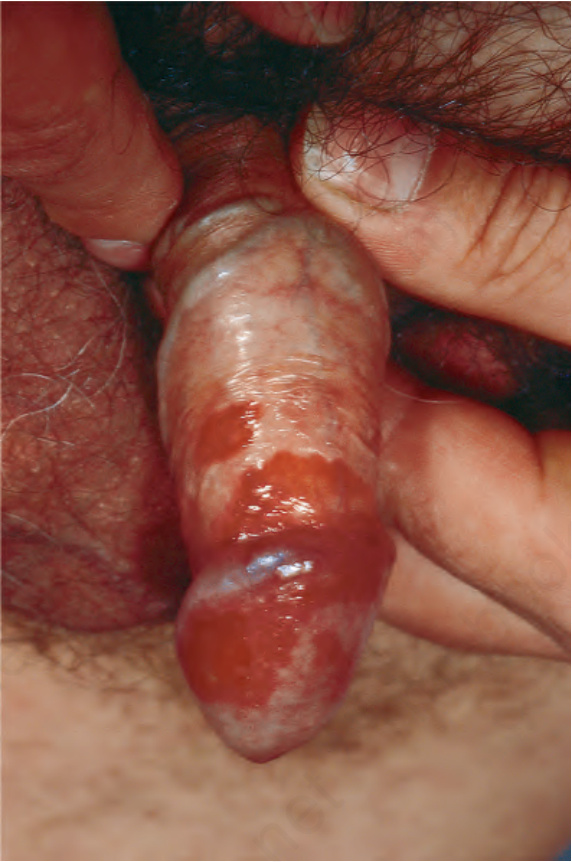
圖 12-63:Zoon 龜頭炎 (Zoon balanitis):可見龜頭、包皮與陰莖體 (glans, prepuce, and shaft of the penis) 受侵犯。摘自 Bunker C. Male Genital Skin Disease. Saunders Ltd./Elsevier 2004。
Fig. 12.63 Zoon balanitis: there is involvement of the glans, prepuce, and shaft of the penis. From Bunker C. Male Genital Skin Disease. Saunders Ltd./Elsevier 2004.
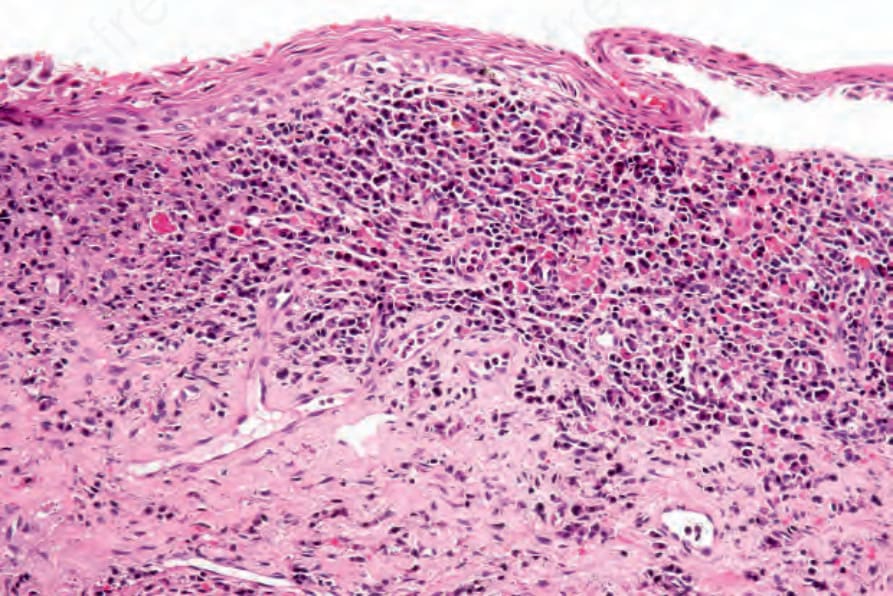
圖 12-64:Zoon 龜頭炎 (Zoon balanitis):注意表皮變薄 (epidermal thinning)、海綿水腫 (spongiosis) 與一條密集的淺層發炎細胞浸潤帶。
Fig. 12.64 Zoon balanitis: note the epidermal thinning, spongiosis, and a dense superficial inflammatory cell infiltrate.