Venous lake
Venous lake
Clinical features Venous lake is a fairly common vascular ectasia that presents on the sun-damaged skin of elderly people and show a predilection for the lip (Fig. 35.458).1–3 Lesions are sometimes multiple and can measure up to 1 cm in diameter.
Pathogenesis and histologic features Histology shows a dilated and congested vein in the superficial dermis. There is no evidence of vascular proliferation (Fig. 35.459). The pathogenesis is possibly related to defective stromal support.
Pathogenesis and histologic features Pathogenic mutations have been found in genes at 9q3334.1 and 12q1114 encoding endoglin (ENG) and activin-like receptor type II-like 1 (ACVRL1 or ALK1 – which is distinct from ALK the anaplastic lymphoma kinase gene), respectively.4–9 Both are related to the TGF-β receptors present on endothelial cells. A reported group of patients has combined juvenile polyposis syndrome and hereditary hemorrhagic telangiectasia with mutations in the SMAD4 on chromosome 18.10–12 Histology shows dilated small vascular channels in the affected organs.
1828 Connective tissue tumors

Fig. 35.458 Venous lake: there is a typical blister-like vascular lesion. By courtesy of the Institute of Dermatology, London, UK.
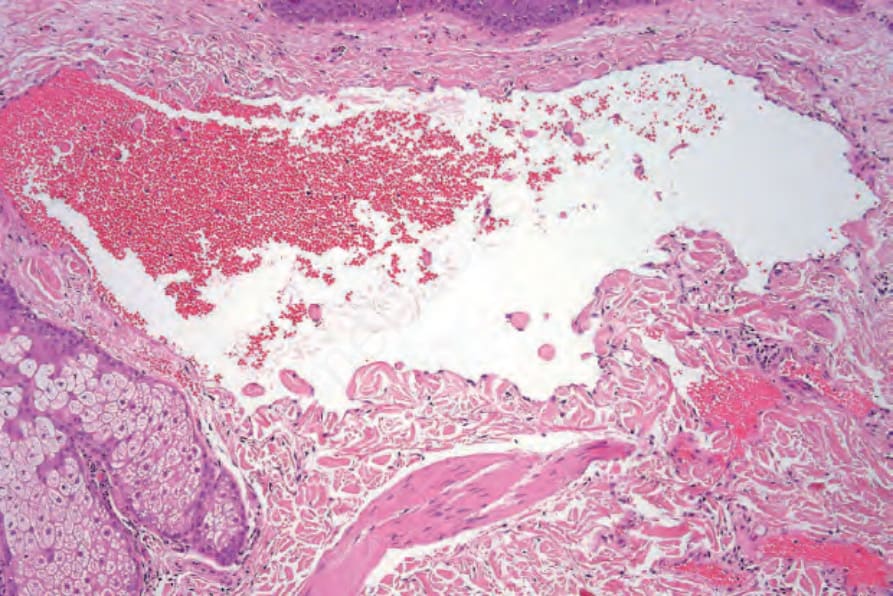
Fig. 35.459 Venous lake: there is striking venous ectasia.