Lipoblastoma/lipoblastomatosis
Lipoblastoma/lipoblastomatosis
Clinical features Lipoblastoma is the circumscribed subcutaneous counterpart of lipoma seen in infancy and childhood.1–6 Its diffuse form (lipoblastomatosis) is infiltrative and typically involves deeper structures, including muscle.
In either form, this condition most often presents in the first 9 years of life (exceptionally at birth, and 10% between the ages of 10 and 16), affects males more often than females, and is typified by a slowly growing, usually subcutaneous mass with size ranging from 1 to 15 cm.1–7 Occasional cases may clinically mimic a hemangioma.8 Most tumors involve the trunk and extremities, followed by the head and neck.7,9 Presentation in the retroperitoneum, mediastinum, and a number of internal organs including the kidney, lung, and heart occurs rarely.10–15 Intrascrotal tumors and
1705 Benign adipocytic tumors and tumorlike lesions
capillaries giving a ‘crow’s feet’ appearance (Fig. 35.18) and may contain very primitive stellate or spindled tumor cells. Hibernoma-like tumors can be seen.32 Mitotic figures are uncommon; some cases show areas of extramedullary hematopoiesis.2
Positivity for S100 protein, CD34 and PLAG1 is seen.7 In addition desmin may be positive in the spindle cells.36 The degree of adipocytic differentiation does not predict risk of recurrence.7 p16 is positive in rare tumors.37
Ultrastructural studies show adipocytes in different stages of development.38
Differential diagnosis Distinction from myxoid liposarcoma, which is extremely rare in children, is made possible by the presence of prominent lobulation and the absence of nuclear hyperchromasia in lipoblastoma. Cytogenetics is very useful in allowing distinction between these tumors, as myxoid liposarcoma lacks rearrangement of 8q11~q13 and instead shows a consistent t(12;16) (q13;p11) involving the DDIT3 and FUS genes. Cytogenetics is also very useful in tumors mimicking ordinary lipoma and hibernoma.37,39 Human insulin injection may induce lipoatrophy with focal lipoblastoma-like changes.40
association with accessory scrota have also been documented.16–19 In the infiltrative type, local recurrence can occur following incomplete excision in up to 19% of cases.3 Familial cases are noted.7 In about 17% of patients central nervous system anomalies are noted including macrocephaly, developmental delay, autism, Sturge-Weber syndrome, and seizures.7 Unusual associations include a patient with glomovenous malformations, epidermal nevus, temporal alopecia and heterochromia in addition to a lipoblastoma.20 A further rare association with cleft palate has been described.21
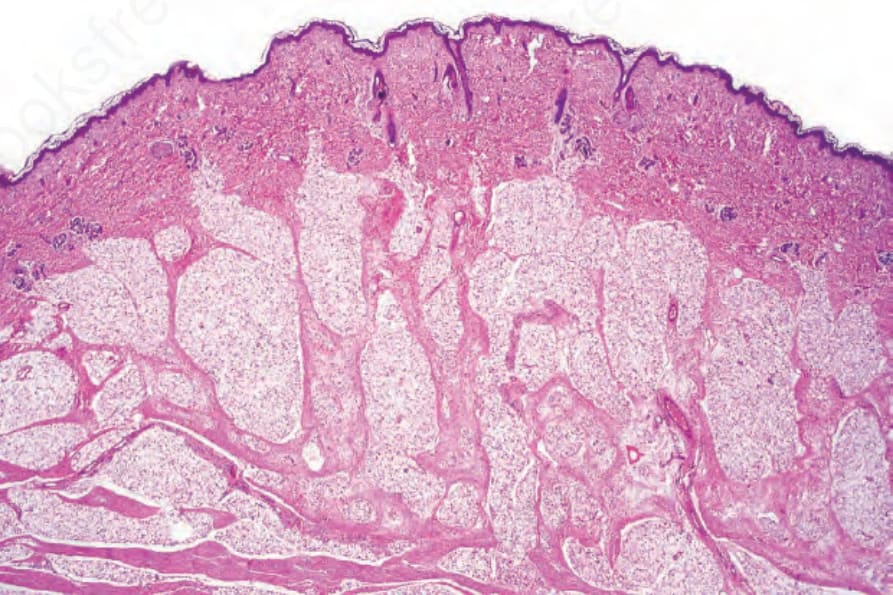
Fig. 35.16 Lipoblastoma: at low power, the tumor is lobulated and composed of mature fat cells and numerous multivacuolated lipoblasts.
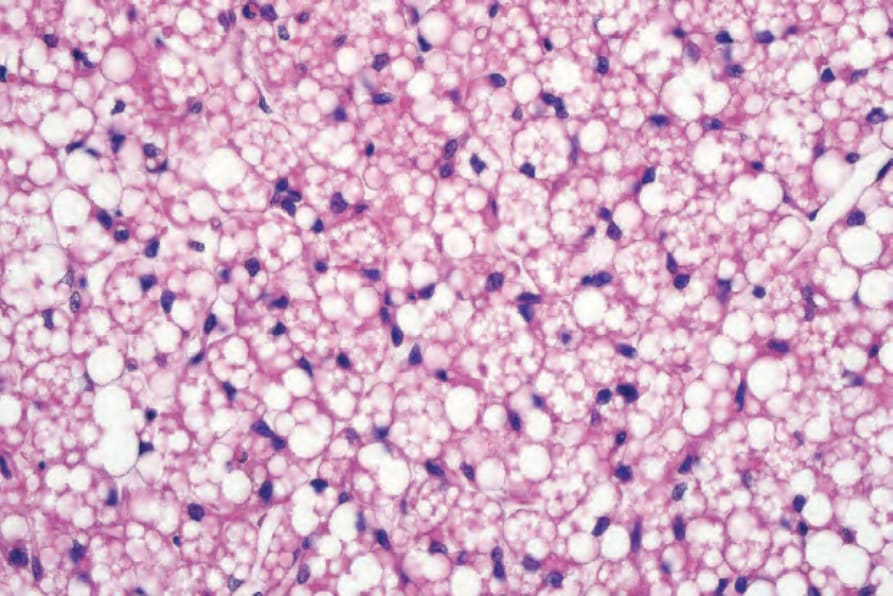
Fig. 35.17 Lipoblastoma: this field shows an admixture of adipocytes and multivacuolated lipoblasts.
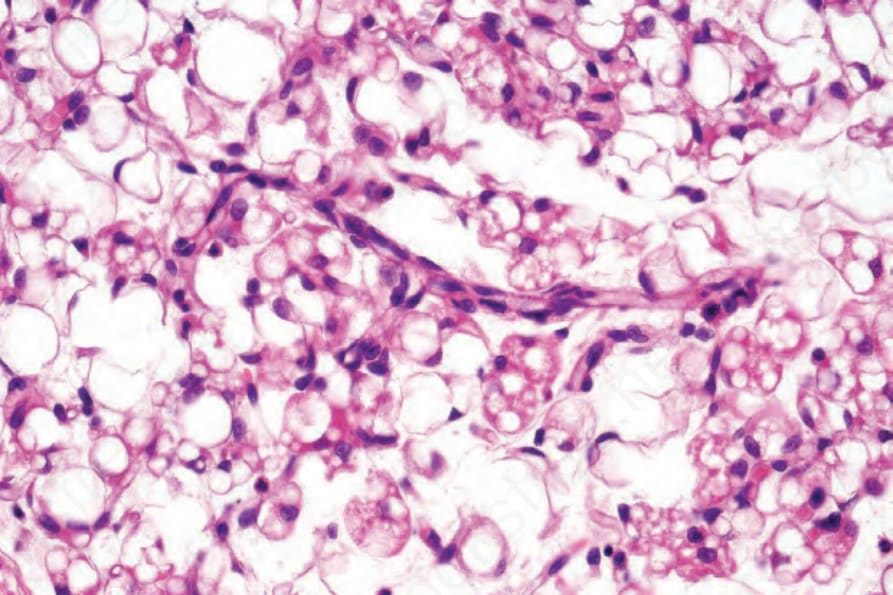
Fig. 35.18 Lipoblastoma: the adipocytes are of varying size. In the center of the field is a thin-walled, branched ‘crow’s foot’ type of blood vessel.