Follicular cysts
Follicular cysts
epidermoid cysts have also been described in association with imiquimod and vemurafenib therapy.9,10
Epidermoid inclusion cysts may also complicate penetrating trauma to the skin, such as by a sewing needle, with resultant implantation of squamous epithelium into the dermis (Fig. 34.3).11,12 Lesions may rarely develop after genital mutilation,13 after vaccination (BCG),14 and after cosmetic surgical procedures including penile girth enhancement therapy15 and abdominoplasty.16
It has been argued that since there is good agreement between the clinical and histologic diagnosis of epidermoid cysts, there is no need to submit these lesions for routine histologic examination. A study found a rate of concordance of about 80% between the clinical and histologic diagnosis, leading the authors to suggest that if the cyst is opened by the surgeon after excision and malodorous cheesy material is obtained, then the lesion can be discarded.17 This is debatable as malignant changes may exceptionally develop within epidermoid cysts (see below). The incidence of malignancy, mainly squamous cell carcinoma developing in epidermoid cysts, was reported as 0.3% in a retrospective study.18 However, most cysts developing malignancy become symptomatic, and it has therefore been proposed that excision should be performed only for symptomatic lesions.19
Most cutaneous cysts are derived from the pilosebaceous unit. Thus, epidermoid, pigmented follicular, and vellus hair cysts, and milia are each derived from the follicular infundibulum.1 Pilar (trichilemmal cysts) are believed to originate in the follicular isthmus of anagen hairs. Steatocystoma is a cyst of the sebaceous duct. Cystic pilomatrixoma is derived from hair matrix cells, and hybrid cysts can originate from any of the above.1
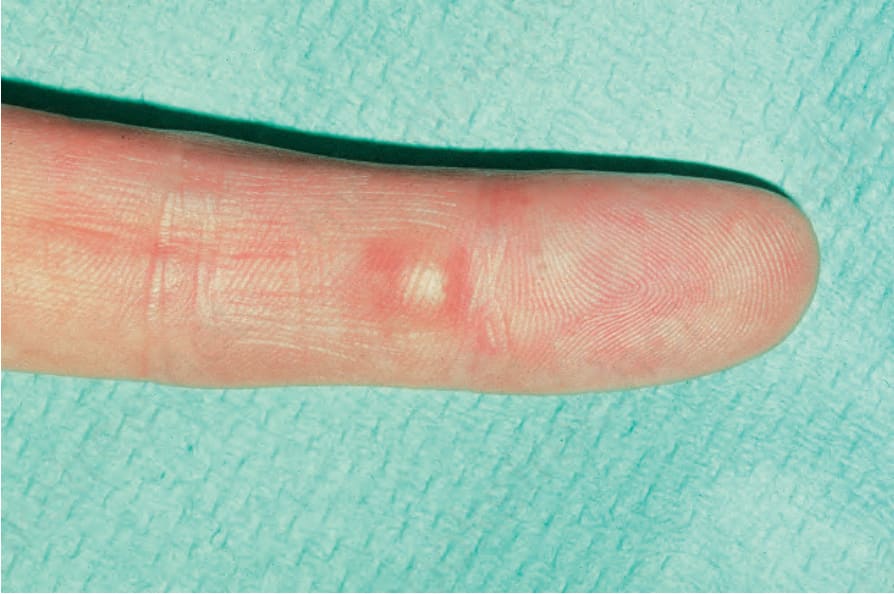
Fig. 34.3 Epidermoid cyst: this implantation variant is at a characteristic site. By courtesy of R.A. Marsden, MD, St George’s Hospital, London, UK.