Common blue nevus
Common blue nevus
Clinical features The common blue nevus is a relatively frequently encountered lesion and, like the Mongolian blue spot and nevi of Ota and Ito, it represents arrested melanocytic migration.1,2 Although it may present anywhere on the integument, there is a predilection for the dorsal aspects of the hands and feet, the buttocks, scalp, and face.3,4 Lesions presenting elsewhere, including the penis and subungual area, are very rare. The nevus is typically a solitary, well-demarcated, dome-shaped, blue or blue-black lesion, usually about 1.0 cm in diameter (Figs 25.224–25.226). Rarely, eruptive and plaque-type giant congenital variants have been documented (see below).5–8 A common blue nevus with satellite lesions is a peculiar variant that can clinically simulate a melanoma.9–11 Blue nevi show a female predominance (2 : 1) and have a very wide age distribution.4 Although typically a tumor of the integument, examples have been reported at a variety of extracutaneous sites, including, oral mucosa, palate, maxillary sinus, conjunctiva, sclera, orbit, lymph nodes, breast, cervix, vagina, prostate, spermatic cord, and pulmonary hilus.7,12–17 Exceptionally, a common blue nevus has been associated with development of melanoma (see malignant blue nevus).18–21 Multiple common blue nevi are rare and can occur in a familial setting.22
In nodal blue nevi, the pigmented spindled and dendritic cells are found within the perinodal fat, capsule, and septa but not within the lymph node parenchyma.16,18,25
On dermoscopy, common blue nevus is characterized by typical steel-blue homogeneous coloration due to the presence of abundant pigment in the dermis.11
1296 Melanocytic nevi
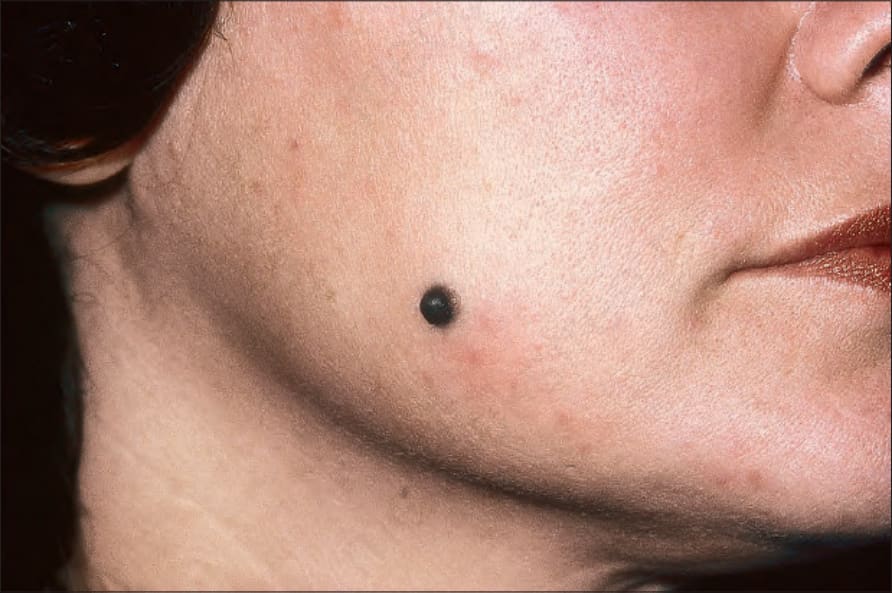
Fig. 25.224 Common blue nevus: typical dome-shaped lesion showing dark blue-black coloration. By courtesy of R.A. Marsden, MD, St George’s Hospital, London, UK.
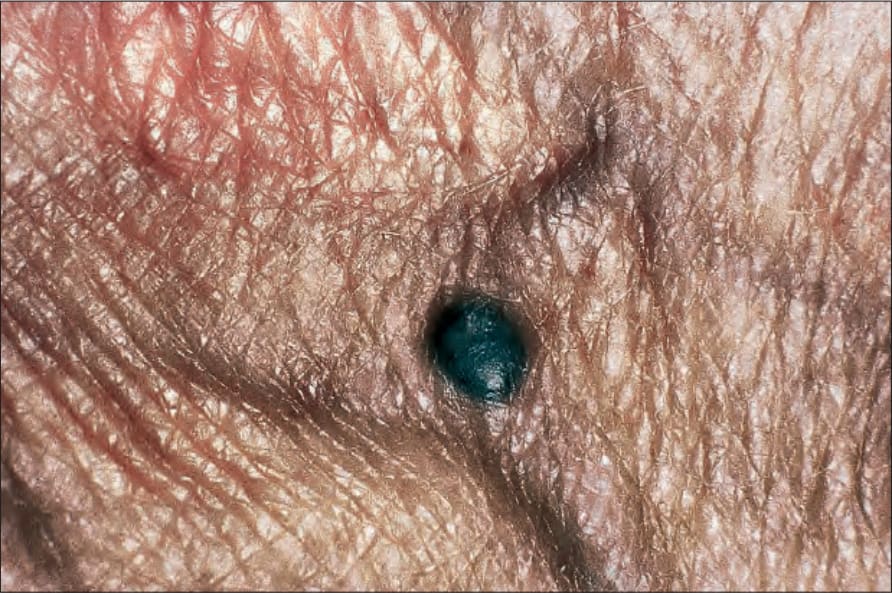
Fig. 25.225 Common blue nevus: the hand is a commonly affected site. By courtesy of A. du Vivier, MD, King’s College Hospital, London, UK.
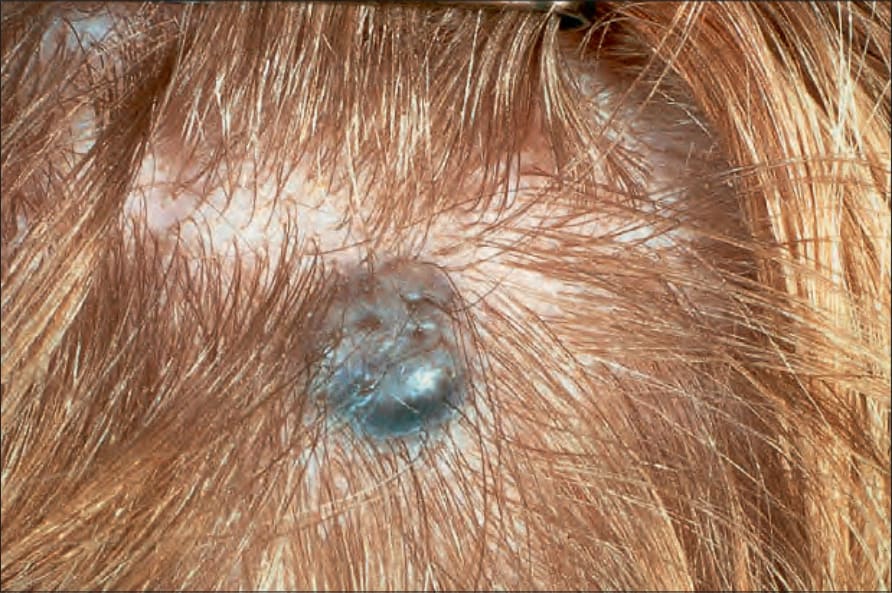
Fig. 25.226 Common blue nevus: the scalp is also frequently affected. By courtesy of the Institute of Dermatology, London, UK.