Pemphigus vulgaris
Pemphigus vulgaris
Clinical features Nail changes in pemphigus vulgaris may be more frequent than previously thought. Nail changes were present in 30 of 64 (47%) affected patients. Sixteen patients had onychomycosis and 14 had nail changes due to pemphigus, confirmed by nail biopsy.1 No correlation was found between duration or severity of the skin disease and nail involvement. Nail involvement may either be an isolated primary manifestation or, more frequently, it may accompany the initial mucocutaneous presentation. It may also occur just before or concurrent with a flare-up of a pre-existing disease.2 Nail symptoms are varied with chronic paronychia and proximal separation of the nail plate from the nail matrix and/or the nail bed, with subsequent nail shedding (onychomadesis) being the most common.2,3 Several nails are usually affected, mainly fingernails. Rare cases of chronic nail involvement restricted to one toenail may lead to permanent loss of nail.4,5 Nail biopsies are only performed when chronic paronychia or onychomadesis precede the mucocutaneous lesions or when only one nail is affected. In this instance, a subungual tumor (Fig. 23.32) or herpetic whitlow must be excluded.6
1139 Longitudinal melanonychia (melanonychia striata)
Histologic features Suprabasal clefting and acantholysis, typical of pemphigus vulgaris, are observed in nail matrix, nail bed, and PNFs, as well as are intercellular deposits of IgG and C3 on direct immunofluorescence.2
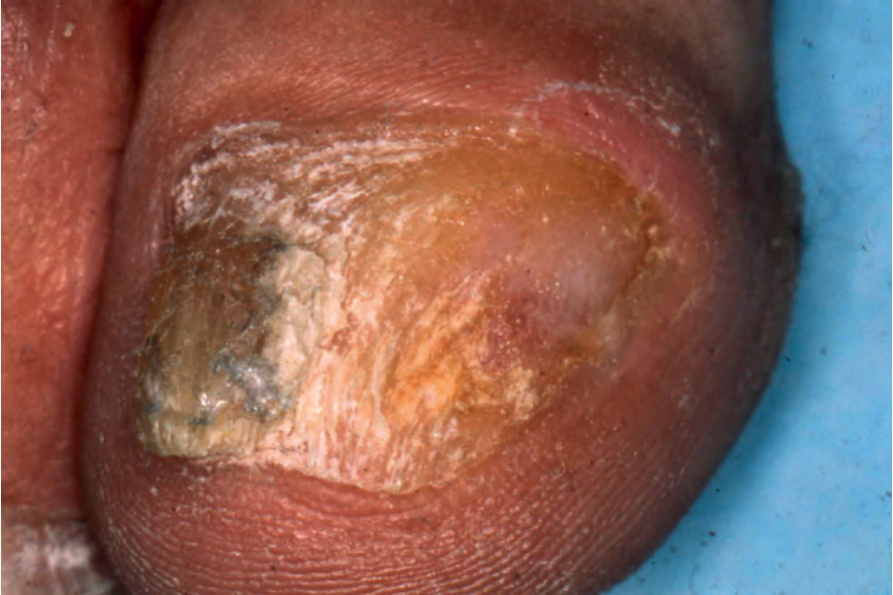
Fig. 23.32 Pemphigus: this example has presented as a subungual destructive tumor of the nail bed. Courtesy of P. Gheeraert MD, Université Libre de Bruxelles.