Pseudofolliculitis
Pseudofolliculitis
Clinical features Pseudofolliculitis (sycosis barbae, pili incarnati, shaving bumps) is an exceedingly common condition which may affect anyone with curly hair, although black males are most often involved (45–83%).1–3 The incidence is also high in Hispanics.4 It develops as a consequence of growth of curved hairs and faulty shaving techniques.1 In this disease, shaving can be a very difficult task.5
are also often present, and the surrounding skin appears erythematous and cyanotic. Telangiectasia is sometimes evident.4,5 Occasionally, extrafacial involvement is encountered.5,6 The condition is usually self-limiting. Resolution is often accompanied by scarring.1 Although young women in their 20s and 30s are most often affected, there are rare reports of male and childhood involvement.7,8 A history of episodes of flushing and seborrhea is common.4 Comedones are not a feature and, in contrast to rosacea, ocular involvement does not occur.1,4
There are occasional reports of associated inflammatory bowel disease (ulcerative colitis more often than Crohn disease), erythema nodosum, and pegylated IFN alpha-2B and ribavirin therapy.4,9–11
Patients present with firm skin-colored or erythematous inflammatory papules and nodules in the shaving areas of the face, often associated with postinflammatory hyperpigmentation (Fig. 22.208).2 Pustule formation generally results from secondary bacterial infection. Hair shafts can sometimes be visible just under the skin surface. The use of epiluminescence dermoscopy can be very useful for visualization of the ingrowing hairs at the sites of individual papules.6 The mustache region is generally spared.1 Scalp shaving may also result in the condition.2 Black and particularly hirsute females may also be affected, and then the axillae and pubic regions are especially involved.4 Hair waxing and pulling with tweezers can have a similar effect.4
1128 Diseases of the hair
Pseudofolliculitis has been associated with ciclosporine and renal transplant recipients.7
Pathogenesis and histologic features Pseudofolliculitis develops as a result of two mechanisms: curly or kinky hair in black individuals tends to curve back directly into the adjacent skin (extrafollicular penetration).1 It continues to grow through the epidermis into the dermis where it may reach a length of 2–3 mm. As it grows longer, it tends to ‘spring back’ out of the skin.8 Shaving techniques that stretch the skin can result in the cut hair end retracting under the epidermis when the skin is released (transfollicular penetration).2
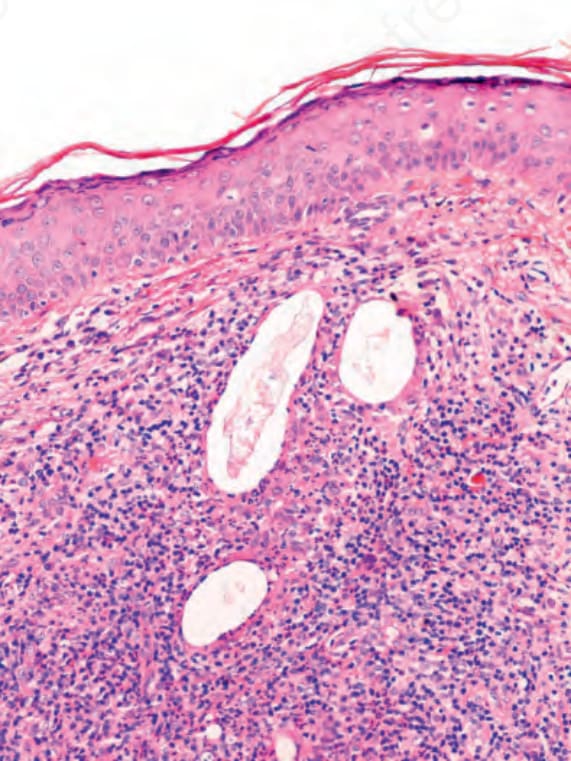
Fig. 22.207 Demodicosis: note some Demodex folliculorum mites free in the dermis, surrounded by an inflammatory cell infiltrate.
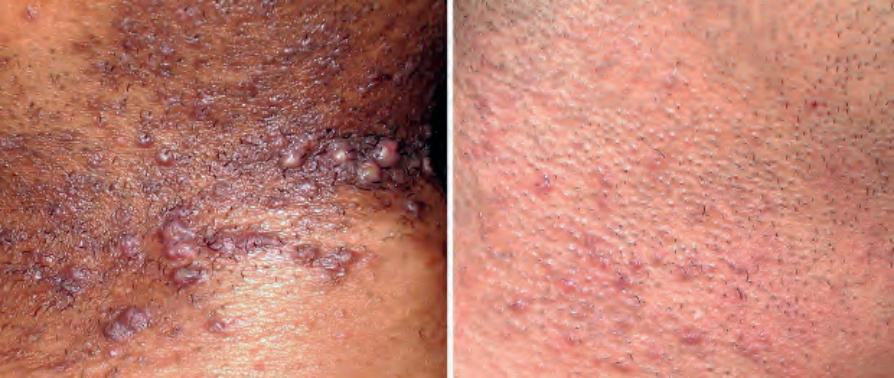
Fig. 22.208 Pseudofolliculitis: predominantly seen in patients of African or Hispanic ancestry. Numerous papules and curved hairs in the beard area.