Uncombable hair syndrome
Uncombable hair syndrome
Clinical features Uncombable hair syndrome (pili canaliculi et trianguli, cheveux incoiffables, spun glass hair) is a disorder of the hair shaft first described by Dupré, Rochiccioli, and Bonafé in 1973.1 It is sporadic or inherited as a monogenic autosomal dominant disorder with variable penetrance.2
The condition is restricted to the scalp and is characterized by hair that is unruly and impossible to comb flat (Fig. 22.180).3 It is frequently seen in children and presents between the ages of 3 months and 3 years. The quantity of hair is usually normal, but it appears dry, dull, frizzy, short, and light in color. It can also be observed in dark hair, but it is usually not as perceptible. The hair is described as unmanageable. Hair fragility is not usually a feature. Partial forms have also been documented in which a localized area of uncombable hair is seen in the frontal and occipital areas.2 The condition tends to improve with time.4,5
Usually, uncombable hair syndrome occurs in isolation without an associated syndrome. However, it has been described with ectodermal dysplasia, retinal dysplasia/pigmentary dystrophy, juvenile cataracts, abnormalities of the digits, tooth enamel anomalies, oligodontia, phalangoepiphyseal dysplasia, angel-shaped phalangoepiphyseal dysplasia, loose anagen syndrome, neurofibromatosis type I, Wilson disease, alopecia areata, lichen sclerosus, anagen hair syndrome, and in a pre-menarche girl with a yolk sac tumor (endodermal sinus tumor). 6–15
Pathogenesis and histologic features The pathogenesis is unknown. It has been hypothesized that the disease results from premature keratinization of a triangular-shaped internal root sheath, the latter resulting from an abnormally shaped dermal papilla.4
1115 Irregularities of the hair shaft
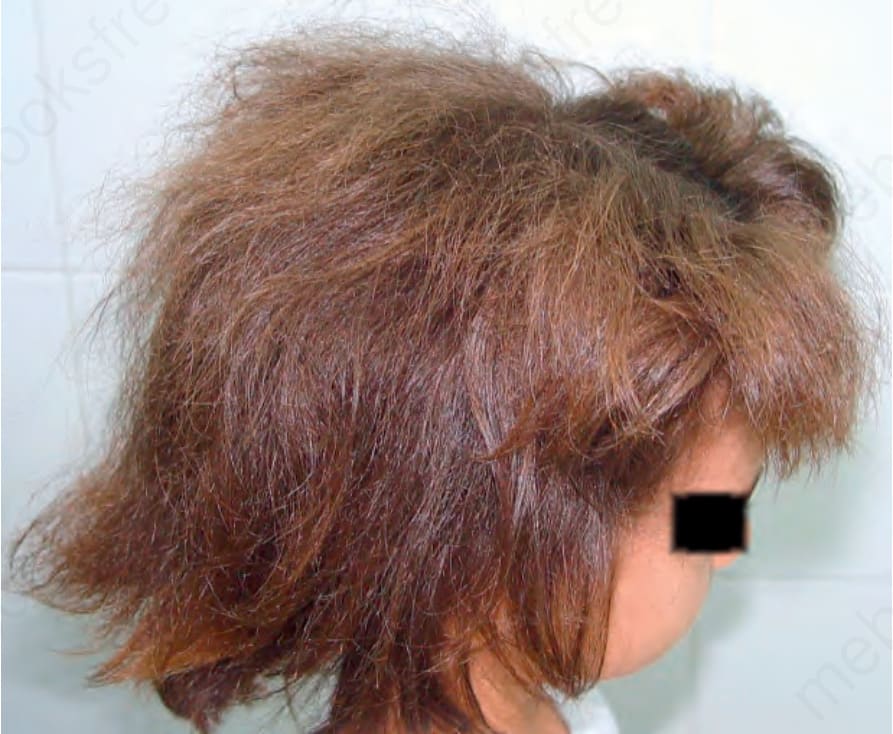
Fig. 22.180 Uncombable hair syndrome: in this condition, the hair resembles spun glass. The condition only affects the scalp. Courtesy of A.M. Aristizábal, MD, CES, Medellín, Colombia.
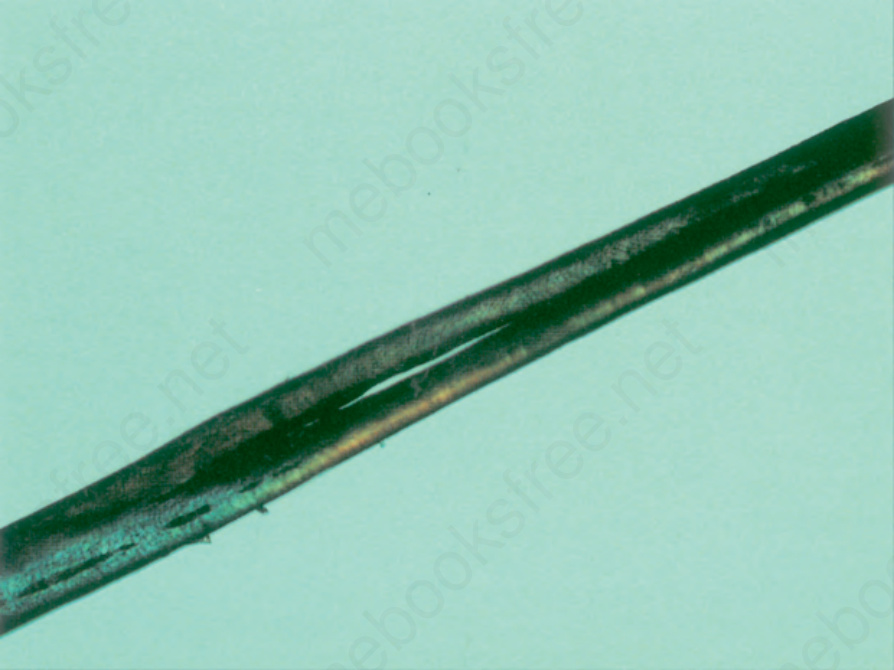
Fig. 22.182 Pili bifurcati: the hair is split within the longitudinal mid-zone and then rejoins. Courtesy of David de Berker, MD, Bristol Royal Infirmary, Bristol, UK.