Trichoptilosis
Trichoptilosis
Clinical features Trichoptilosis (split ends) is one of the acquired structural abnormalities of the hair shaft. It is very frequent and defined as a longitudinal fracture, splitting or fraying of the distal end of the hair. It is observed more commonly in women and children with long and poorly groomed hair as a result of the cumulative effects of chemical and physical trauma. It has also been observed in numerous hair shaft disorders including monilethrix, TTD, Netherton syndrome, and pili torti. Trichoptilosis is often seen with trichorrhexis nodosa and trichoclasis. Selenium shampoo, ketoconazole 2% shampoo, and hair gels have been regarded as contributing factors.1
Pathogenesis and histologic features The pathogenesis is loss of cuticular cells due to wear of the distal portion of the shaft leaving the cortex exposed, resulting in a split. The distal part of the hair separates longitudinally into two or more divisions that extend 2.0–3.0 cm or occasionally longer (Fig. 22.179). Central trichoptilosis has also been observed as a longitudinal split in the hair shaft without involvement of the proximal and distal ends of the split.2,3
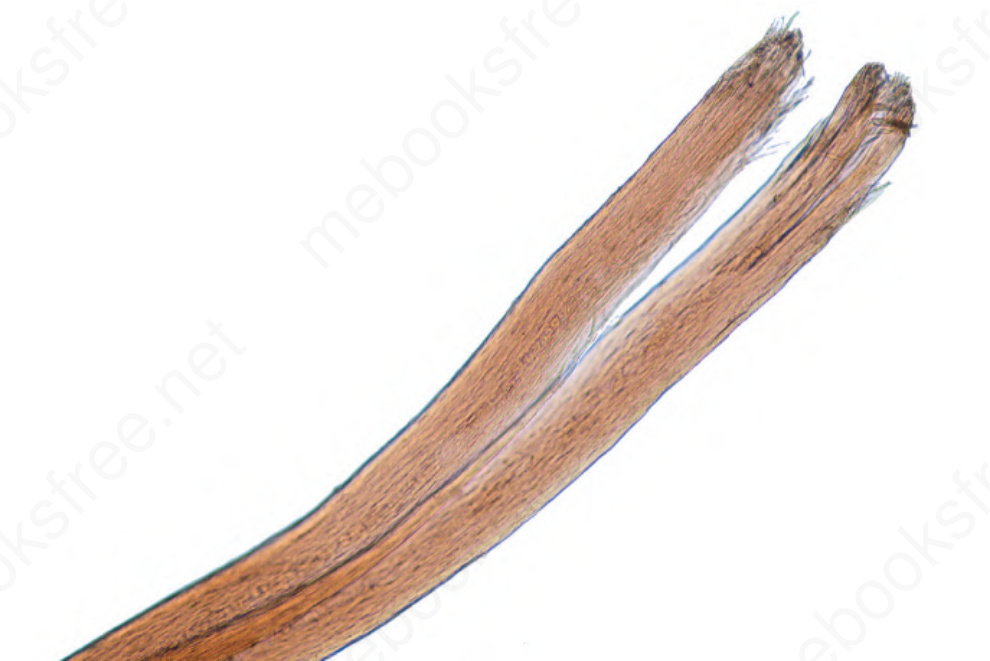
Fig. 22.179 Trichoptilosis: typical split ends commonly seen in long normal hairs. The hair tip is more vulnerable to trauma than more proximal areas.
Differential diagnosis Trichoptilosis must be differentiated from pili bifurcati. In the latter condition, each hair division produces two separate parallel branches that subsequently fuse to form a single hair shaft. In contrast to trichoptilosis, in pili bifurcati, a cuticle covers each branch.4