Traction alopecia
Traction alopecia
Clinical features Traction alopecia is another form of traumatic alopecia secondary to the application of tensile forces to the hair of the scalp with a histologic pattern similar to that of trichotillomania. It is a reversible form of alopecia which presents in adults and children.1 It may become a permanent alopecia and result in a scarring alopecia if the traction is intense and sustained. Its causes are varied and often related to cultural and cosmetic practices. The most important are secondary to grooming styles such as excessive brushing, hair weaves, tight braiding, ponytails/pigtails, buns (chignon alopecia), cornrows, or wearing elastic hair bands.2 Traction alopecia is particularly frequent in individuals of African descent (ancestry) (Fig. 22.86).3,4 Other variants of traction alopecia may occur in nurses as a result of the use of a cap and among Sikh males from wearing a turban.5,6 It has also been reported from hair extensions and a recognized feature as a sequel of torture.7,8
The hair loss usually occurs in the frontal and temporal areas but depends on the hairstyle used, and it is particularly noticeable at the margin of the tightly styled hair, leading over time to a widening of the parting lines, with retained hairs along the frontal and temporal rim called the ‘fringe’ sign (Fig. 22.87).9,10
A recent observation with potential therapeutic implications is the finding that the piloerection induced by α1-AR agonists makes hair extraction difficult and this indirectly protects against the development of alopecia.11
Histologic features The biopsy should be processed in short horizontal sections as this may provide more information, particularly when the traction details are not very clear.12
The microscopic features are biphasic and depend on the time at which the biopsy is taken. In the early phases, there is a normal number of terminal hair follicles, some inflammation, abundant hair follicles in telogen and catagen, and trichomalacia (Fig. 22.88). As the process evolves, the terminal hair follicles disappear and only miniaturized follicles mixed with fibrous tracts are left. The number of sebaceous glands may be diminished.10,13
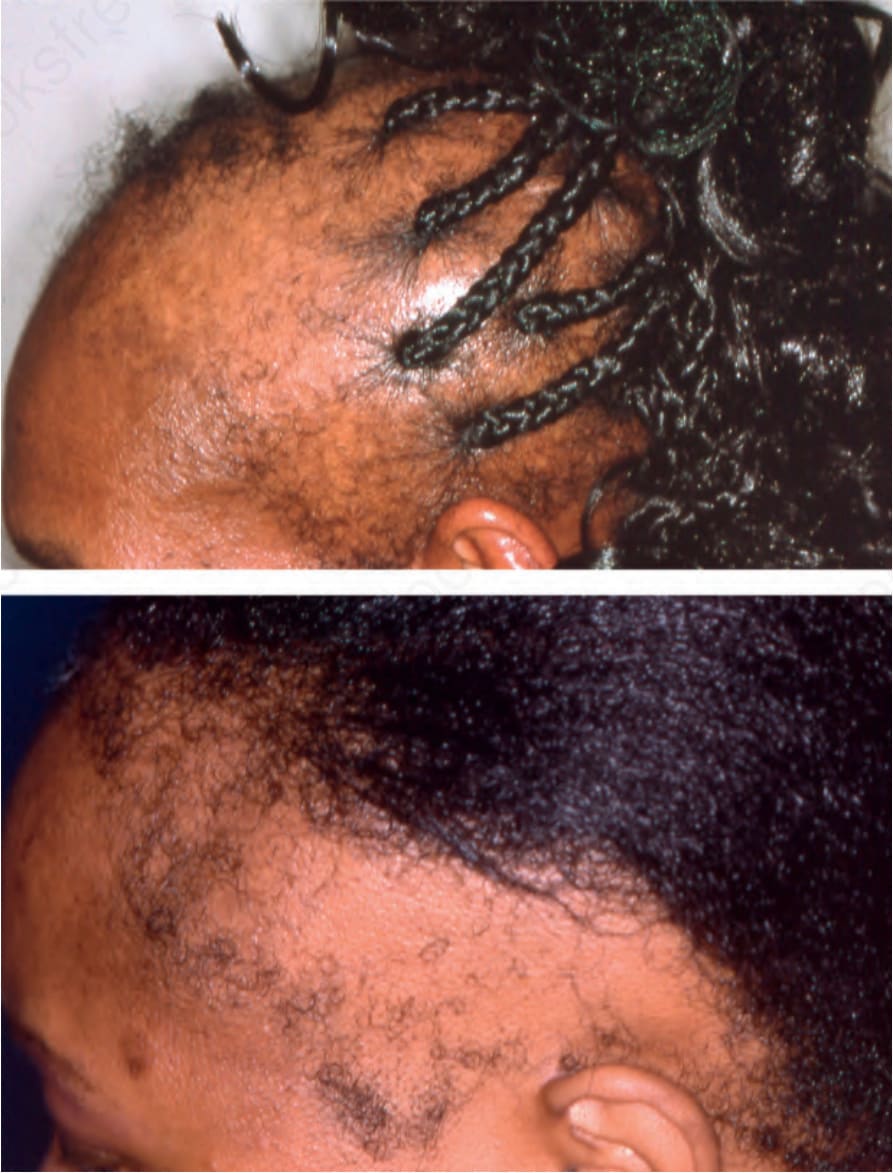
Fig. 22.86 Traction alopecia: prolonged traction for extended periods of time results in severe frontal hair loss. Pronounced changes are observed. Courtesy of P. Reygagne, MD, Centre Sabouraud, Paris, France.
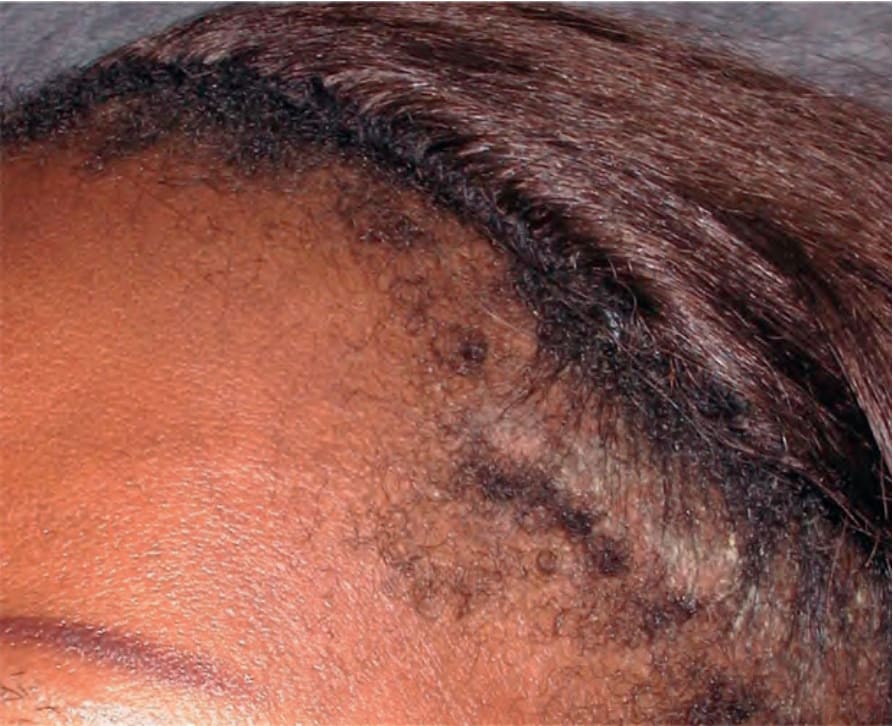
Fig. 22.87 Fringe sign: note the retained hairs along the frontal and temporal rim. Courtesy of J. Cadavid, MD, Clínica Medellín, Medellín, Colombia.
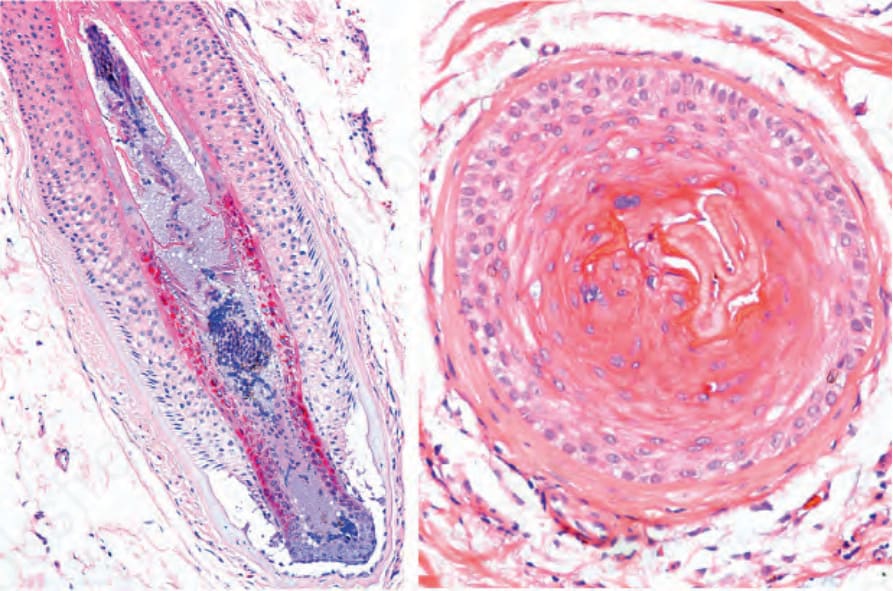
Fig. 22.88 Traction alopecia, early stage: vertical and horizontal sections of a hair follicle showing marked damage to the inner root sheath.