Pityriasis alba
Pityriasis alba
Clinical features Pityriasis alba is one of the most common localized disorders of hypopigmentation in children. The incidence varies between 1.9% and 5.2%.1 Young adults may also be affected. It characteristically presents as ill-defined, slightly scaly macules of hypopigmentation on the face with predilection for the cheeks (Fig. 20.22).2–8 Involvement of the neck, trunk, and limbs may also be seen and a variant with lesions restricted to the knees has been documented.9 Patients often (but not always) have an atopic diathesis. Pityriasis alba tends to be slightly more common in males and in patients with darker skin. A case associated with the antiepileptic drug Zonisamide has been reported.10
Ultrastructurally, the melanocytes display degenerative changes and keratinocytes show a reduced number of melanosomes.6
A possible variant of the disease has been described as ‘pigmenting pityriasis alba’, in which there is facial involvement only, with macules displaying a central area of bluish hyperpigmentation surrounded by a halo of hypopigmentation.11 Interestingly, affected patients had an associated dermatophyte infection in 65% of cases. This variant is more commonly seen in patients with pigmented skin.1
An extensive variant of pityriasis alba has been described but it is not clear whether this represents an example of progressive macular hypomelanosis.12–14
Pathogenesis and histologic features The pathogenesis of the disease is not well understood but there is a clear link to atopic eczema, and some regard it as a form of postinflammatory hypopigmentation secondary to eczema. One large study found a higher incidence of the disease in association with higher sun exposure and personal hygiene (long and frequent baths and mechanical exfoliation) in atopic individuals.1,15 Low copper levels have been demonstrated in patients with the disease.1
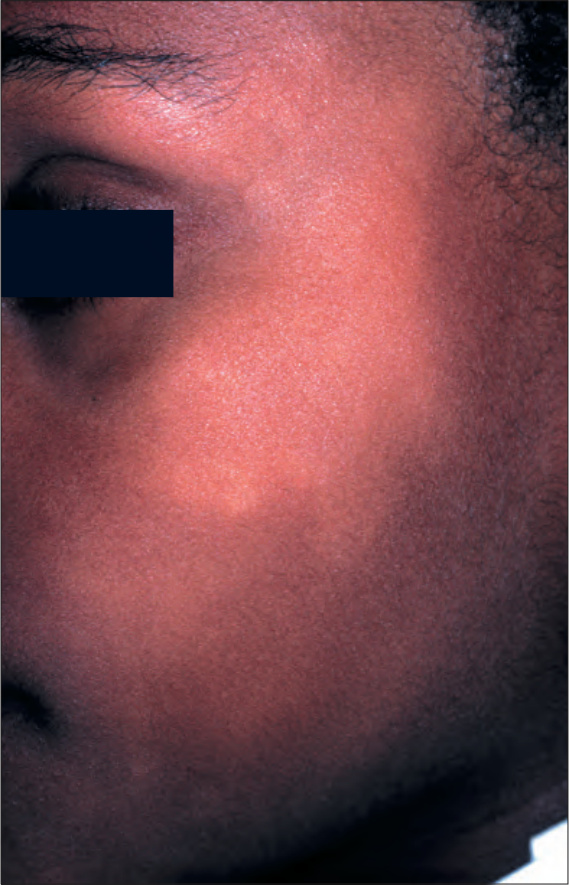
Fig. 20.22 Pityriasis alba: ill-defined patches of hypopigmentation on the face. By courtesy of the Institute of Dermatology, London, UK.