Bartonellosis
Bartonellosis
Clinical features Bartonellosis (Carrión disease) is a biphasic disease caused by Bartonella bacilliformis, an organism that is closely related to B. henselae and B. quintana.1–5 The initial stage of infection (hematic phase) is referred to as Oroya fever. Patients are acutely ill with pyrexia, rigors, myalgia, and a
Histopathological examination of the verrucous lesions reveals an exuberant intradermal capillary proliferation lined by swollen endothelial cells, often accompanied by a neutrophilic infiltrate (Fig. 18.129). Some of the superficial and peripheral vessels may be dilated, whereas deep dermal or subcutaneous nodules tend to have a more compact vascular and endothelial cell proliferation.3,15 Occasional cases harbor a cytologically atypical endothelial proliferation, resulting in potential confusion with malignant vascular tumors.16 There is a background mixed inflammatory cell infiltrate of variable intensity comprising neutrophils, histiocytes, lymphocytes, and plasma cells. Careful examination of the endothelial cells in early lesions may reveal characteristic intracytoplasmic aggregates of B. bacilliformis,
874 Infectious diseases of the skin
referred to as Rocha-Lima inclusions.3 These may be highlighted with the aid of a Giemsa preparation. Ultrastructurally, the endothelial inclusions represent degraded bacteria and extracellular matrix components contained within cell surface invaginations.3 Bacteria are conspicuously absent from late lesions.
Differential diagnosis Verruga peruana should be distinguished from Kaposi sarcoma, BA, lobular capillary hemangioma (pyogenic granuloma), and true epithelioid vascular neoplasms (such as epithelioid hemangioma and epithelioid hemangioendothelioma).
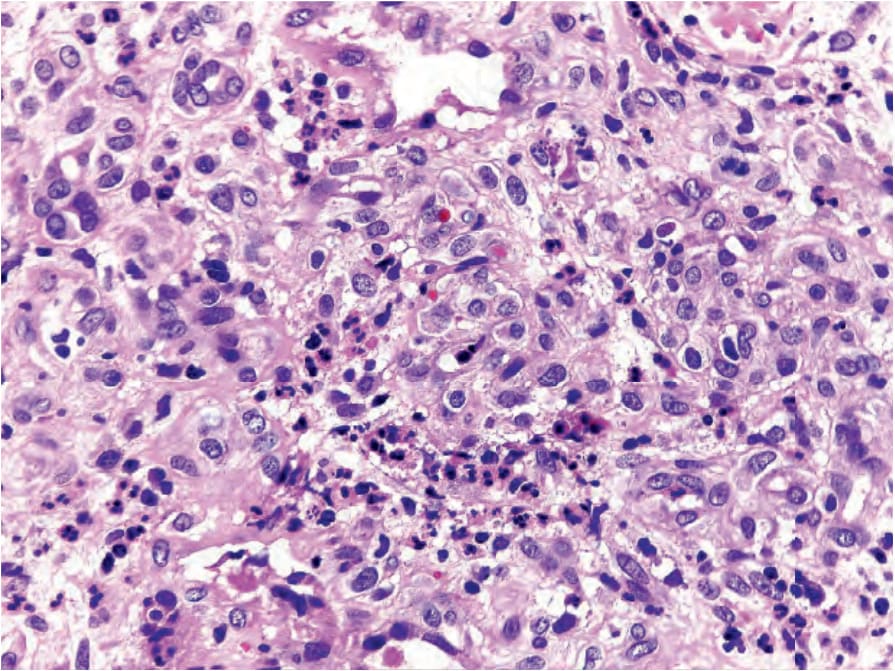
Fig. 18.129 Verruga peruana: there is an exuberant vascular proliferation, with endothelial prominence and a background neutrophilic infiltrate. By courtesy of F. Bravo, MD, Lima, Peru.
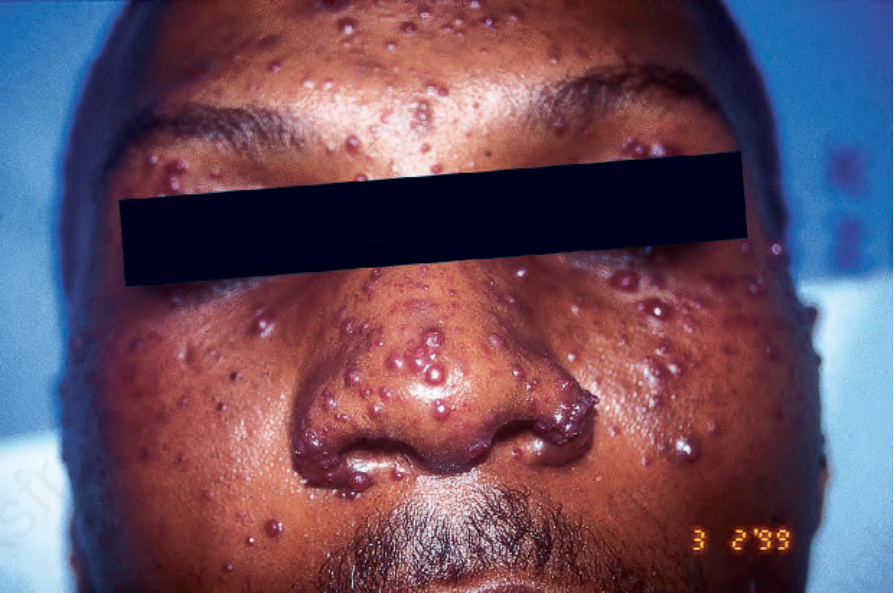
Fig. 18.130 Bacillary angiomatosis: numerous papules and nodules are present. By courtesy of N.C. Dlova, MD, Nelson R. Mandela School of Medicine, University of KwaZulu-Natal, South Africa.