Infective folliculitis
Infective folliculitis
Clinical features Infection of hair follicles is probably the commonest form of skin infection. It is usually due to S. aureus (impetigo of Bockhart) and, although disfiguring, is self-limiting.1–8 Pustular folliculitis usually implies infection of the ostium and upper part of the follicle. It presents as numerous small red and tender pustules, which discharge pus and quickly resolve without scarring
867 Infective folliculitis
(Fig. 18.112). Staphylococcal carriers tend to have recurrent infections.9 The role of community-associated CA-MRSA in cutaneous infections, including folliculitis, has been emphasized in recent years.10,11
P. aeruginosa is a well-recognized cause of epidemics of folliculitis associated with swimming pools, whirlpools, or spa baths.12–14 These shared facilities can be infected by Pseudomonas if they became alkaline and if the chlorine content drops. Nevertheless, moisture and occlusion are necessary to affect normal skin. For this reason, lesions of this type are found only under the area covered by bathing costumes. Other Gram-negative bacteria such as Klebsiella spp., Escherichia coli, Enterobacter spp., and Proteus spp. have been implicated in the pathogenesis of folliculitis in patients receiving long-term antibiotic therapy for treatment of acne or rosacea.15 Extensive folliculitis may be an early manifestation of HIV infection.1 Micrococcus spp., which are considered commensal organisms, may be a cause of folliculitis in patients with HIV infection.16 Folliculitis due to Acinetobacter baumanii has been reported in a patient with AIDS.17
A furuncle or boil is a more exuberant form of suppurative folliculitis. It is common in young adults and usually affects the skin of the face, neck, buttocks, and axillae (Figs 18.113–18.115).1 Lesions can be up to 2 cm across and the inflammation is not confined within the follicle, but is associated with much surrounding erythema and often systemic symptoms.
After discharge of the pustular necrotic core, the lesion heals rapidly, but with scarring. A deep folliculitis due to S. aureus may affect the beard area; this form is termed sycosis or folliculitis barbae. CA-MRSA is strongly associated with recurrent furunculosis in the United States. Nasal carriage of S. aureus occurs in 60% of individuals and represents a major risk factor for the development of recurrent furunculosis.11
A carbuncle is a variant of a furuncle with multiple tracks and routes of discharge. It is most commonly seen in older men and may be associated with systemic symptoms.1,5
Acute paronychia is comparable to a folliculitis in that it is a painful suppurative infection of the nail fold, most commonly caused by S. aureus; it heals rapidly on release of the pus (Fig. 18.116). A rare scarring alopecia
868 Infectious diseases of the skin
adjacent follicular epithelium. The superficial suppurative folliculitis may discharge through the ostium and rapidly resolve. Alternatively, it may progress more deeply and rupture through the follicular epithelium; the abscess then extends into perifollicular dermis and surrounds the whole follicle. The follicular epithelium and hair shaft with pus then form the purulent necrotic core of the furuncle or boil. Healing is preceded by a lymphohistiocytic or even granulomatous phase and is followed by scarring and loss of hair in the involved area. A carbuncle is associated with more persistent suppuration, much more fibrosis, and granulation tissue. Panton-Valentine leukocidin-producing strains of S. aureus have been linked to the evolution of deep-seated, often multiple furuncles.11,19
Although most of the suppurative forms of folliculitis are due to S. aureus, other causal conditions include dermatophytosis, herpes simplex, and syphilis; the features of these infections are described under the appropriate headings elsewhere in this chapter.
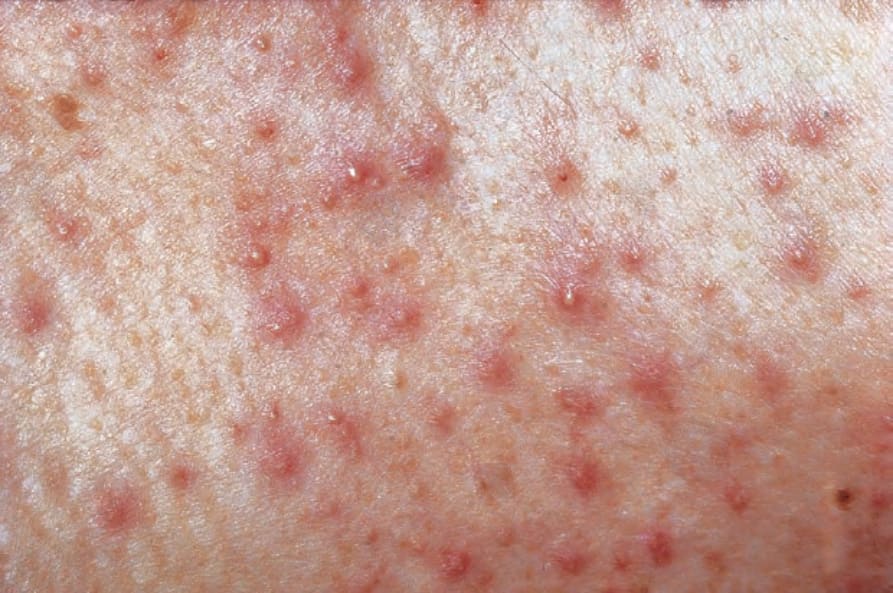
Fig. 18.112 Folliculitis: characteristic small pustules with surrounding erythema. By courtesy of R.A. Marsden, MD, St George’s Hospital, London, UK.
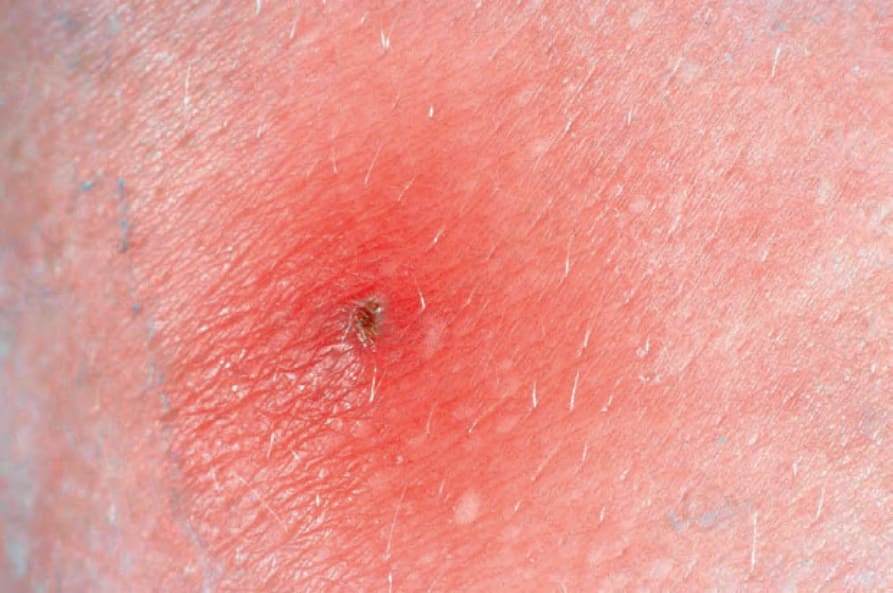
Fig. 18.113 Furuncle: early lesion characterized by edema and erythema. By courtesy of the Institute of Dermatology, London, UK.
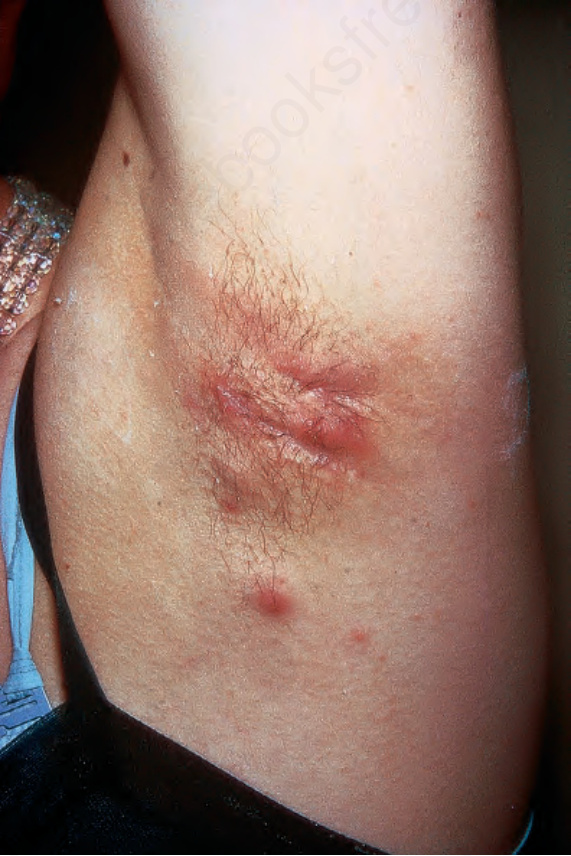
Fig. 18.114 Furuncle: multiple erythematous nodules in the axilla, which is a commonly affected site. The lesions are exquisitely painful. By courtesy of R.A. Marsden, MD, St George’s Hospital, London, UK.
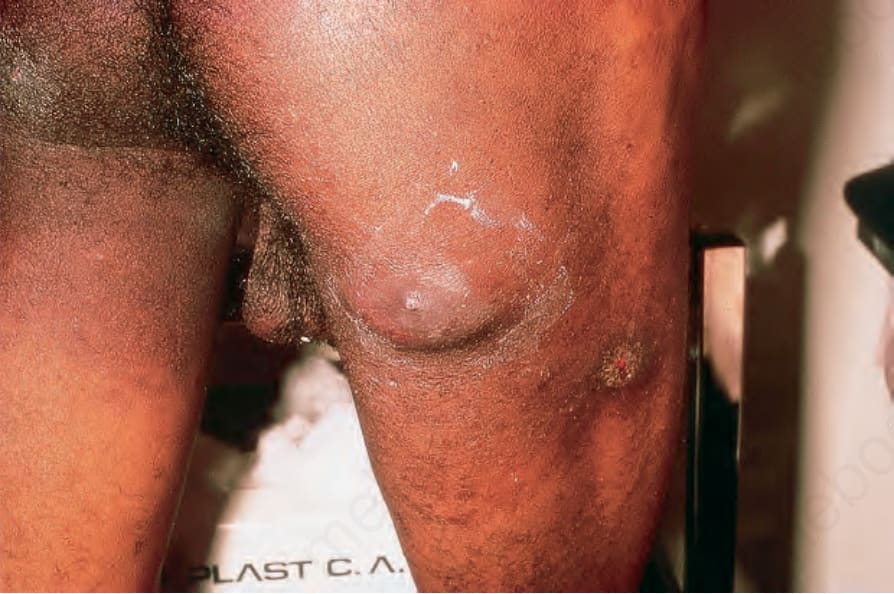
Fig. 18.115 Furuncle: note the large swelling on the thigh. This patient was HIV positive. By courtesy of C. Furlonge, MD, Port of Spain, Trinidad.
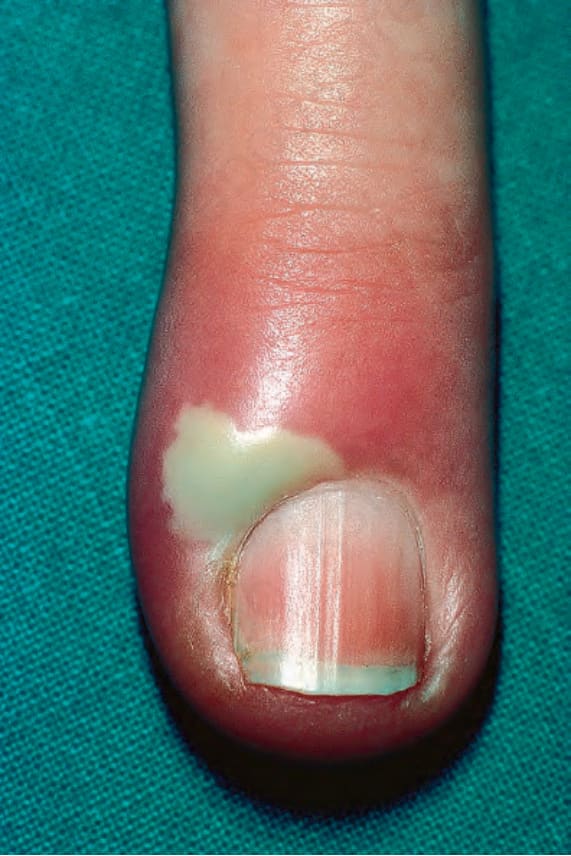
Fig. 18.116 Acute paronychia: pus and erythema are present. By courtesy of E.E. Gluckman, MD, King’s College Hospital, London, UK.