Plane warts
Plane warts
Clinical features Plane warts (verrucae plana), usually caused by HPV2, 3, or 10, are flat, smooth, and a few millimeters in diameter with typically little change in color from the adjacent skin, although they may appear gray-yellow or pale brown (Fig. 18.17).1–3 HPV5 is rarely implicated in HIV-infected patients.4 Plane warts may also result from HPV types 26–29 and 41 infection.5 They affect the face, backs of the hands, and the shins. There may be only a few present, but occasionally they are very numerous and become confluent in areas of scratching (koebnerization).6 Plane warts are common in children and may be seen in women, but are not usually found in males after puberty
832 Infectious diseases of the skin
cell infiltrate.2,11–13 The lymphocytes encountered in regressing lesions have been found to express the cytotoxic granule granzyme-B.14 Extravasation of erythrocytes may be a feature and edema of the papillary dermis is frequently present.15
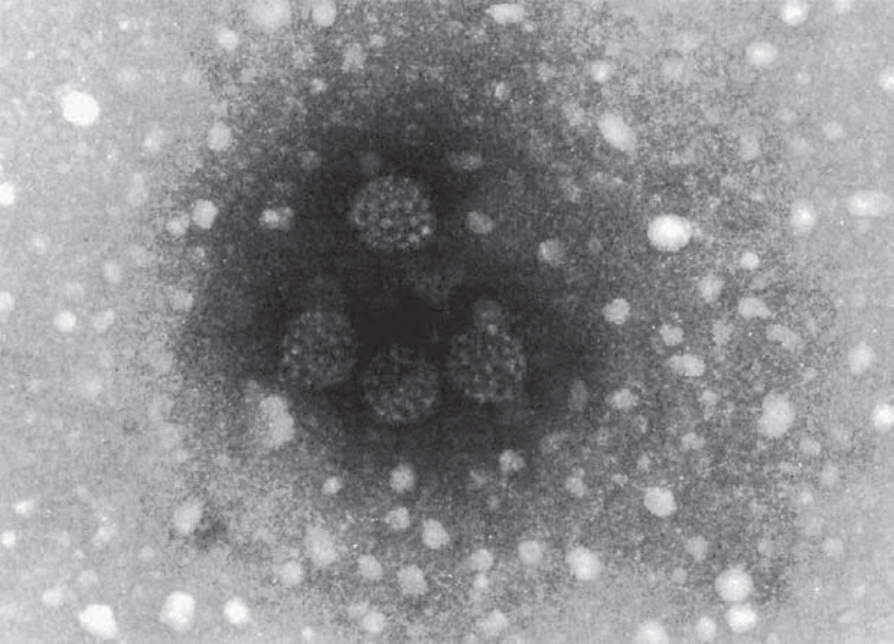
Fig. 18.16 Plantar wart: this honeycomb arrangement of HPV is characteristic. By courtesy of I. Chrystie, FIMLS, St Thomas’ Hospital, London, UK.
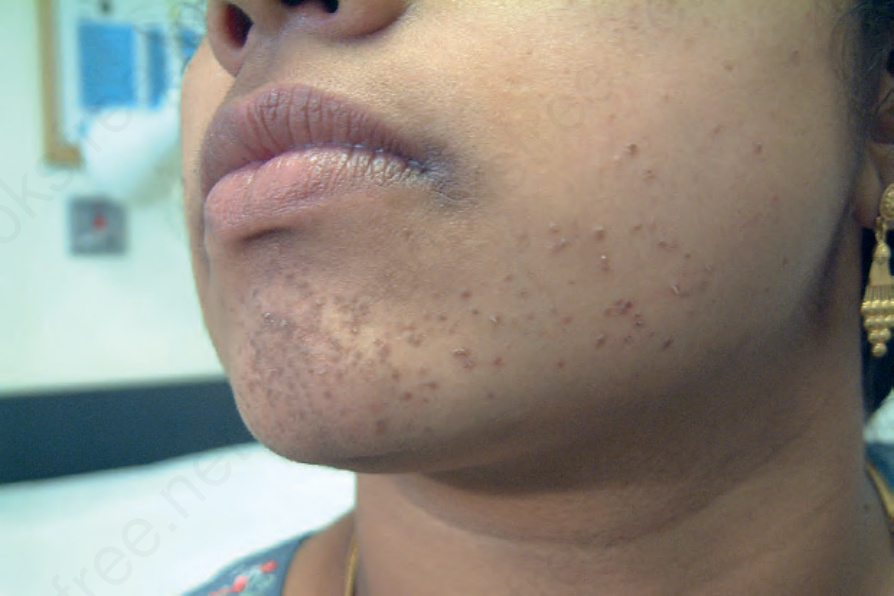
Fig. 18.17 Plane wart: note the typical flat, flesh-colored papules, which have extended in a linear distribution due to scratching (Koebner phenomenon). By courtesy of B Al-Mahmoud, MD, Qatar, Oman.
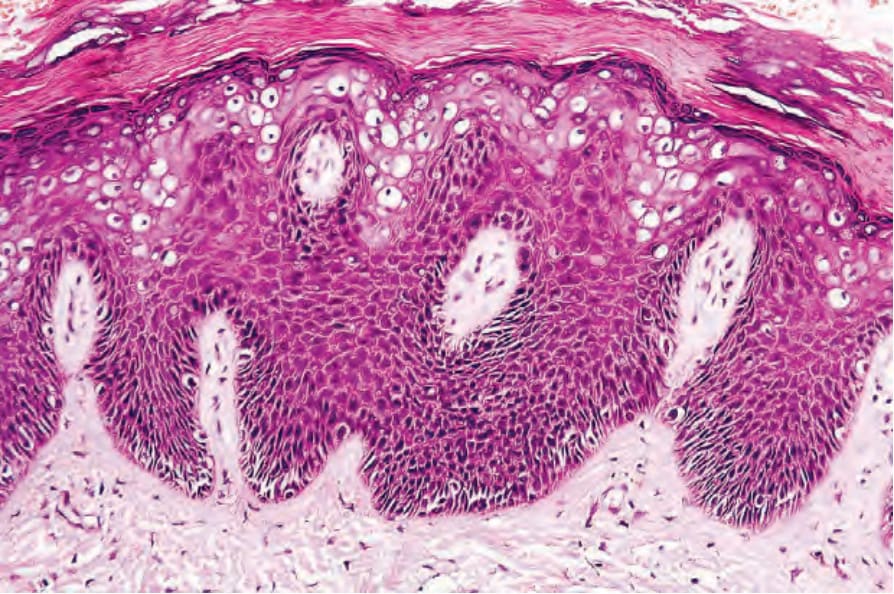
Fig. 18.18 Plane wart: there is hyperkeratosis and slight regular acanthosis; papillomatosis is only mild. Note the prominent cytoplasmic vacuolation.