Arsenic
Arsenic
Clinical features Arsenic exposure can be encountered under a variety of circumstances.1–7 It may be a constituent of proprietary medicines and is an active component of pesticides and herbicides.3 Fowler’s solution – once used in the treatment of psoriasis and other dermatological disorders – contained 1% potassium arsenate.1,3 The most common source of arsenic exposure now is through contaminated groundwater. For many years (as a consequence of its use as an insecticide), it was an ingredient in cigarette tobacco.2,4 High levels of arsenic occur in the mining and smelting industries.3
Exposure to arsenic may cause acute arsenical dermatitis, although more commonly patients are seen with long-term sequelae.2–7 The former presents
Iododerma is associated with multiple myeloma, polyarteritis nodosa, lymphoma, and glomerulonephritis.3,7,12 Renal insufficiency may be a predisposing factor.
Pathogenesis and histologic features Although delayed hypersensitivity is believed to represent the underlying pathogenesis, the precise mechanism is unknown. Acute lesions are
660 Cutaneous adverse reactions to drugs
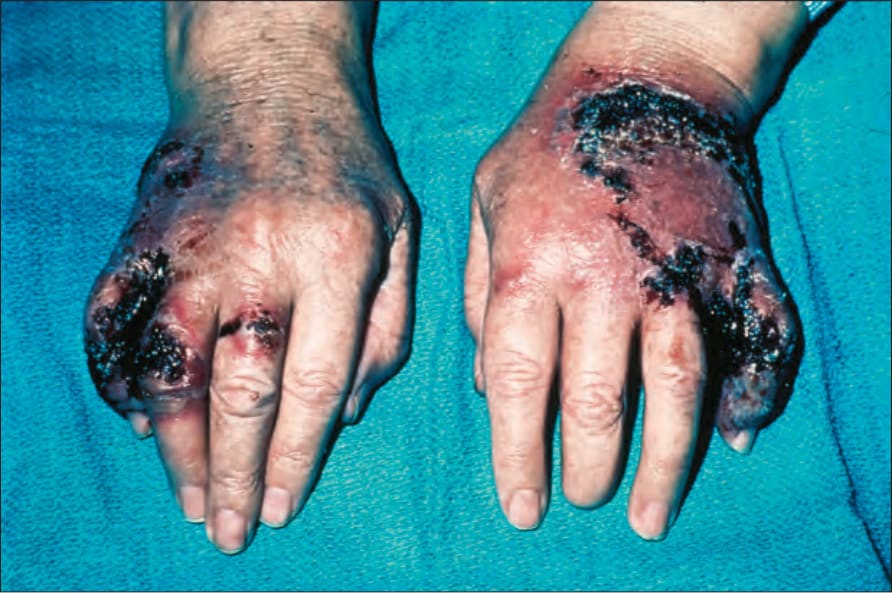
Fig. 14.80 Iododerma: ulcerated vegetative plaques are present on the backs of the hands and fingers. By courtesy of the Institute of Dermatology, London, UK.
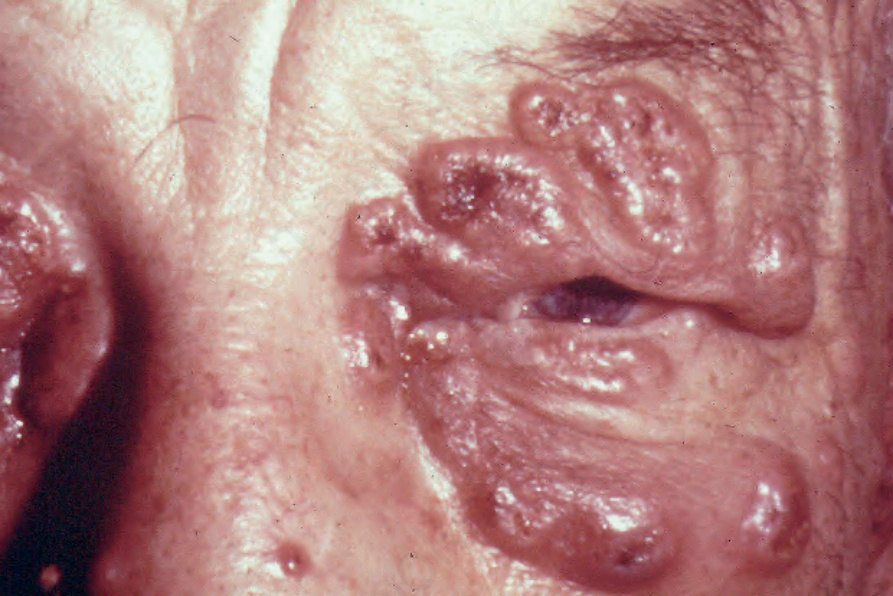
Fig. 14.82 Bromoderma: vegetant plaques and nodules are seen around the eye. Ulceration is present. By courtesy of the late M. Beare, MD, Royal Victoria Hospital, Belfast, N. Ireland.