Drug-induced alopecia
Drug-induced alopecia
Drug-induced alopecia is usually reversible, predominantly nonscarring, and affects females more often than males.1–4
Anagen effluvium, in which hair growth stops due to cessation of mitotic activity, is a common feature of anticancer therapy and often develops days or a few weeks after starting the drug.1,2 The scalp and beard areas, which contain a high percentage of anagen follicles, are particularly affected. It especially complicates combination chemotherapy and is likely to be severe.5 Although all anticancer drugs may be associated with some degree of alopecia, particular offenders include bleomycin, cyclophosphamide, dactinomycin, daunorubicin, doxorubicin, 5-fluorouracil, ifosfamide, and vindesine.1,2 There is some variation in drug effect. Some cause alopecia in all individuals whereas others affect only a minority of patients.5 In addition to traditional chemotherapeutics, targeted chemotherapeutics, especially vismodegib, sorafenib, and vemurafenib, are associated with alopecia.6 TNF-α antagonists and endocrine-based chemotherapies are also associated with alopecia.7,8
651 Bullous drug reactions
Telogen effluvium, in which hairs are transformed into the telogen phase, develops several months after commencing therapy.1 Anticoagulants, including heparin and warfarin and dextran sulfate, cause telogen effluvium in up to 50% of patients.3,5,9–14 Other causes include antithyroid drugs such as iodine, thiouracil and carbimazole, oral contraceptives, lithium, IFNs, retinoids, and pramipexole.5,15–17
Alopecia areata may develop as a consequence of TNF-α inhibitors such as adalimumab, etanercept, and infliximab.18–21 Case reports of alopecia areata have also been reported secondary to acitretin, vandetanib, and ustekinumab.22–24
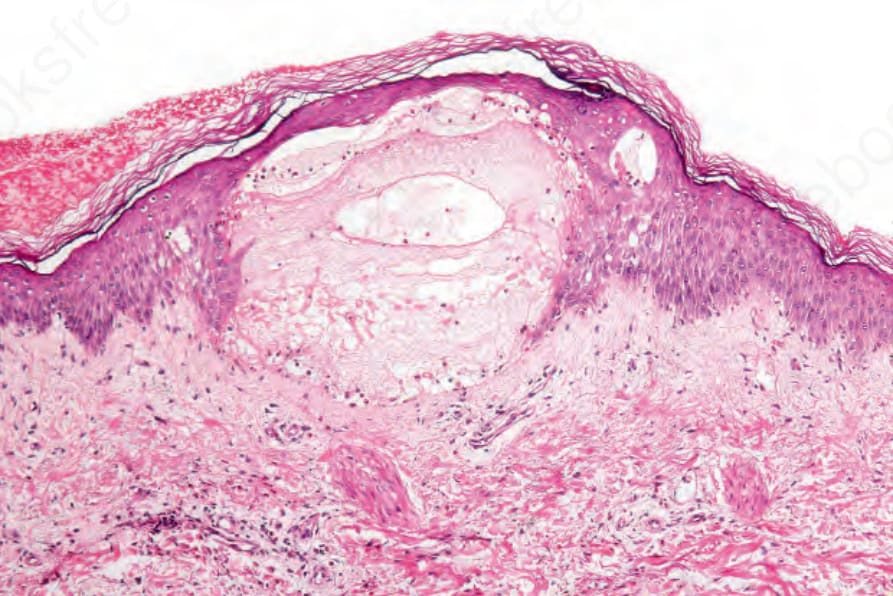
Fig. 14.55 Bullous drug reaction: this subepidermal blister arose against a background of an exanthematous drug reaction.