Scurvy
Scurvy
Clinical features Scurvy, due to vitamin C deficiency, results from a diet inadequate in fresh fruit and vegetables and is nowadays most often encountered following inappropriate dieting and food fads, in alcoholics and socially isolated individuals, and in patients with malabsorption secondary to underlying bowel diseases, including Crohn disease, Whipple disease, and gastrointestinal chronic graft-versus-host disease.1–4 Scurvy is rare in children but does occur in those with developmental and psychiatric disorders. It may also be secondary to drinking boiled or evaporated milk that is deficient in vitamin C.5
Cutaneous manifestations include dry skin, follicular hyperkeratoses (particularly affecting the forearms, legs, and abdomen), perifollicular hemorrhages with coiled hair (especially affecting the legs), petechiae and subungual splinter hemorrhages, leg edema, alopecia, erythematous swollen and bleeding gums with tooth loss, and clinical evidence of poor wound healing (Fig. 13.141).1–8 Painful subperiosteal hemorrhage, ‘Barlow disease’, is characteristically seen in infants.5 Less specific manifestations, which may cause a delay in diagnosis, include fatigue, arthralgia, myalgias, and in children a refusal to walk.6,9
Pathogenesis and histologic features Vitamin C is necessary for hydroxylation of proline and lysine residues during the conversion of procollagen into collagen fibers. As a result of impaired collagen synthesis, basement membrane synthesis is defective, with consequent loss of blood vessel wall integrity. This, combined with impaired dermal connective tissue constituents, results in a bleeding tendency.
The cutaneous features include follicular dilatation and keratin plugging, perifollicular hemorrhages with chronic inflammation, and hemosiderin deposition.7,10–12 The alopecia is characterized by hair shaft fracture and corkscrew hairs within a dilated and plugged follicle (Fig. 13.142).1,7,13 In some cases, the corkscrew hairs may be less apparent, but perifollicular hemorrhage is a clue to the diagnosis (Fig. 13.143).
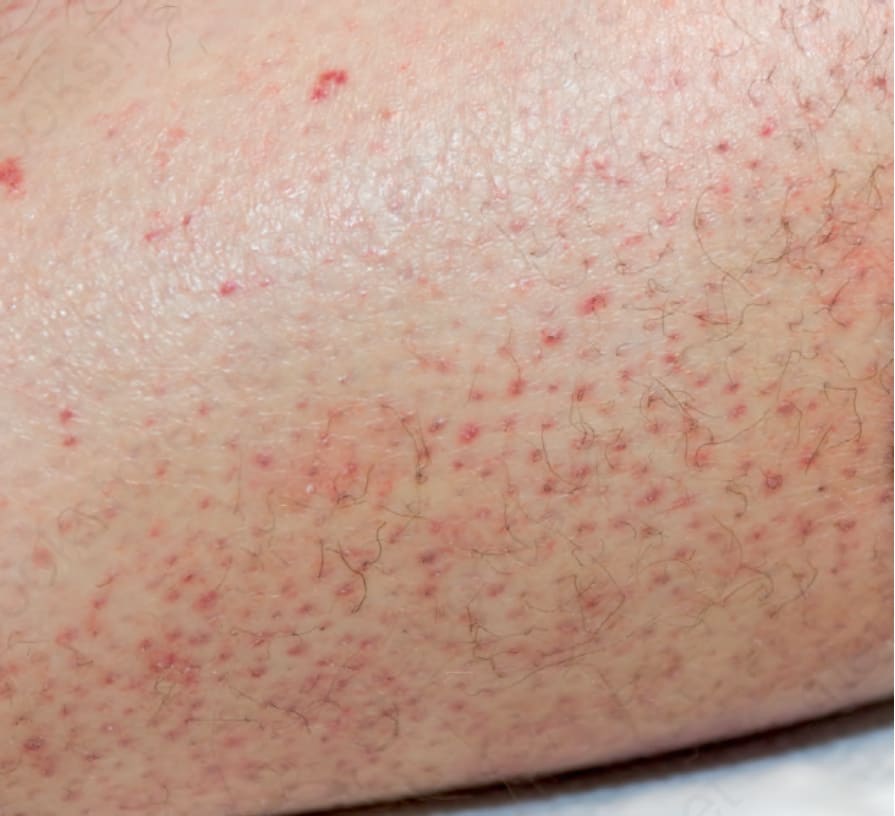
Fig. 13.141 Scurvy: the hairs have a coiled, corkscrew shape and there is perifollicular hemorrhage. By courtesy of Melissa Piliang, MD, Cleveland Clinic, Cleveland, USA.
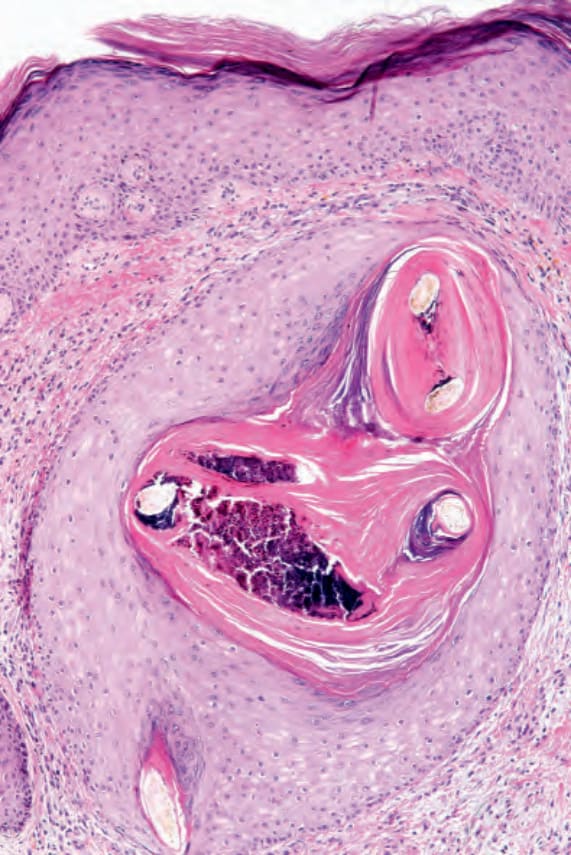
Fig. 13.142 Scurvy: the hair follicle is dilated and there is a typical corkscrew hair cut in multiple planes. Note the surrounding chronic inflammation and red cell extravasation. By courtesy of S. Tahan, MD, Beth Israel and Deaconess Medical Center, Boston, USA.
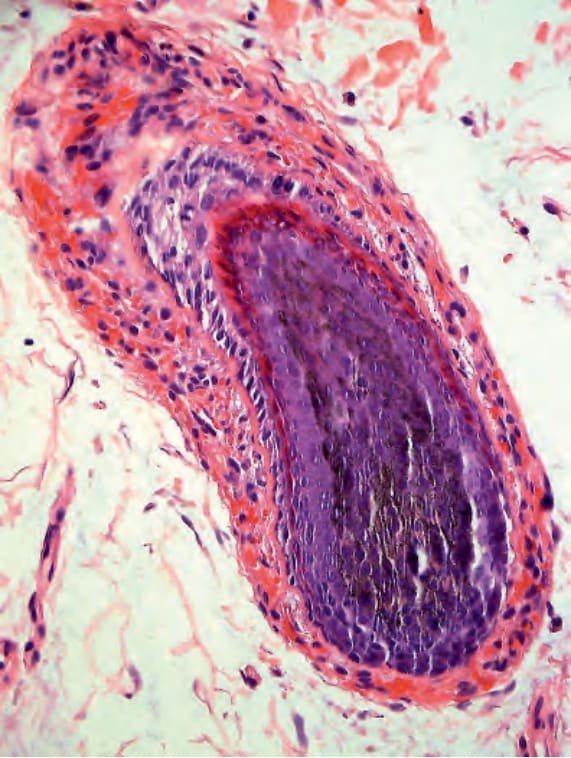
Fig. 13.143 Scurvy: In cases where the corkscrew hairs are less evident, perifollicular hemorrhage is a helpful clue. By courtesy of Melissa Piliang, MD, Cleveland Clinic, Cleveland, USA.