Verrucous carcinoma
Verrucous carcinoma
Clinical features Verrucous carcinoma is a low-grade, slow-growing SCC first described in 1948.1 The precise incidence of verrucous carcinoma is difficult to assess accurately because of the confusing number of different terms that have been applied to this tumor in the past. There has been some debate as to whether verrucous carcinoma, well-differentiated epidermoid SCC, epithelium cuniculatum, and giant condyloma of Buschke-Löwenstein are all one and the same or separate entities. It is now generally accepted that they are identical lesions.2,3
A case of vulval verrucous carcinoma in an HIV-positive patient has been documented.17
Histologic features Verrucous carcinoma is characterized by an exophytic and endophytic growth pattern.18,19 The latter, which may extend deeply into subcutaneous tissues or beyond, has a bulbous and sharply delineated lower border, lacking the infiltrative characteristics of conventional SCC (Figs 12.193–12.195). The epithelium is well differentiated, showing no appreciable cytological atypia; mitoses, which are generally sparse, are confined to the lower layer. Intraepithelial neutrophil abscesses are commonly present. In some tumors, koilocytes may be seen, supporting an HPV-associated etiology. One study describes a distinctive triad of marked epithelial acanthosis, loss of the granular cell layer with superficial epithelial cell pallor, and multilayered parakeratosis.20 It has been suggested that this could be a precursor to verrucous carcinoma and is designated vulvar acanthosis with altered differentiation.
The tumor presents as a warty exophytic plaque and usually occurs at three anatomical sites: the oropharynx, sole of the foot, and the anogenital skin (Figs 12.191 and 12.192).2,4–6 Verrucous carcinoma of the vulva may arise on a background of LS or LP.7–10 Oral and lower limb neoplasms may be associated with various types of HPV.11–14 Similarly, genital verrucous carcinoma may be associated with HPV albeit in a minority of cases.15 The benign histologic appearances of this tumor often lead to an incorrect histologic report of condyloma or squamous papilloma, with resulting undertreatment. Vulval verrucous carcinoma can coexist with ordinary SCC.16
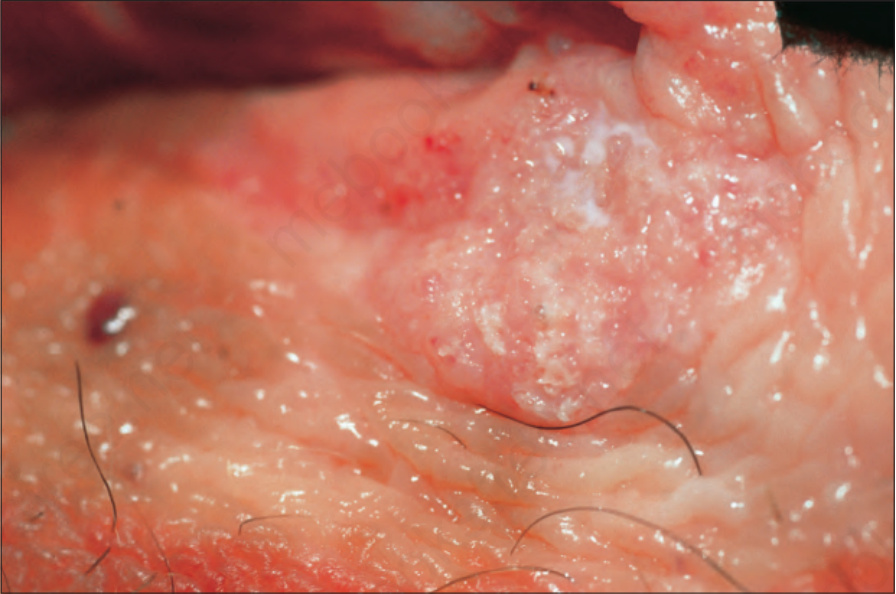
Fig. 12.191 Verrucous carcinoma: note the keratotic warty tumor mass. By courtesy of the Institute of Dermatology, London, UK.
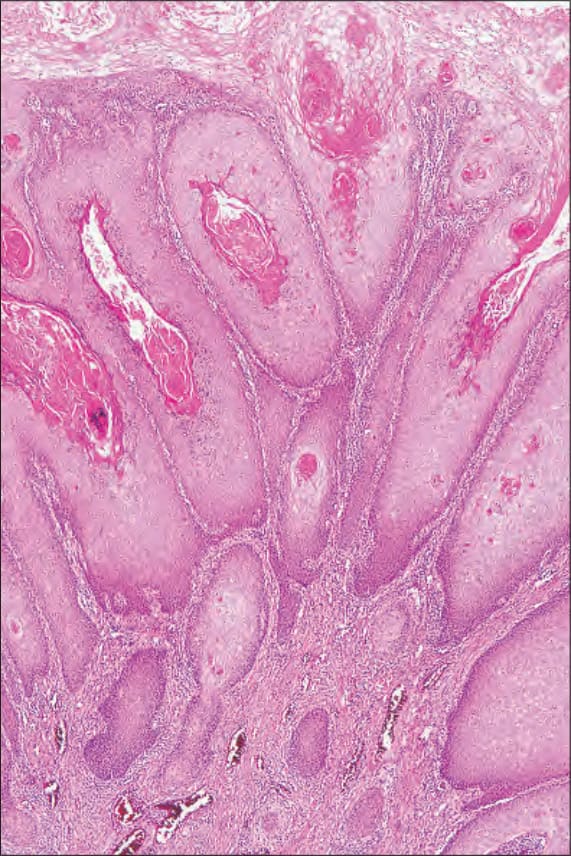
Fig. 12.193 Verrucous carcinoma: low-power view showing the characteristic growth pattern comprising deeply penetrating, blunt, finger-like processes.