Tinea
Tinea
12.80–12.82) and is usually due to Trichophyton rubrum. It is not always a result of spread from the nails or feet although people with tinea manuum or unguium can spread it to the groins or perianal skin. Tinea cruris is itchy, and diagnosed by the presence of red-brown, scaly patches with raised, deeper red edges extending from the groins onto the abdomen (Fig. 12.83), buttocks (Fig. 12.84), and thighs. Annular lesions are not always obvious. Diagnosis is not always easy, because many patients have been previously misdiagnosed and/or partially treated with topical corticosteroids or topical antifungal agents. This presentation is called tinea incognito (Fig. 12.85), where the symptom of itch and the signs of inflammation, including redness, the scale, and the well-demarcated, often scalloped, elevated active margins, have been suppressed, although there is often subtle postinflammatory hyperpigmentation. Folliculitic lesions may be seen.
Tinea (or ‘ringworm’) refers to superficial dermatophytosis. Tinea is a common disease of the pelvic girdle, especially of the groins (Figs
Tinea of the penis or scrotum6 is not common, and when it occurs it is usually associated with crural disease. Rarely encountered is tinea on the glans penis with an itch or pain and producing an erythematous patch or a crop of scaly papules. Pandey et al.7 associated penile tinea (in India) with occlusion due to the wearing of a langota – described as a T-shaped bandage tied over the genitalia.
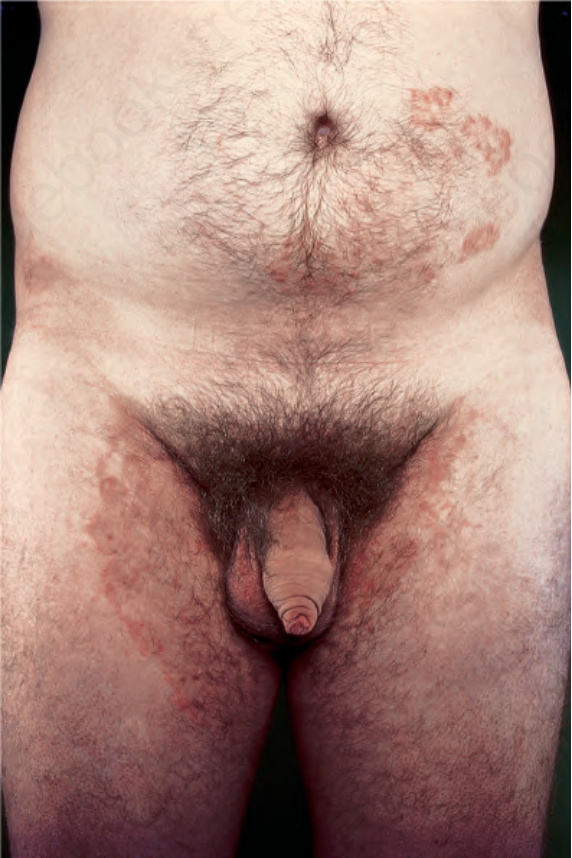
Fig. 12.83 Tinea cruris: in this patient, there is extensive involvement. From Bunker C. Male Genital Skin Disease. Saunders Ltd./Elsevier 2004.
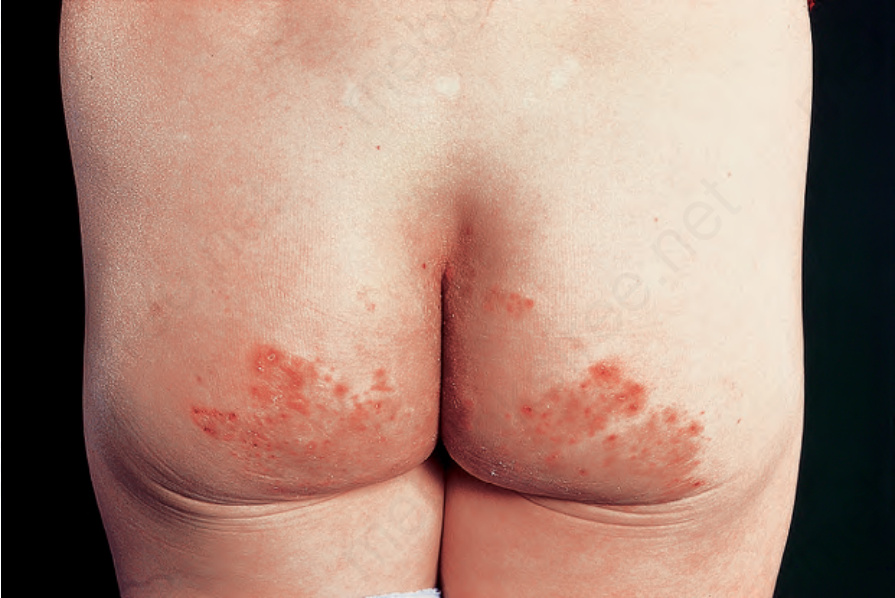
Fig. 12.84 Tinea cruris: note the bilateral involvement of the buttocks.
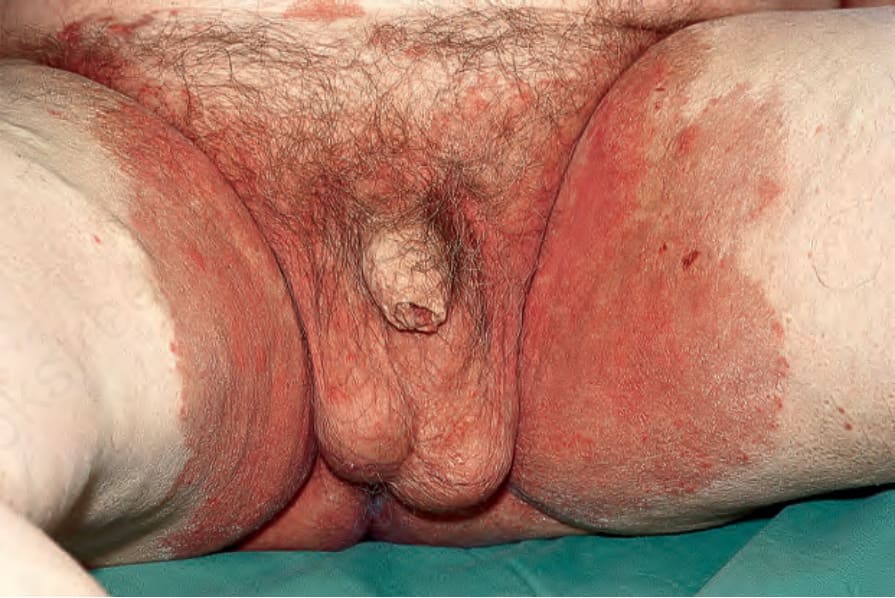
Fig. 12.85 Tinea incognito: there is extensive involvement of the abdomen, groins, thighs and scrotum. This followed injudicious use of topical steroids. From Bunker C. Male Genital Skin Disease. Saunders Ltd./Elsevier 2004.