Erythrasma
Erythrasma
Clinical features Erythrasma is a superficial infection of the skin at flexural sites, particularly in the inguinal and genitocrural folds (Fig. 12.77).1 The skin between the toes and natal cleft may also be involved. The affected areas are covered in red-brown scaly plaques with well-demarcated edges. The rash is usually asymptomatic or mildly itchy. The affected areas fluoresce coral pink under Wood light. This feature is due to the presence of porphyrin and may be absent in some cases.2 Very rare cases present with generalized involvement.3 The disease may appear concomitantly with a dermatophytosis and this often makes the diagnosis difficult.4
Pathogenesis and histologic features The organism involved is an aerobic, Gram-positive corynebacterium, Corynebacterium minutissimum,5 which is a normal skin commensal.
496 Diseases of the anogenital skin
Overgrowth and dermatitis are encouraged by the damp and warm conditions of a flexural zone. Obesity, friction, diabetes, and immunosuppression are all contributory factors.
The characteristic clinical picture and the presence of fluorescence under Wood light obviate the need for biopsies in most cases. A biopsy shows the presence of rods and filamentous organisms in the stratum corneum (Figs 12.78 and 12.79). Inflammation is minimal.
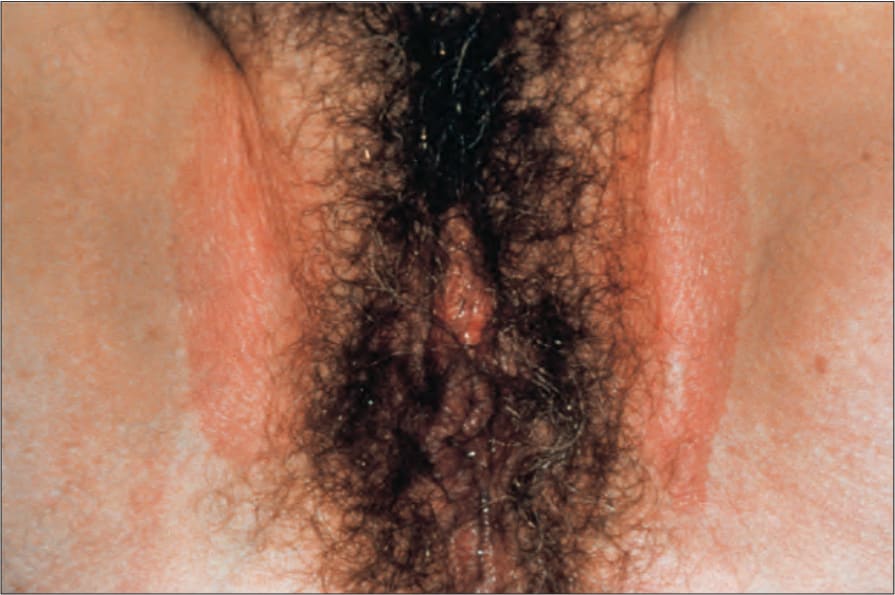
Fig. 12.77 Erythrasma: the flexural distribution and sharply demarcated border are characteristic features. By courtesy of the Institute of Dermatology, London, UK.
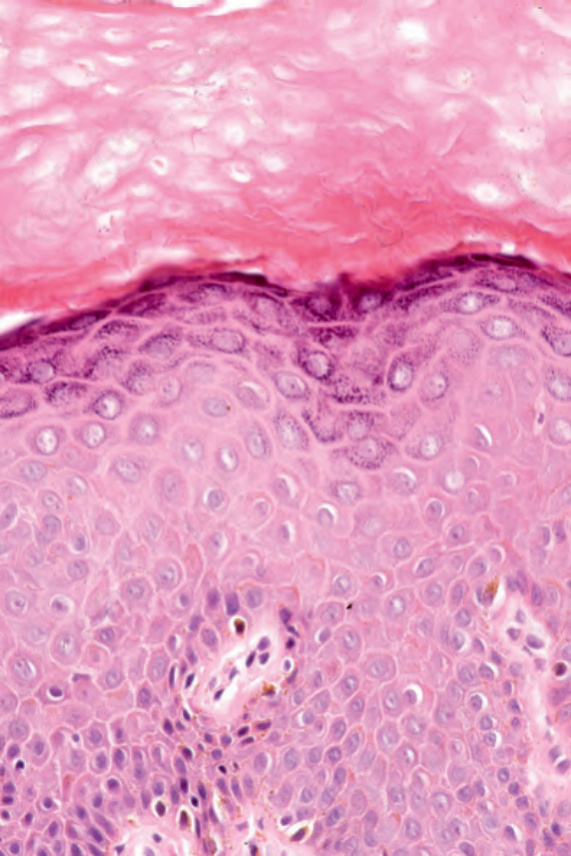
Fig. 12.78 Erythrasma: bacilli are just visible in the upper stratum corneum.