Hidradenitis suppurativa
Hidradenitis suppurativa
Clinical features Hidradenitis suppurativa (acne inversa; chronic perianal pyoderma in Japan and Verneuil disease in France)1,2 is a chronic inflammatory dermatosis that affects areas rich in apocrine glands. Bridged comedones, folliculitis and furunculosis, deep discharging sinuses, nodules, cysts, and scars may all be present in the groins (Fig. 12.69), the natal cleft and buttocks, and in the axillae and under the breasts.1 The patient may have conglobate acne. Pili incarnati (ingrowing hairs) and secondary folliculitis is a common problem in the bikini area in women but rarely encountered in men (Fig. 12.70). It is more common in black individuals and affects the axillae preferentially in women and the perineum in men. A urethral cutaneous fistula and phimosis has been reported.3 It is a cause of dorsal perforation of the penis.4,5 Scarring from the disease and its treatment can be extensive (Fig. 12.71). The morbidity of hidradenitis may be appalling, interfering with sitting, sleeping, walking, defecation, and sexual activity. Depression is common.
Hidradenitis suppurativa has been considered to be a form of ‘apocrine acne’. However, the primary pathological process seems to be associated
eminently with the hair follicle. The role of endocrine factors is uncertain as is the primary part played by bacteria. Chronicity and tissue destruction lead to the classical physical signs. Disease that has persisted for more than 20 years carries a significant risk of progression to SCC and rarely verrucous carcinoma6–9
Hidradenitis is usually a clinical diagnosis. Swabs should be taken for bacteriological analysis. Rarely, a biopsy may be necessary to exclude carcinoma or Crohn disease. Perineal Crohn disease mimics hidradenitis with its granulomatous inflammation, ulceration, and fistula formation, but it is less painful. Also, the disease is absent from the axillae and it is rare for patients to be free of overt gastrointestinal symptoms. Very florid perianal disease can be seen in myeloma and leukemia in homosexual men and AIDS.10–12
Histologic features The histology is identical to that of hidradenitis suppurativa occurring elsewhere.
493 Inflammatory dermatoses
Histologic features The histology of idiopathic aphthous ulceration is entirely non-specific. The main reason why a biopsy is performed is to rule out other pathologies.
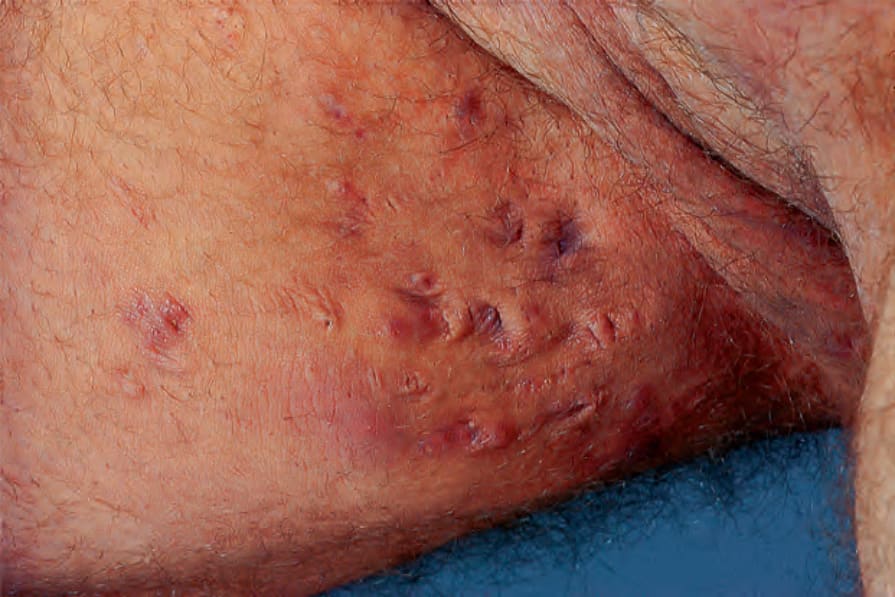
Fig. 12.69 Hidradenitis suppurativa: there is extensive involvement of the groin. From Bunker C. Male Genital Skin Disease. Saunders Ltd./Elsevier 2004.
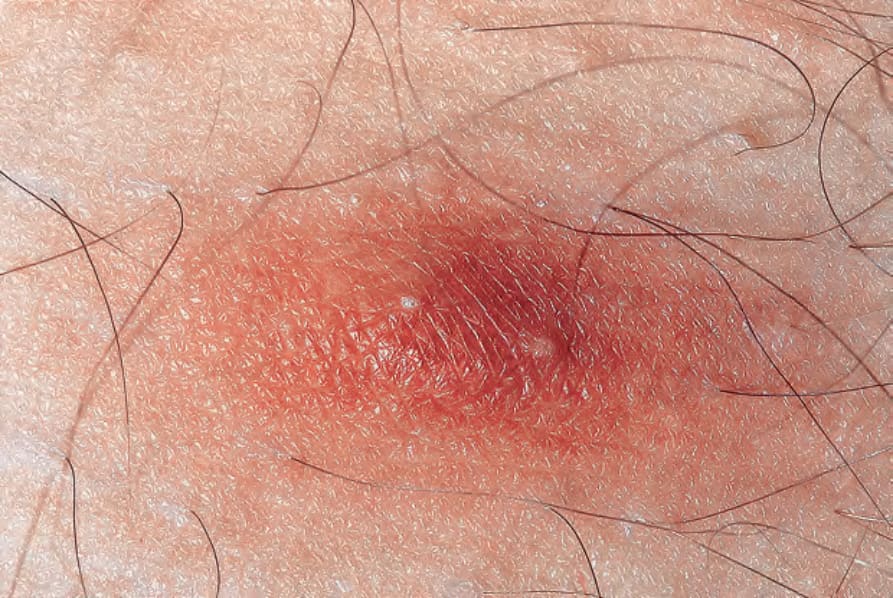
Fig. 12.70 Pili incarnati: lesion from the groin showing and inflamed follicular lesion. From Bunker C. Male Genital Skin Disease. Saunders Ltd./Elsevier 2004.
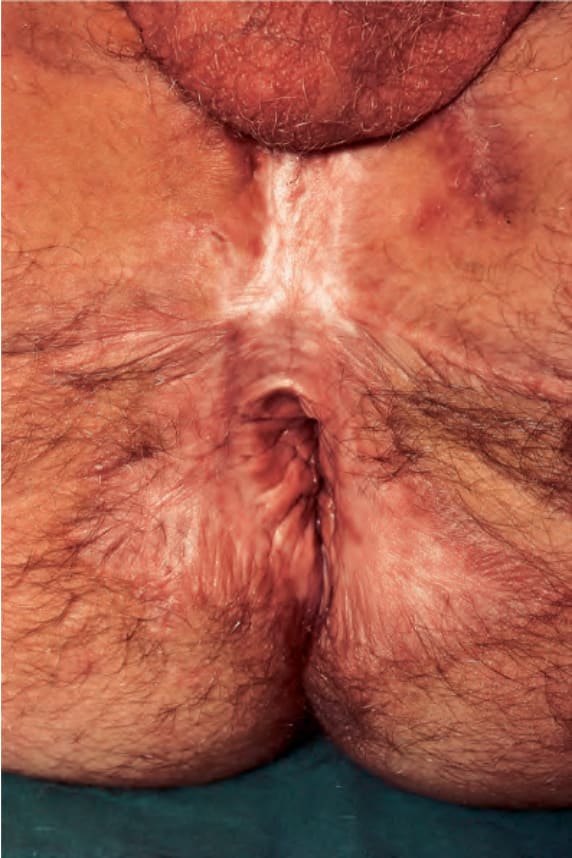
Fig. 12.71 Hidradenitis suppurativa: there is extensive scarring as a result of the disease and also from surgery. Courtesy of Prof. Tim Allen-Mersh, London, UK. From Bunker C. Male Genital Skin Disease. Saunders Ltd./Elsevier 2004.