Sialolith
Sialolith
Clinical features Sialoliths or salivary gland calculi affect patients in their sixth or seventh decade. Those in the minor glands are generally asymptomatic unless infected, while those in the major glands, especially in Wharton duct (the most common site for sialoliths), cause symptoms of pain, pressure, and
443 Reactive conditions
swelling just before meals. The most common sites for minor gland sialoliths are the upper lip mucosa and buccal mucosa, which together account for 75–90% of all minor salivary gland lithiasis.1–3 They present as hard nodules and may drain if infected.
Pathogenesis and histologic features Sialoliths form around a central nidus of bacteria, cell debris, and/or mucous plug. It is most common in the Wharton duct in the floor of mouth because of the long and tortuous nature of the duct.
The sialolith consists of concentric lamellar and globular calcifications within a cystically dilated excretory duct that exhibits squamous, mucous cell or ciliated cell metaplasia, and periductal inflammation (Fig. 11.188).1,2 Bacteria, inflammatory cells and cellular debris may be present within or around the lith. Rupture can lead to acute and chronic inflammation
and/or a foreign body reaction. Approximately one-quarter of calculi are unmineralized.1
Differential diagnosis Phleboliths and calcified thrombi are generally not lamellated and occur within vascular lumina lined by endothelial cells.
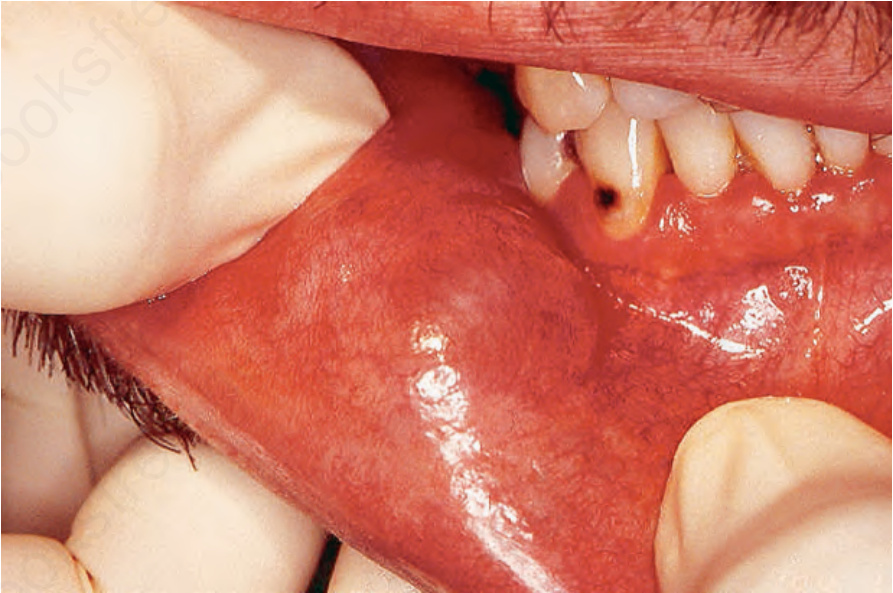
Fig. 11.179 Mucocele: note the bluish sessile nodule on the lower labial mucosa, a typical site.
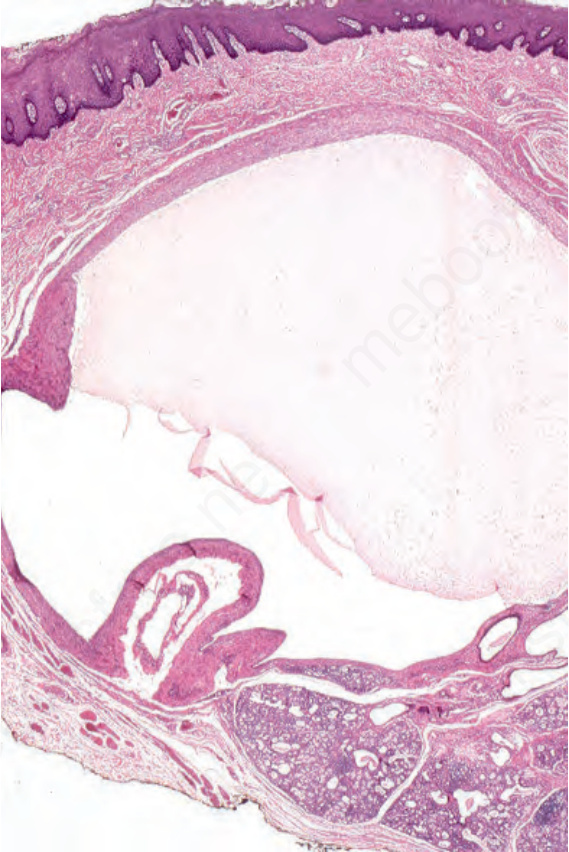
Fig. 11.180 Mucocele: there is a cyst-like cavity filled with mucin surrounded by granulation tissue without lining epithelium.
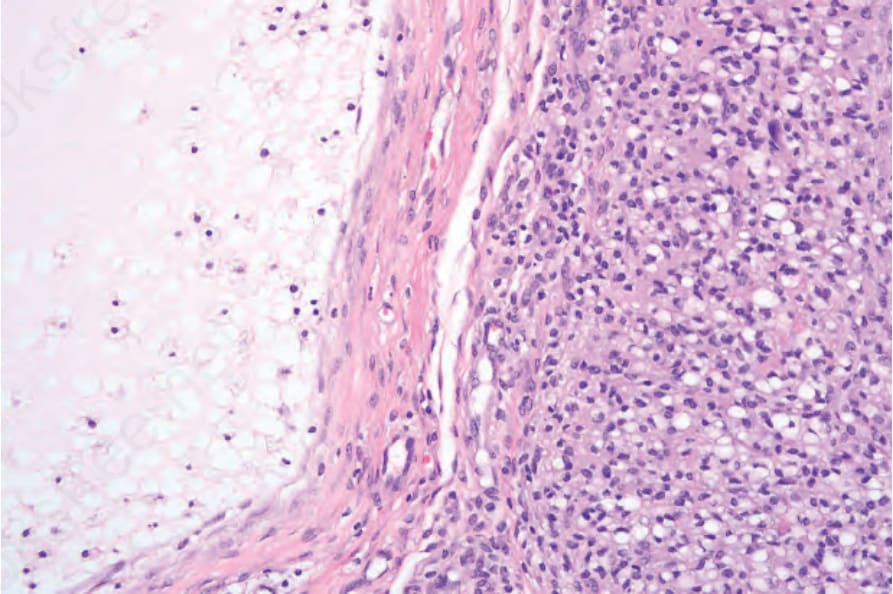
Fig. 11.181 Mucocele: the mucocele contains mucin and muciphages and is surrounded by granulation tissue containing muciphages and inflammatory cells; there is no lining epithelium present.
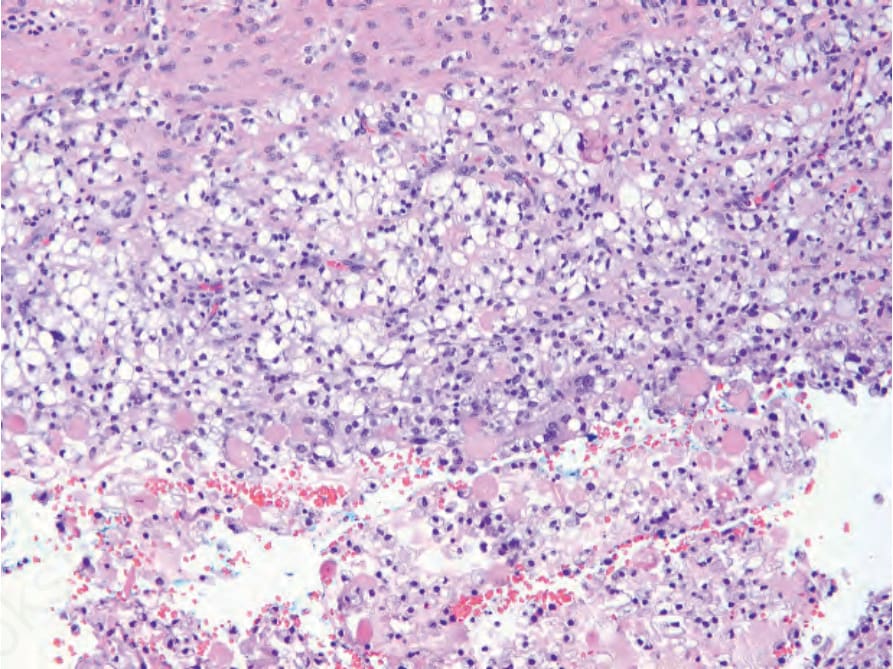
Fig. 11.182 Mucocele: the wall of a mucocele may contain clear cells
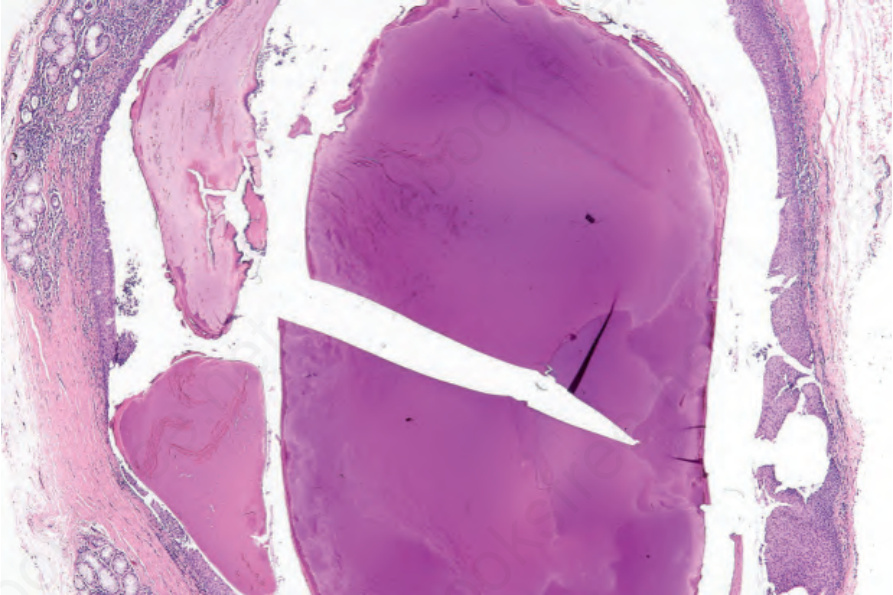
Fig. 11.188 Sialolith: the sialolith is present within an ectatic salivary duct, the lining of which exhibits squamous metaplasia.