Dyskeratosis congenita
Dyskeratosis congenita
Clinical features This is a rare, but important, systemic illness with poor prognosis and high mortality. It has a predominantly X-linked recessive mode of inheritance and occurs mainly in males (6 : 1), although both autosomal dominant and recessive variants are also recognized.1–5 The condition consists predominantly of a complex triad of skin pigmentation, nail, and mucosa abnormalities. There is also an increased incidence of malignancy including hematological and solid tumors.1,2,6,7
The skin acquires a widespread reticular pigmentation with associated poikiloderma, which at first appears most prominently on the face, neck, and the ‘V’ neck region of the upper chest, but later becomes generalized (Fig. 7.104).1,4 During childhood, the nails become dystrophic and are often lost (Fig. 7.105). There may also be palmoplantar hyperkeratosis associated with hyperhidrosis, development of epiphora, early loss of dentition, caries, poor growth, sparse hair, bullous eruptions, lacrimal duct stenosis, and mental subnormality.1–3,8,9 A reduced diffusion capacity develops from pulmonary fibrosis.2,9,10
Premalignant leukoplakia involving particularly the mouth and anus is an important complication, with a significant risk of squamous cell carcinoma developing in these lesions.2,5,9,11 The urethra and vagina may also be
273 Interface dermatoses
TINF2, and WRAP53 genes involved in telomere function.9,16,17 Not all cases have a known genetic cause. There is marked chromosomal instability with a striking predisposition to develop rearrangements.2,18 Dyskeratosis congenita therefore appears to result from defective telomerase activity with resultant impaired stem cell turnover or proliferative activity.4,9,19 This is supported by the finding that telomeres are markedly shortened and that this develops at an early age.6,20
The autosomal dominant variant has similarly been shown to be associated with a mutation of the RNA component of telomerase TERC, telomerase enzyme TERT – both part of the shelterin telomere protection complex TIN2.4,6
Finally, the autosomal recessive variant has been associated with mutation in the NOP10/NHP2 genes that regulate telomerase.6
The histologic features of the pigmentary changes are non-specific, showing only pigmentary incontinence.
Biopsies of the mucosal lesions show an acanthotic epithelium with or without dysplastic changes. In the latter case, great care must be taken to exclude the presence of squamous cell carcinoma.
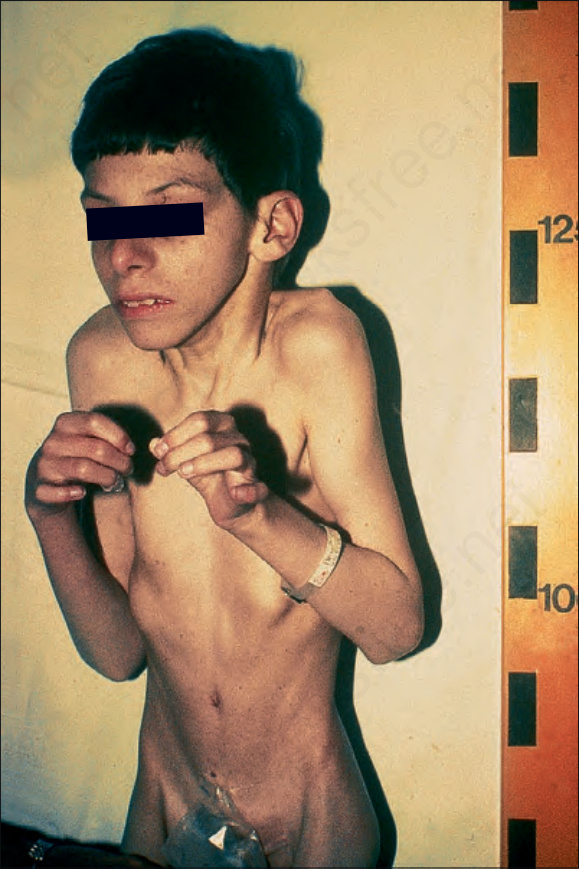
Fig. 7.103 Cockayne syndrome: the features include prominent ears, prognathism, a ‘beaked’ nose, and flexion contractures. By courtesy of D. Atherton, MD, Institute of Dermatology and Children’s Hospital at Great Ormond Street, London, UK.
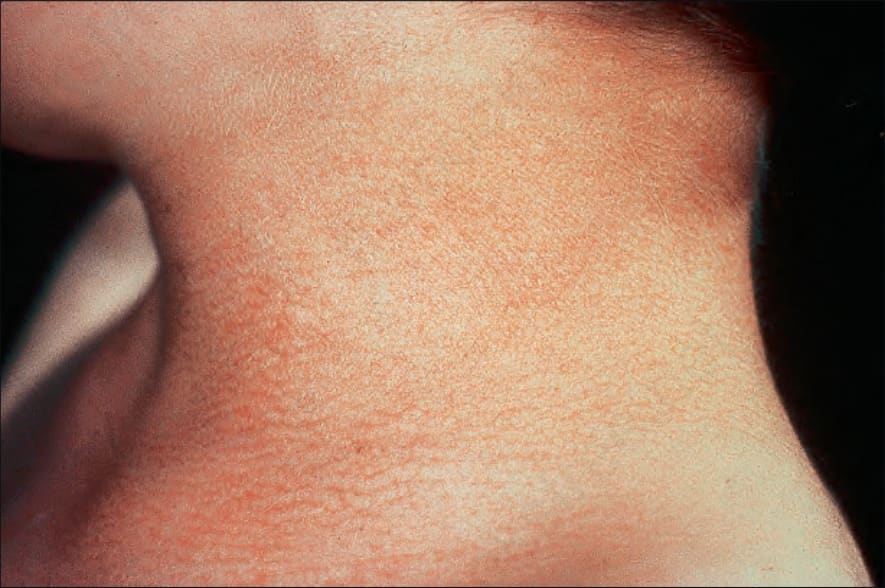
Fig. 7.104 Dyskeratosis congenita: typical poikilodermatous pigmentation on the neck. By courtesy of D. Atherton, MD, Institute of Dermatology and Children’s Hospital at Great Ormond Street, London, UK.
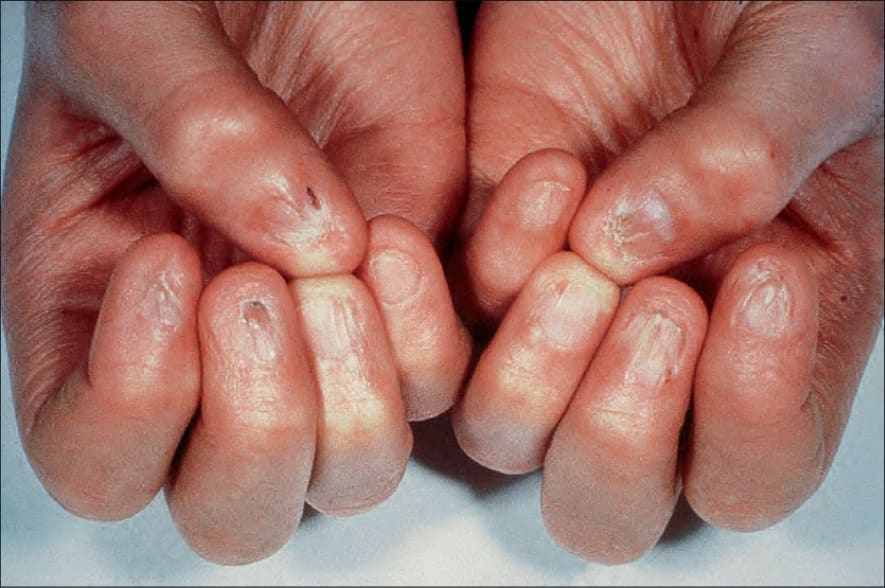
Fig. 7.105 Dyskeratosis congenita: there is dystrophy of the nails with marked atrophy of the surrounding skin. By courtesy of D. Atherton, MD, Institute of Dermatology and Children’s Hospital at Great Ormond Street, London, UK.