Relapsing linear acantholytic dermatosis
Relapsing linear acantholytic dermatosis
Clinical features Relapsing linear acantholytic dermatosis (Hailey-Hailey-like epidermal nevus) is an exceptionally rare nevus-like condition characterized by erythematous plaques with vesicles and erosions arranged in a linear distribution along Blaschko lines.1–3 It typically undergoes spontaneous resolution followed by recurrence and has a chronic course. Insufficient cases have been documented to precisely determine its relationship to Hailey-Hailey disease.
190 Acantholytic disorders
Recent data, however, demonstrate that at least some of the patients harbor mutations in the gene responsible for Hailey-Hailey disease, ATP2C1. The disease has been shown to be a type 2 mosaicism according to Happle, resulting in homozygosity for the mutated gene and pronounced disease in a segmental distribution superimposed on more classical disease in a heterozygous individual.4–7
Histologic features The features are indistinguishable from Hailey-Hailey disease.
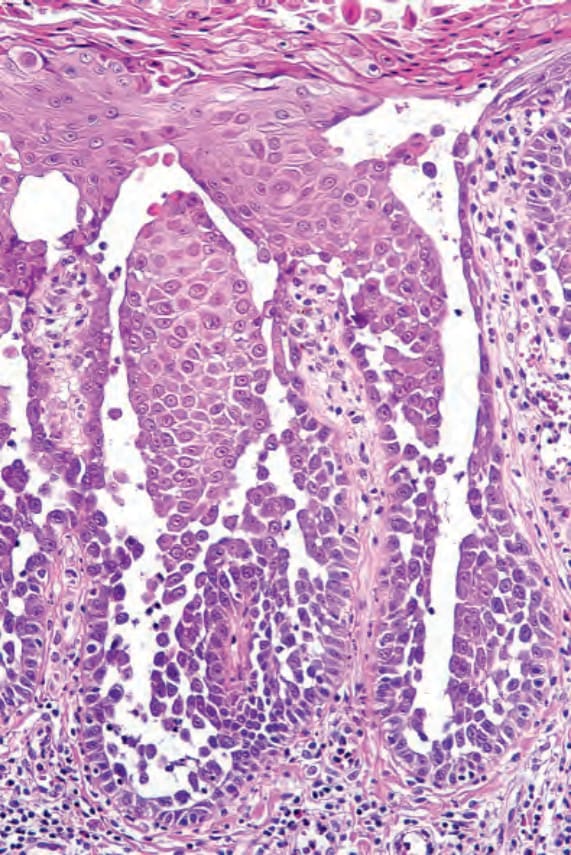
Fig. 5.48 Hailey-Hailey disease: in contrast to Darier disease, dyskeratosis is usually minimal or even absent.
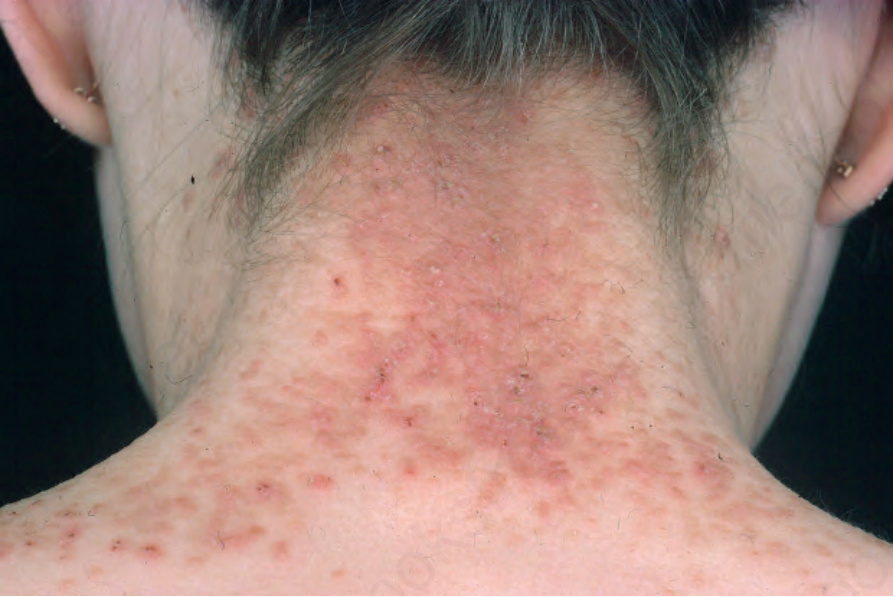
Fig. 5.49 Darier disease: in this patient, keratotic brown papules are present on the back of the neck. From the slide collection of the late N.P. Smith, MD, the Institute of Dermatology, London, UK.