Granular parakeratosis
Granular parakeratosis
Clinical features Granular parakeratosis is a distinctive acquired disorder of keratinization originally reported in 1991.1–4 The condition most often affects the axillae
Differential diagnosis Apart from representing a distinctive dermatosis, granular parakeratosis is a diagnostic feature in solitary keratosis, i.e., granular parakeratotic acanthoma.16,17 Granular parakeratosis can be also found as an incidental finding in many diseases, e.g., dermatophytosis, molluscum contagiosum, dermatomyositis, solar keratosis, squamous cell carcinoma, keratoacanthoma, lymphomatoid papulosis, and basal cell carcinoma (Fig. 3.158). As such, granular parakeratosis is best considered as a histologic pattern similar to focal acantholytic dyskeratosis and epidermolytic hyperkeratosis.18,19
116 Disorders of keratinization
A
B
A
B
117 Acquired palmoplantar keratoderma and malignancies
B
A
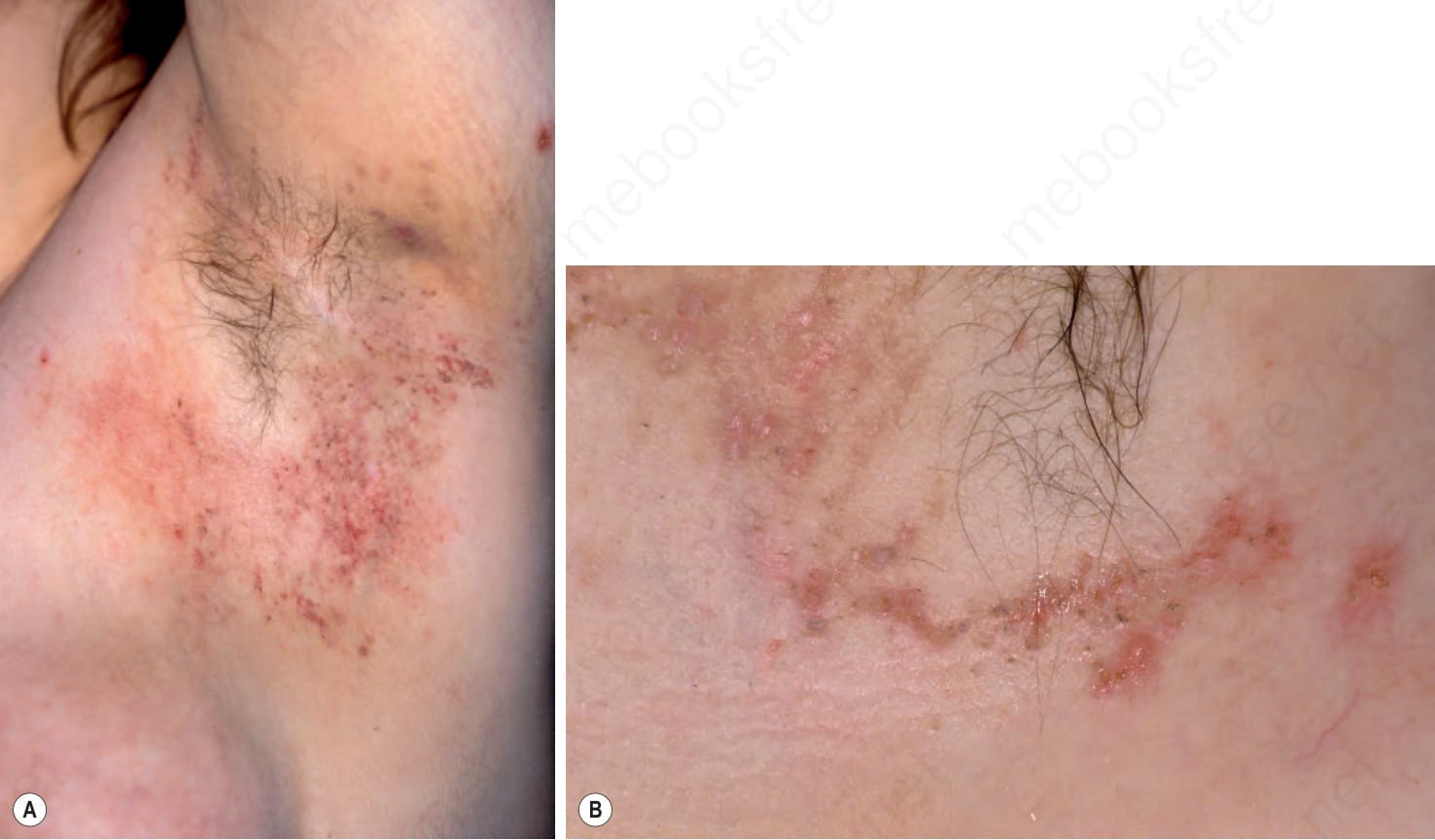
Fig. 3.156 Granular parakeratosis: (A) in the axilla of a middle-aged woman erythematous, hyperpigmented and hyperkeratotic papules develop in a reticulated fashion; (B) a few of these lesions are erosive.
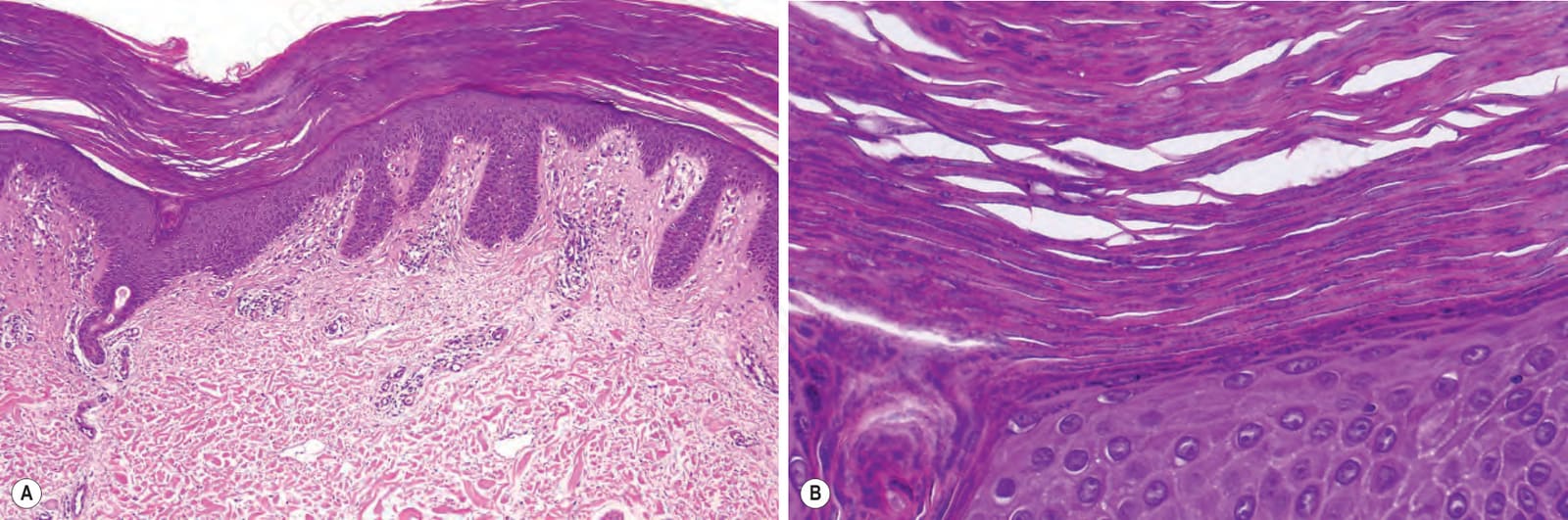
Fig. 3.157 Granular parakeratosis: (A) there is marked thickening of the horny layer with parakeratosis; (B) high-power view showing retention of keratohyalin granules.
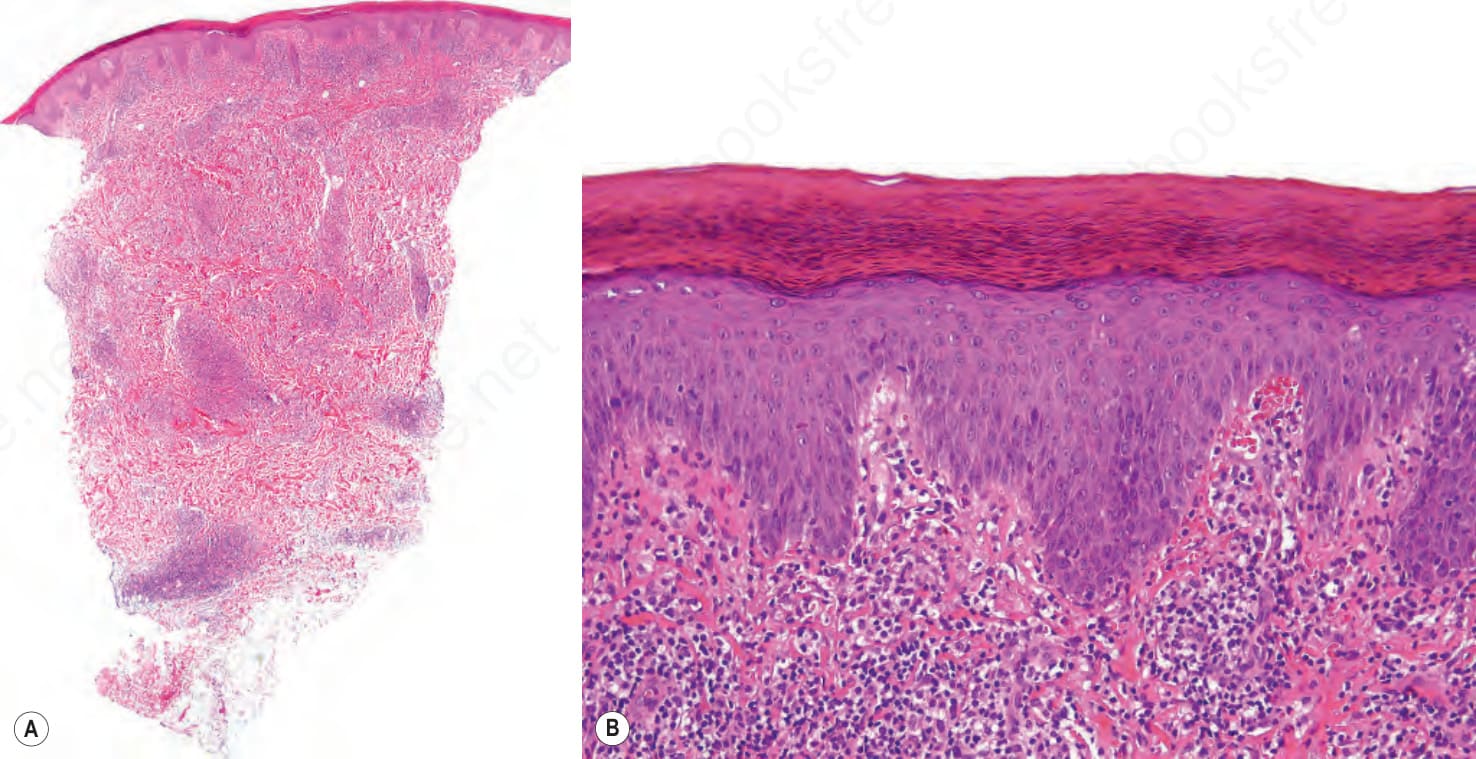
Fig. 3.158 Granular parakeratosis: (A) this example arose against a background of lymphomatoid papulosis; (B) high-power view.