Transient aquagenic keratoderma
Transient aquagenic keratoderma
Transient aquagenic keratoderma (syn. transient reactive papulotranslucent acrokeratoderma, aquagenic syringeal acrokeratoderma, acquired aquagenic palmoplantar keratoderma, aquagenic wrinkling of the palms and soles) is characterized by a mild keratoderma in the center of the palms that is triggered or exacerbated by contact with water or sweat.1 Patients develop thickening and white to translucent, ‘pebbly’ changes on their palms shortly
107 Acquired palmoplantar keratoderma and malignancies
A
after immersion in water (Fig. 3.135A).2 Associated symptoms include pain, burning sensation or pruritus. Onset is typically during the second decade of life, with predilection for women. The papular lesions are associated with dilated acrosyringeal ostia (Fig. 3.135B).3
Pathophysiology and histology Transient aquagenic keratoderma appears to be acquired, but an autosomal recessive, or dominant pattern of inheritance has been observed. It has been described after use of cyclooxygenase-2 inhibitors.4 Aquagenic wrinkling of the palms is seen in about 50% of patients and heterozygous carriers with cystic fibrosis and in up to 10% of heterozygous CFTR gene mutation carriers.5,6
B
Histologically, normal skin or dilated eccrine ostia, hyperplasia of the eccrine sweat glands, and a mildly hyperkeratotic stratum corneum may be seen (Fig. 3.136).7
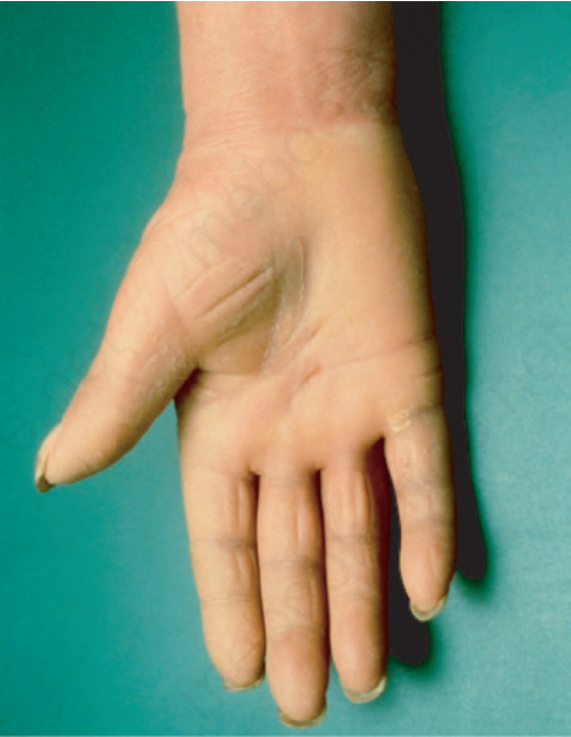
Fig. 3.134 Mechanic hands: patients with dermatomyositis, in particular dermatomyositissystemic scleroderma-overlap syndrome may develop circumscribed hyperkeratoses on palms.
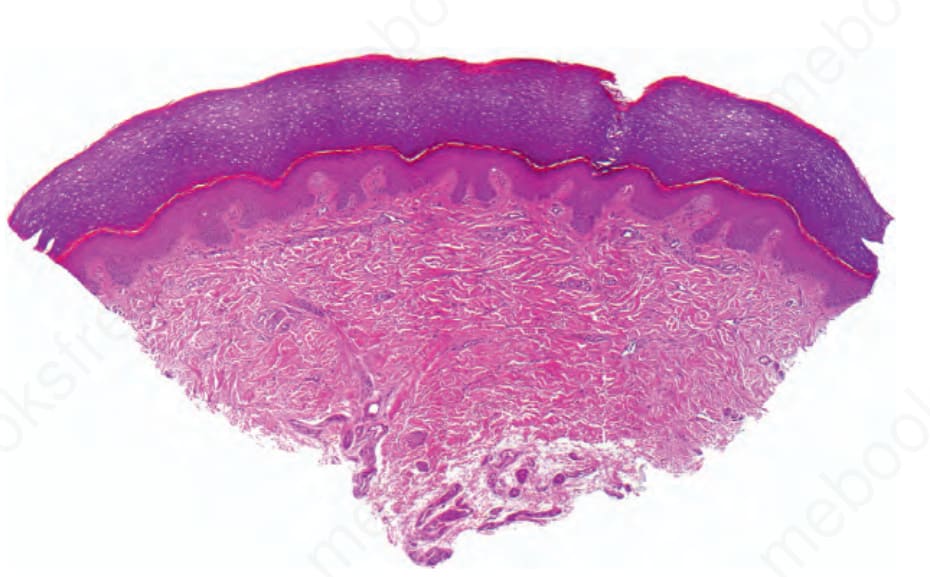
Fig. 3.136 Transient aquagenic keratoderma: note the wide opening of an acrosyringeal ostium, and the pale staining of an orthohyperkeratotic stratum corneum, otherwise there are no other histologic changes.