Naxos syndrome
Naxos syndrome
B
e.g., mutations with expression of altered plakoglobin may show mild skin fragility, keratoderma, and wooly hair only.7,8 Of note, autosomal dominant JUP mutations underlie isolated arrhythmogenic right ventricular cardiomyopathy and a Naxos-variant with leukonychia and oligodontia.9,10 Finally, complete loss of plakoglobin due to homozygous nonsense mutations may lead to ‘lethal’ epidermolysis bullosa.11
Clinical features This syndromic palmoplantar keratoderma was first identified on the Greek islands of Naxos and is characterized by keratoderma, life-threatening cardiomyopathy, and wooly hair.1–2 Wooly hair is present from birth and this is followed by diffuse keratoderma. However, in some patients a more striate and areata type of PKK may be present.3 Heart involvement is characterized by right ventricular cardiomyopathy and manifests by arrhythmias, insufficiency, and sudden death in adolescence with a penetrance of 100%.4 The clinical and histologic features of Carvajal-Huerta syndrome are similar and do not allow a clear distinction.5
Pathogenesis and histologic features Mutations of the JUP gene encoding plakoglobin, a cell junction protein found in desmosomes in the epidermis and cardiac muscle accounts for the symptoms.6 Different mutations of JUP show a large phenotypic spectrum,
Histology shows compact hyperkeratosis, hypergranulosis, and acanthosis.2 We are not aware if keratinocyte disadhesion is present in routine histology as evident in Carvajal-Huerta syndrome (see below).
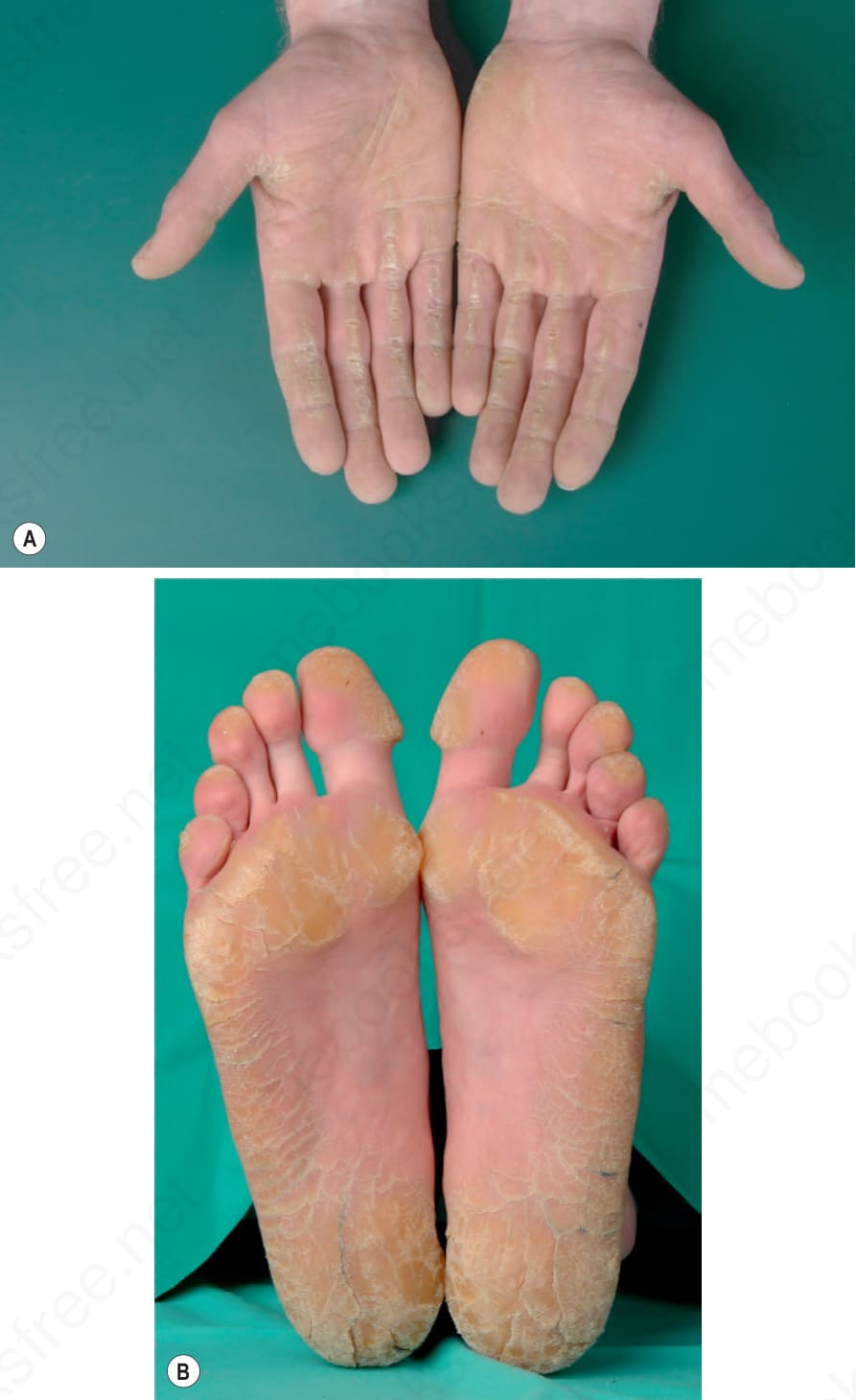
Fig. 3.113 Striate palmoplantar keratoderma: (A) linear hyperkeratotic bands along the palms and flexural side of the fingers; (B) island-like areas of hyperkeratosis on the soles over pressure points.