Clouston syndrome
Clouston syndrome
Clinical features Clouston syndrome (hidrotic ectodermal dysplasia 2) is characterized by dystrophic nails developing in early infancy with hypotrichosis in conjunction with papillomatous and fissured transgradient keratoderma.1,2 Clouston syndrome was first documented in French Canadian families with an
94 Disorders of keratinization
Pathogenesis and histologic features This autosomal dominant ectodermal dysplasia, is caused by mutations in the gap junction beta-6 (GJB6) gene encoding connexin 30 which is a potential target of p63.9–13 Histologic evaluation of the thickened palms and soles shows verruciform hyperplasia and papillomatosis of the epidermis with orthohyperkeratosis and a normal granular layer. Papular lesions may demonstrate proliferation of ductal structures within a fibrovascular stroma, which is referred to as eccrine syringofibroadenomatosis (Fig. 3.103).8,14 Hair follicles, sebaceous glands, and apocrine glands are reduced or absent. Ultrastructural examination of the hair shows disorganization of the hair fibers, with loss of the hair shaft cuticle.14,15
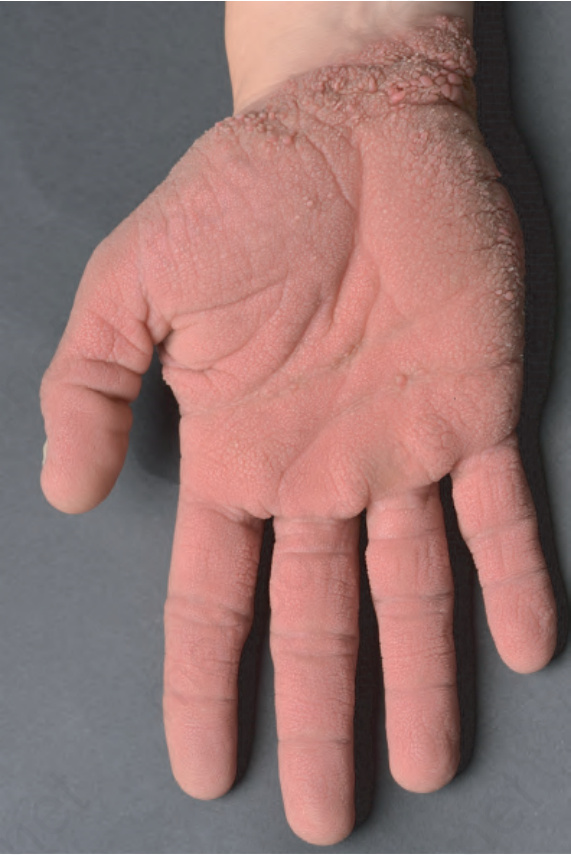
Fig. 3.101 Clouston syndrome: the keratoderma shows a typical ‘pebbled’ appearance.
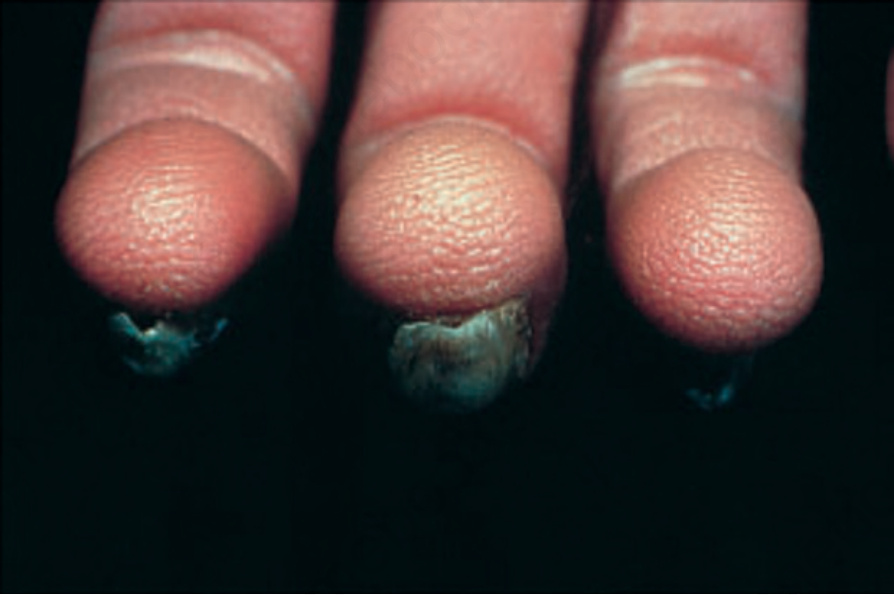
Fig. 3.102 Clouston syndrome: there is nail dystrophy accompanied by hyperkeratosis of the fingertips, thereby accentuating the epidermal surface ridges. By courtesy of D. Atherton, MD, the Children’s Hospital at Great Ormond Street, London, UK.
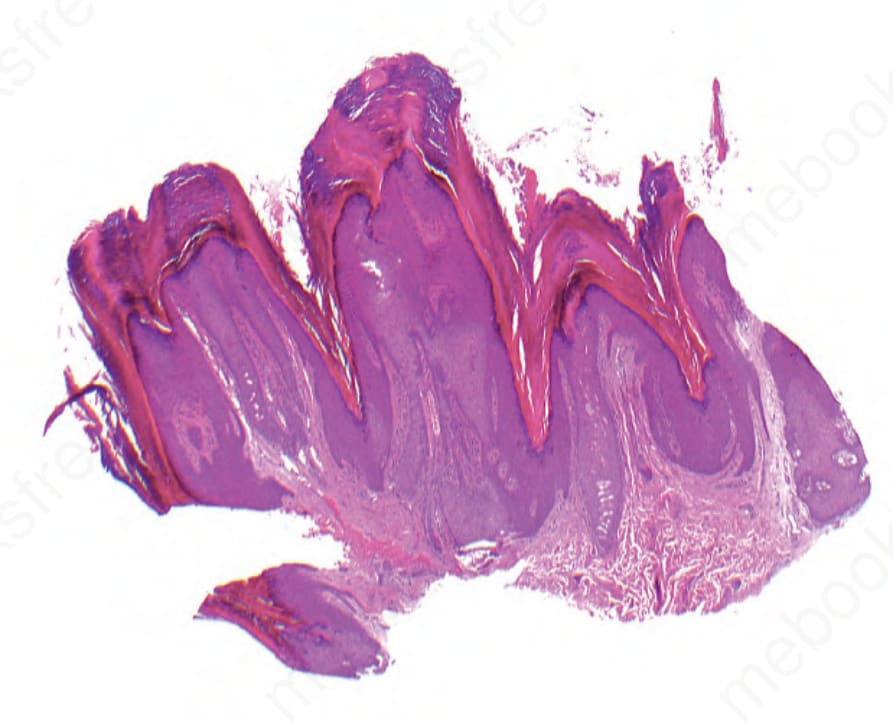
Fig. 3.103 Clouston syndrome: verruciform hyperplasia and papillomatosis of the epidermis are characteristic and should not be misdiagnosed as verruca vulgaris. The ducts of sweat glands are associated with a fibrovascular stroma.