Keratosis pilaris
Keratosis pilaris
Clinical features This fairly common condition, which has an autosomal dominant mode of inheritance, is probably a follicular variant of ichthyosis and, indeed, frequently accompanies ichthyosis vulgaris.1–3 The age at presentation is most often in the first two decades of life with a peak during adolescence.2 There is an apparent increased incidence in females, in particular those suffering from hyperandrogenism and obesity. The lesions present as pruritic small follicular keratoses, sometimes containing small, distorted hairs. They are most often found on the lateral aspects of the arms and thighs, although the face, trunk, and buttocks may also be affected (Fig. 3.65).2 Seasonal variation, with lesions being much more severe in winter, is often documented.2 There is an increased incidence of atopy.2
Although keratosis pilaris most often presents as an isolated phenomenon, occasionally it may develop in association with systemic disease, including Hodgkin lymphoma, vitamins B12 and C deficiency, hypothyroidism, Cushing disease, and treatment with adrenocorticotropic hormone.3–5 A keratosis pilaris-like eruption has been described in BRAF kinase inhibitor therapy.6
Histologic features Keratosis pilaris is characterized by follicular dilatation and keratin plugs, which may contain one or several distorted hair shafts (Fig. 3.66).4 A mild, lymphocytic cell infiltrate surrounds superficial dermal blood vessels and sometimes also involves the hair follicles.
B
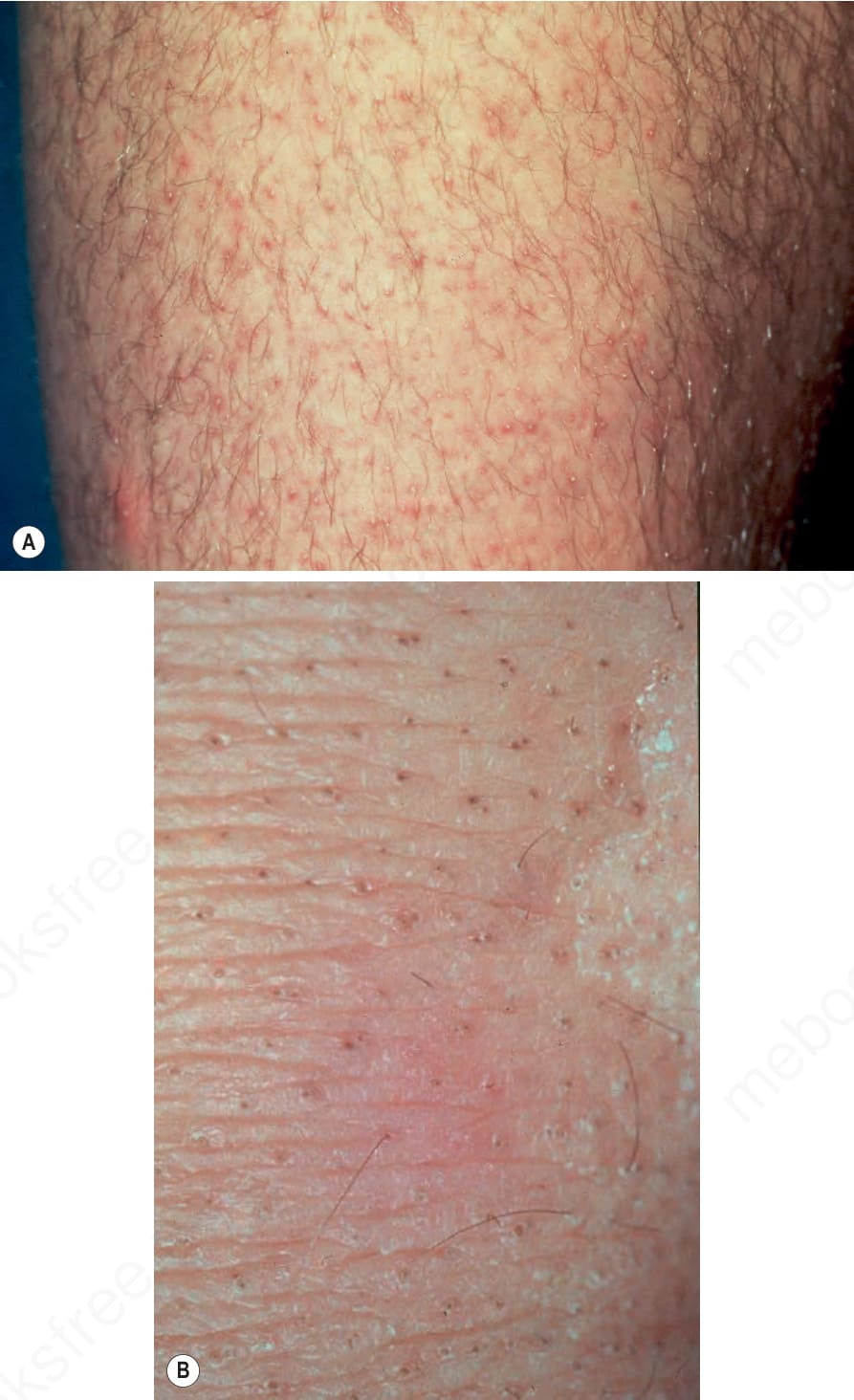
Fig. 3.65 Keratosis pilaris: (A) typical follicular papules and pustules on the thigh; (B) note the conspicuous plugged follicles. (A) By courtesy of R.A. Marsden, MD, St George’s Hospital, London, UK. (B) By courtesy of the Institute of Dermatology, London, UK.
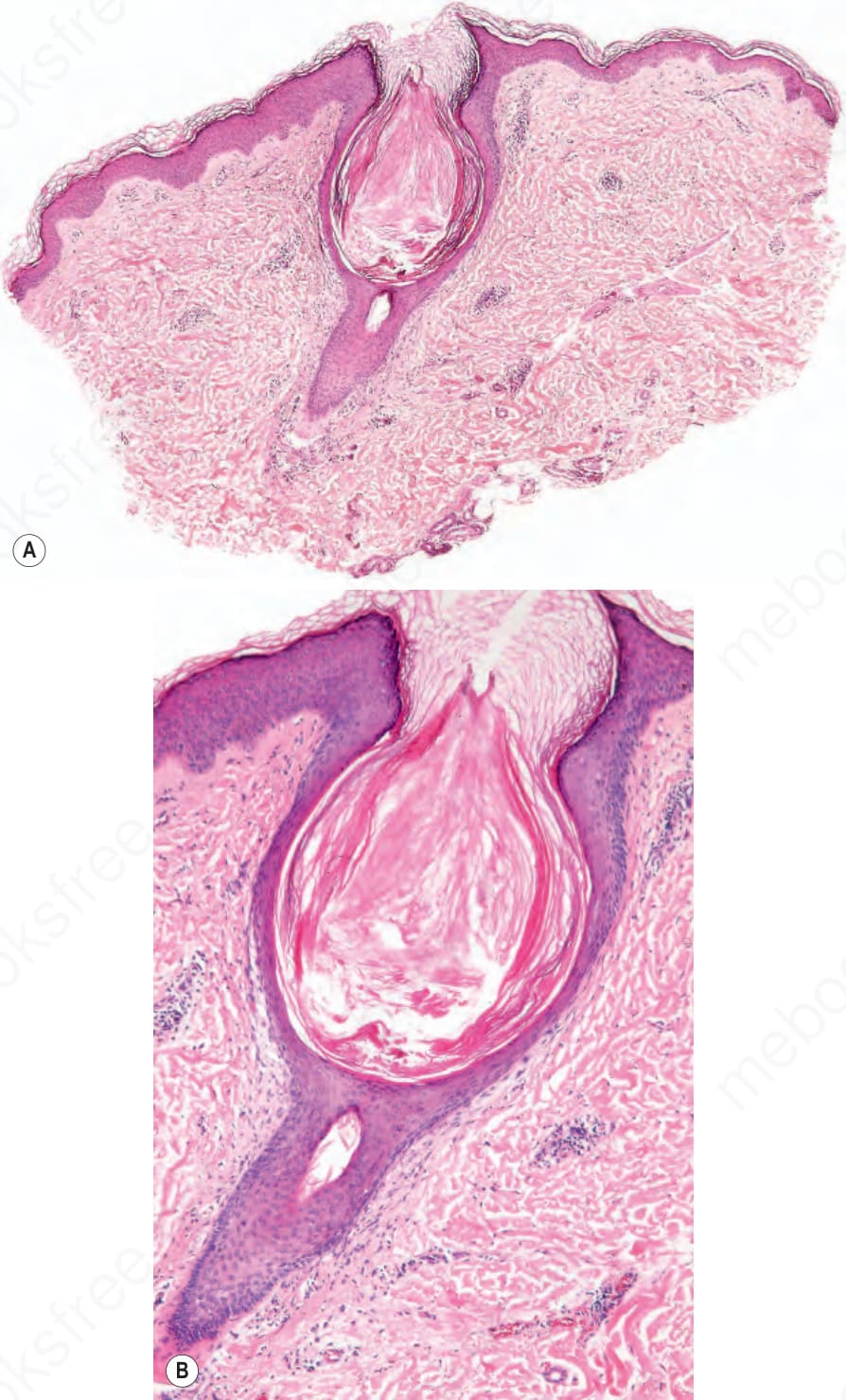
Fig. 3.66 Keratosis pilaris: (A) there is follicular dilatation and plugging; (B) note the atrophy of the infundibular epithelium.