Ichthyosis prematurity syndrome
Ichthyosis prematurity syndrome
In ichthyosis prematurity syndrome there is polyhydramnion and the premature neonates may suffer from transient asphyxia. The infants have a thick cheesy membrane which desquamates followed by skin improvement within some weeks.1 This syndrome is caused by mutations in the fatty acid transport protein 4 gene (SLC27A4).2 The skin shows compact orthohyperkeratosis and acanthosis.
At ultrastructural level, characteristic masses of lipid membranes in lentiform paranuclear swellings of granular and horn cells can be demonstrated which has led to the designation ichthyosis congenita type 4.3
erythema clears and persistent whorled scaling following the lines of Blaschko is noted (Fig. 3.55).1,2
Associated symptoms are scarring alopecia, follicular atrophoderma, localized hypo-and/or hyperpigmentation, sectorial cataracts, and skeletal dysplasia, which leads to asymmetric shortening of the long bones or severe kyphoscoliosis. Due to the individual differences in X-inactivation, expression of the disease is rather variable, even within families.1,2
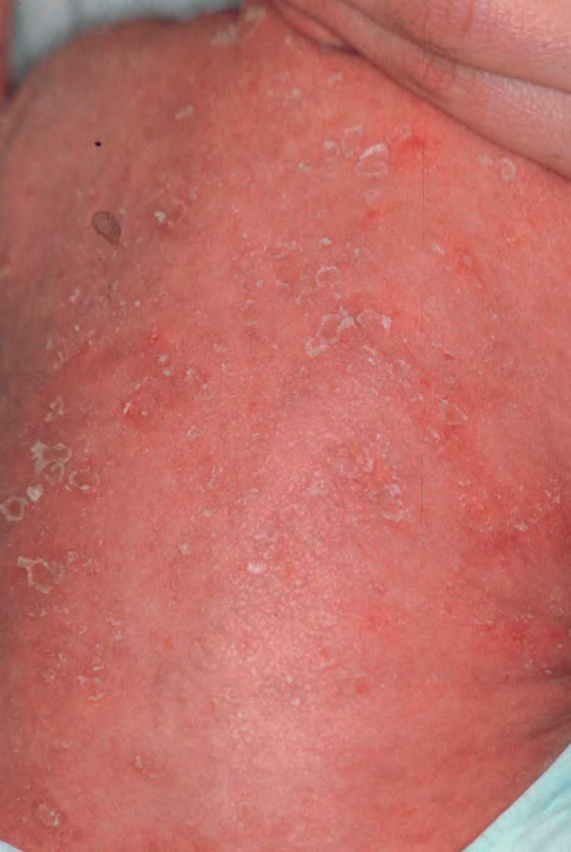
Fig. 3.55 Conradi-Hünermann-Happle syndrome: scaly erythema follows the whorled lines of Blaschko. By courtesy of H. Traupe MD, Dept of Dermatology, Münster, Germany.