Epidermolytic epidermal nevus
Epidermolytic epidermal nevus
A nevoid variant of EI is the result of somatic mutations in KRT1 or KRT10.1,2 These nevi follow one or more Blaschko lines and are characterized by a prominent hyperkeratosis. The dirty-appearing verruciform aspect should raise the diagnostic suspicion of a keratin mutation (linear verrucous epidermal nevus).3 A biopsy can easily identify the histologic pattern of epidermolytic hyperkeratosis which allows distinction from other types of epidermal nevi (Fig. 3.34). Since children of affected patients may develop a form of generalized EI, genetic counseling should be offered.4
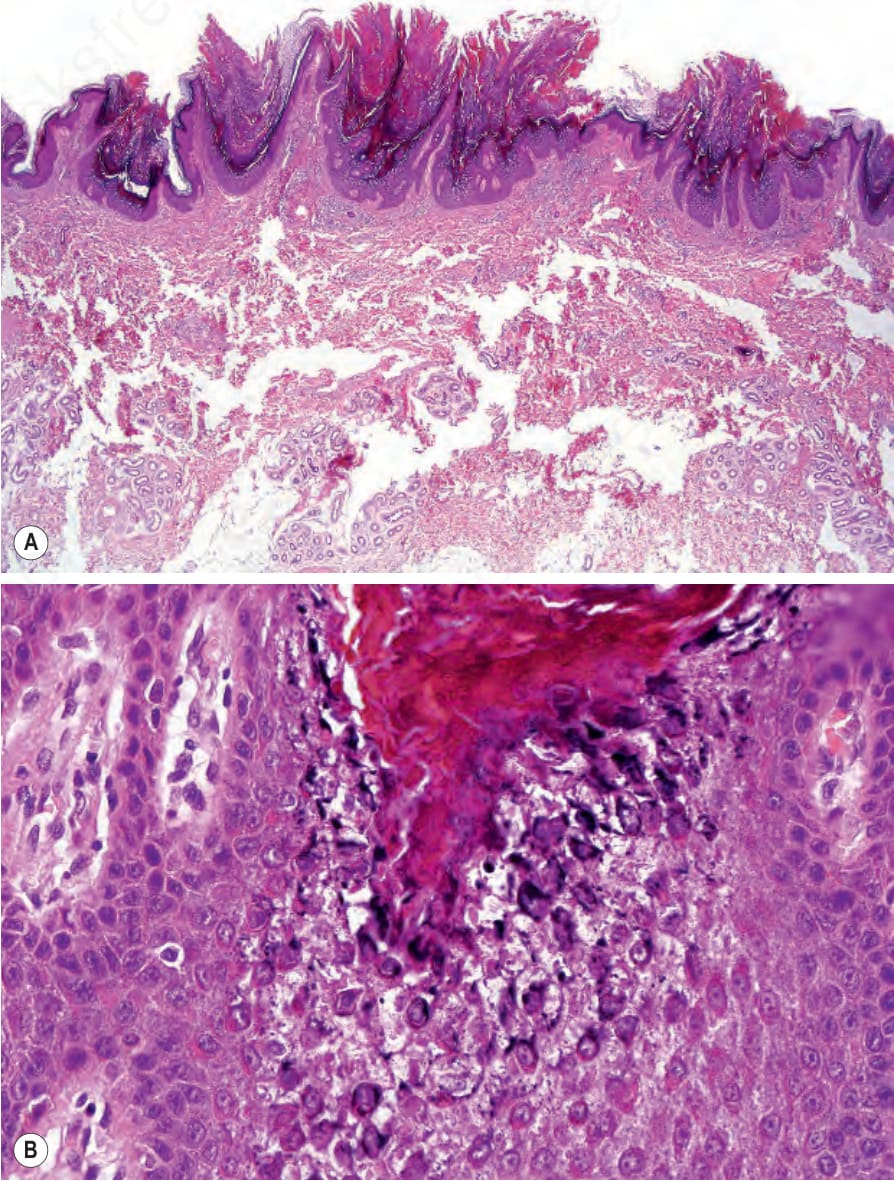
Fig. 3.34 Linear epidermolytic epidermal nevus: (A) low-power view showing massive hyperkeratosis and papillomatosis; (B) high-power view showing epidermolytic hyperkeratosis.