Annular epidermolytic ichthyosis
Annular epidermolytic ichthyosis
Annular EI is a rare but clinically distinct form of keratinopathic ichthyosis related to a novel dinucleotide mutation in KRT10.1,2 Patients have mild erythroderma and blisters at birth, but the characteristic feature is the presence of migrating annular and polycyclic, gray hyperkeratotic plaques with a peripheral erythematous border on the trunk and on the extremities (Fig. 3.31). High temperature in the summer, fever or pregnancy can induce recurrences.3,4
Histologically, epidermolytic hyperkeratosis is the dominant pattern, however a biopsy from the inflammatory border shows features of a lymphocytic, psoriasiform dermatitis with parakeratosis.2
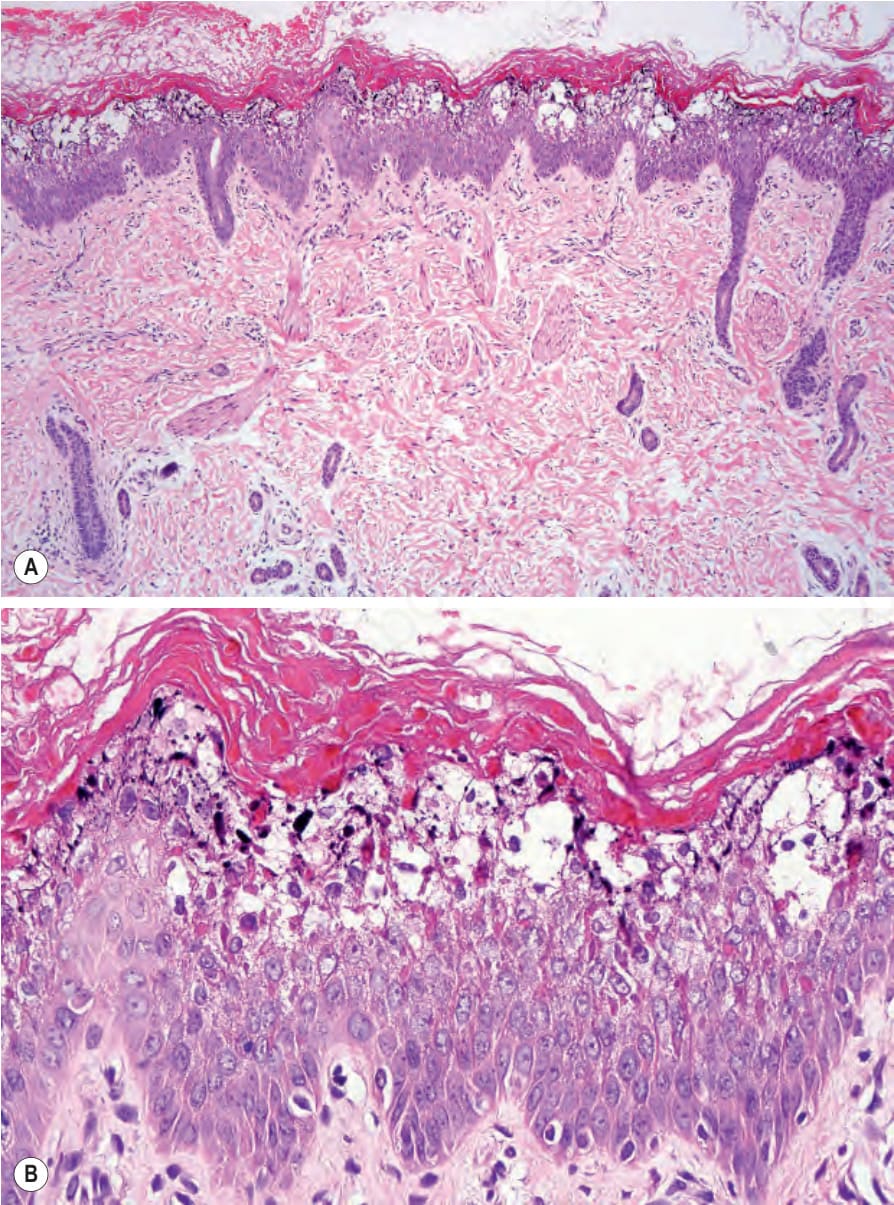
Fig. 3.29 Epidermolytic ichthyosis: (A) there is massive hyperkeratosis and acanthosis. The epidermis shows conspicuous superficial vacuolation, which has resulted, in vesiculation; (B) there is intracellular vacuolation, and irregular eosinophilic granules (representing dense abnormal aggregates of keratin filaments) are present in the superficial layers of the epidermis.
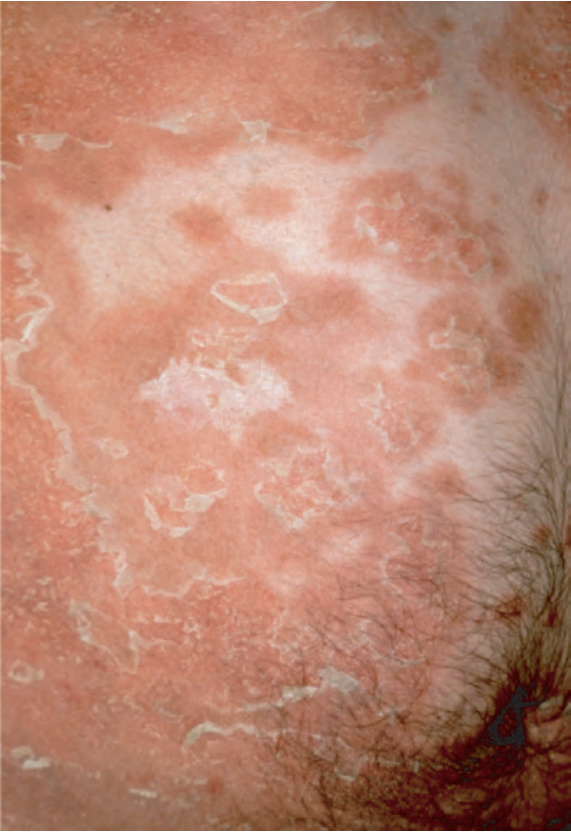
Fig. 3.31 Annular epidermolytic ichthyosis: migrating, polycyclic, gray hyperkeratotic plaques with a peripheral erythematous border. By courtesy of H. Traupe, MD, Münster, Germany.