Ichthyosis
Ichthyosis
The term ichthyosis (Gr. ichthys, fish) is applied to a number of heterogeneous genetic disorders characterized by permanent and generalized abnormal keratinization.1,2 The clinical features range from mild involvement, often passed off as ‘dry skin’ (xerosis), through to severe widespread scaly lesions causing much discomfort and social embarrassment (Fig. 3.1). The scales are shed as clusters rather than as single cells as is the norm.1 The pathogenesis of the ichthyoses is heterogeneous and ultimately depends upon abnormal differentiation resulting in impaired desquamation of corneocytes (retention hyperkeratosis) or increased corneocyte production (hyperproliferative hyperkeratosis).3,4 In some ichthyotic diseases these alterations cause hypohidrosis with dysregulation of the body temperature, abnormal epidermal barrier function, or skin infections.1
ichthyosis in Sorèz 2009 proposed a differentiation between common and rare ichthyoses, and between syndromic and nonsyndromic forms (Tables 3.1 and 3.2).5,6
Originally, ichthyotic skin disorders were classified into noncongenital ichthyoses developing 4 weeks after birth and congenital ichthyoses presenting with a collodion membrane or ichthyosiform erythroderma at birth or within 4 weeks later.3 As too many exceptions and variations had to be notified a new classification appeared mandatory. A consensus conference on
Finally, hereditary ichthyoses should be differentiated from acquired ichthyosis or ichthyosiform skin conditions that do not have a genetic basis and can be caused by different underlying diseases .7
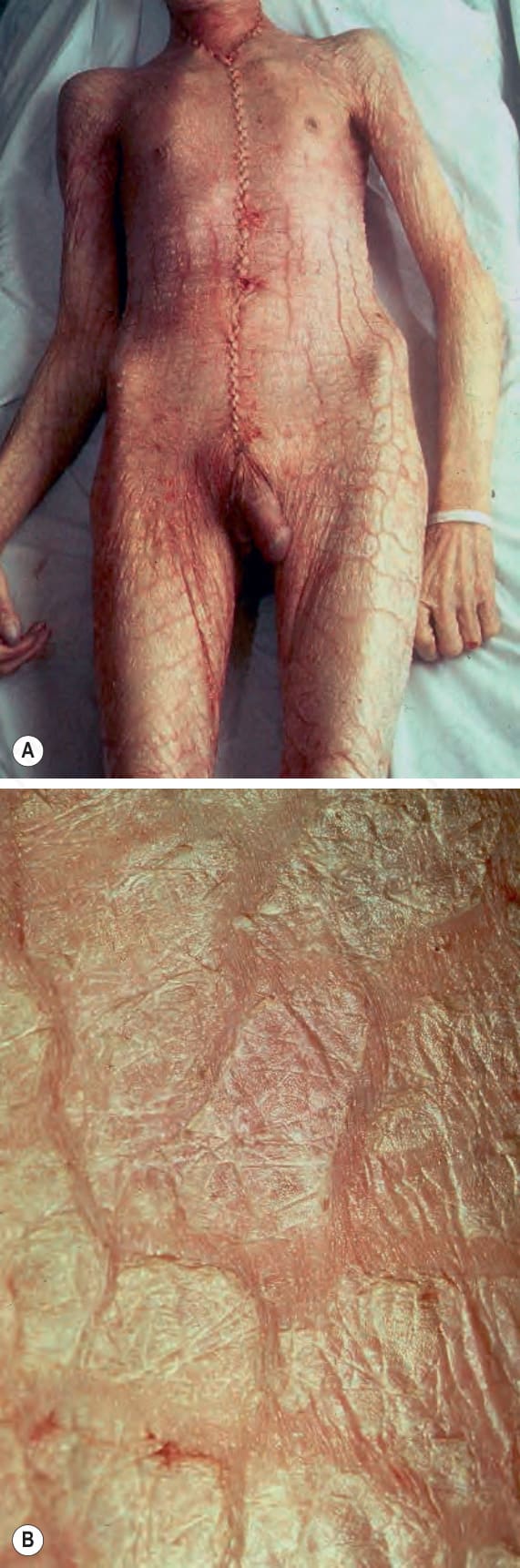
Fig. 3.1 (A, B) Severe generalized ichthyosis: this was an incidental finding at autopsy. Ichthyosis can be very disfiguring and a considerable social disadvantage. (A,B) By Courtesey Ph. McKee.
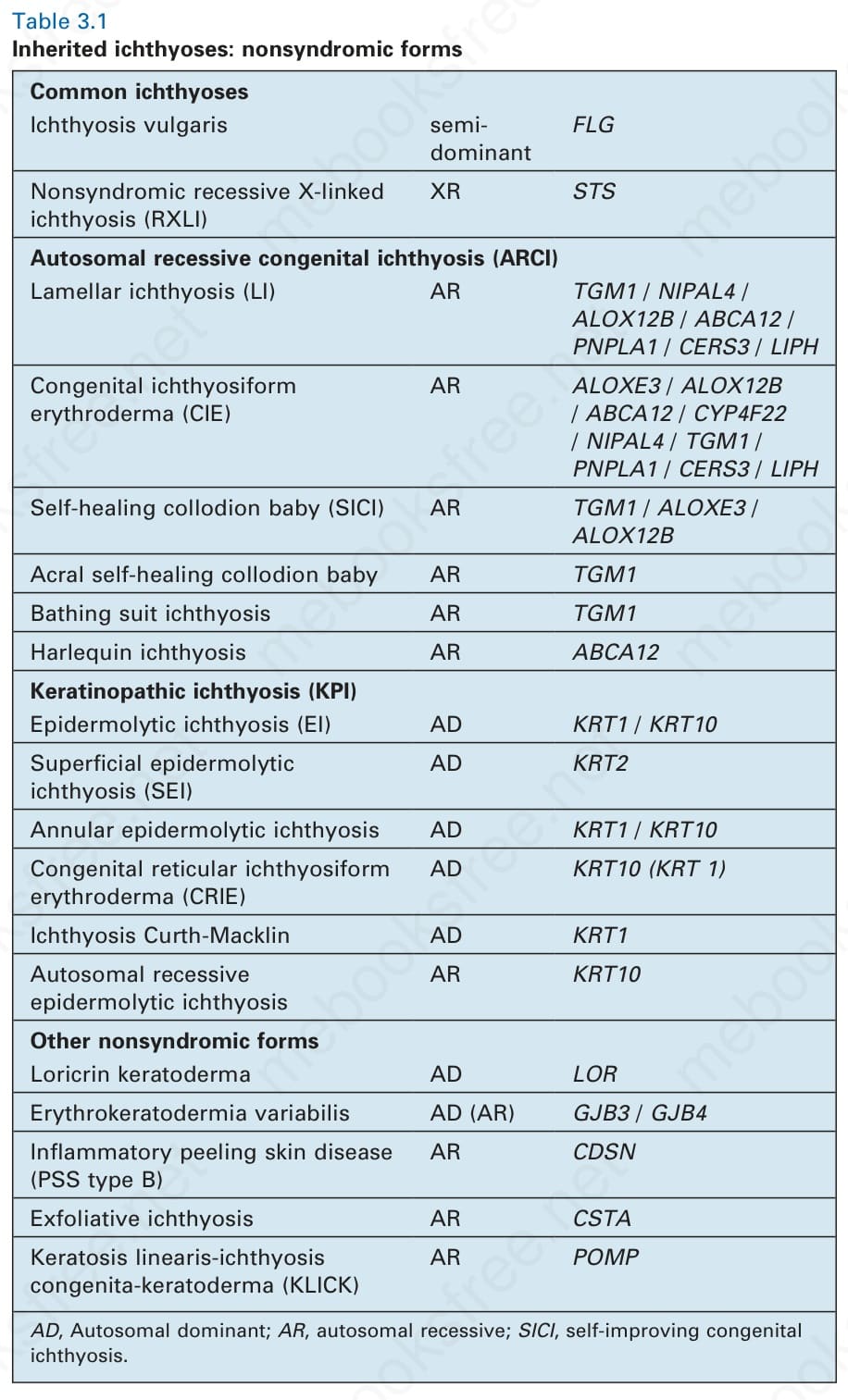
Table 3.1 Inherited ichthyoses: nonsyndromic forms