引言
自從多價重組疫苗 (polyvalent recombinant vaccines) 商業化以來,對人類及非人類哺乳動物乳突瘤病毒 (papillomaviruses) 的研究興趣便逐漸消退;然而,小鼠乳突瘤病毒 (mouse papillomavirus) 的發現開啟了有趣的研究新途徑。過去三十年間已發現許多齧齒類乳突瘤病毒,其中一種來自一群野生的歐洲收割鼠 (European harvest mice) 族群。不過,直到近期才在免疫缺陷的裸鼠 (nude mice) 身上報導出一種實驗室小鼠乳突瘤病毒,此病毒可傳播給其他裸鼠,但僅限於少數的近交系遺傳背景 (inbred backgrounds)。研究指出,這些病灶要發展出來,小鼠需具有泛 T 細胞缺陷 (pan T-cell deficiencies)。在具免疫能力 (immunocompetent) 的小鼠正常皮膚中發現了一種非常相似的病毒亞型,顯示此病毒已良好地適應其宿主。在免疫缺陷的品系中,吻部 (muzzle) 與尾部皮膚發展出良性的乳突瘤 (papillomas,即疣 warts),但在背側腰部皮膚 (dorsal lumbar skin) 則發展出侵襲性、低分化、類似毛母質瘤 (trichomatrixomas) 的癌 (Fig. 36.8)。
小鼠毛囊的色素生成
在小鼠毛囊中,色素生成 (pigmentation) 依循黑色素細胞 (melanocytes) 與真皮乳頭 (dermal papilla) 之間一系列精確的交互作用順序。毛髮僅在毛髮週期的生長期 (anagen) 階段才會主動色素化。黑色素合成 (melanin synthesis) 在退化期 (catagen) 處於不活躍狀態,並持續至休止期 (telogen) 仍然不活躍;因此,必須強調毛囊色素生成 (follicular melanogenesis) 本質上具有週期性。
毛色基因學
目前在小鼠的研究中,已鑑定出影響毛色 (coat color) 的基因比任何其他性狀都多。在 Mouse Genome Informatics (www.informatics.jax.org) 搜尋「abnormal hair/coat pigmentation」此一詞句,得到一千六百九十二種影響毛色的基因型 (http://www.informatics.jax.org;2016 年 8 月)。當今研究中熱門的近交研究品系所發現最常見的等位基因 (alleles) 如 Fig. 36.9 所示。雖然毛色遺傳學已被研究近一百年,但影響毛色的等位基因之龐大多樣性似乎是一個永無止盡的故事。此領域目前的研究正積極探討這些基因之間的相互關聯,以建構出一條遺傳路徑 (genetic pathway,Fig. 36.10)。
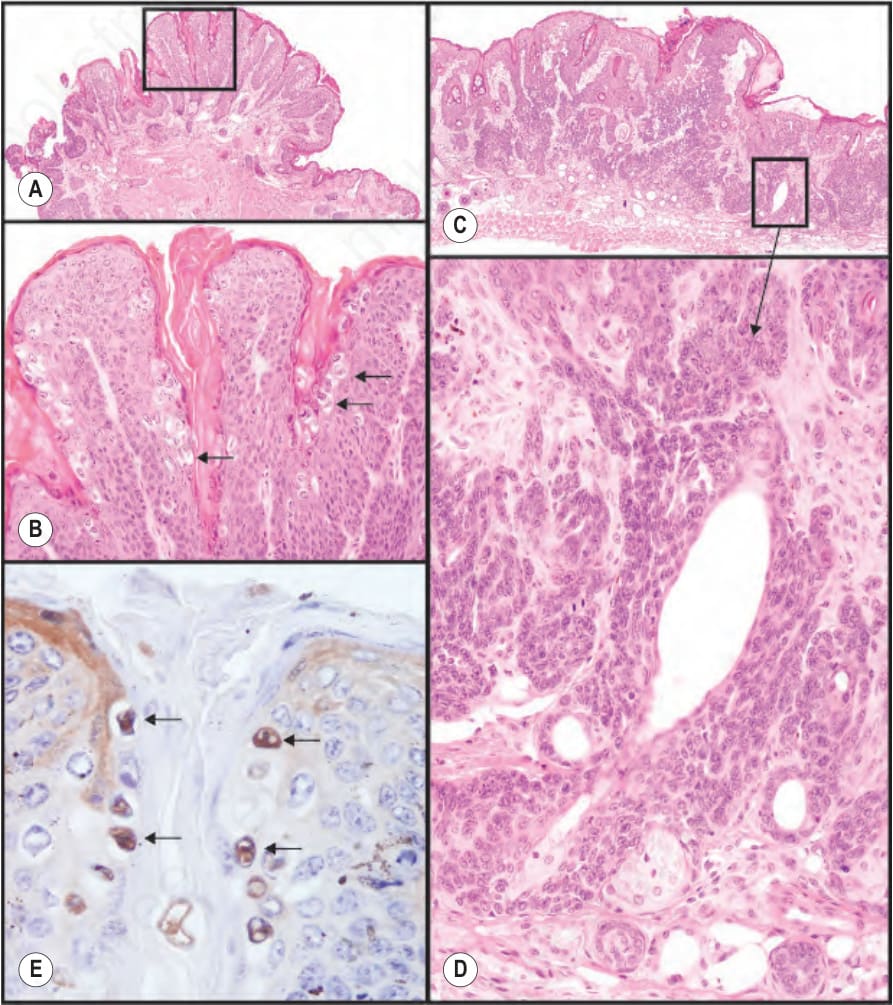
圖 36-8:實驗室小鼠乳突瘤病毒 (laboratory mouse papillomavirus) 感染在吻部 (muzzle,A、B) 與尾部造成外生性乳突瘤 (exophytic papillomas),這些病灶具生產性 (productive)(可藉免疫組織化學在凹空細胞 koilocytes 中偵測到病毒抗原,E)。然而,當病毒接種至腰部區域的背側皮膚時,發展出一個略為隆起的病灶,其細胞為低分化且具局部侵襲性 (locally invasive,C、D)。這些細胞具有高核質比 (nuclear to cytoplasmic ratio)、高有絲分裂指數 (mitotic index),並在免疫組織化學上對數種小鼠特異性角蛋白 (mouse specific keratins) 呈陽性。
Fig. 36.8 Laboratory mouse papillomavirus infections cause exophytic papillomas on the muzzle (A, B) and tail that are productive (viral antigens can be detected in koilocytes by immunohistochemistry, E). However, when the virus was inoculated into the dorsal skin in the lumbar region, a slightly raised lesion developed with poorly differentiated cells that were locally invasive (C, D). These cells had a high nuclear to cytoplasmic ratio, high mitotic index, and were positive for several mouse specific keratins by immunohistochemistry.
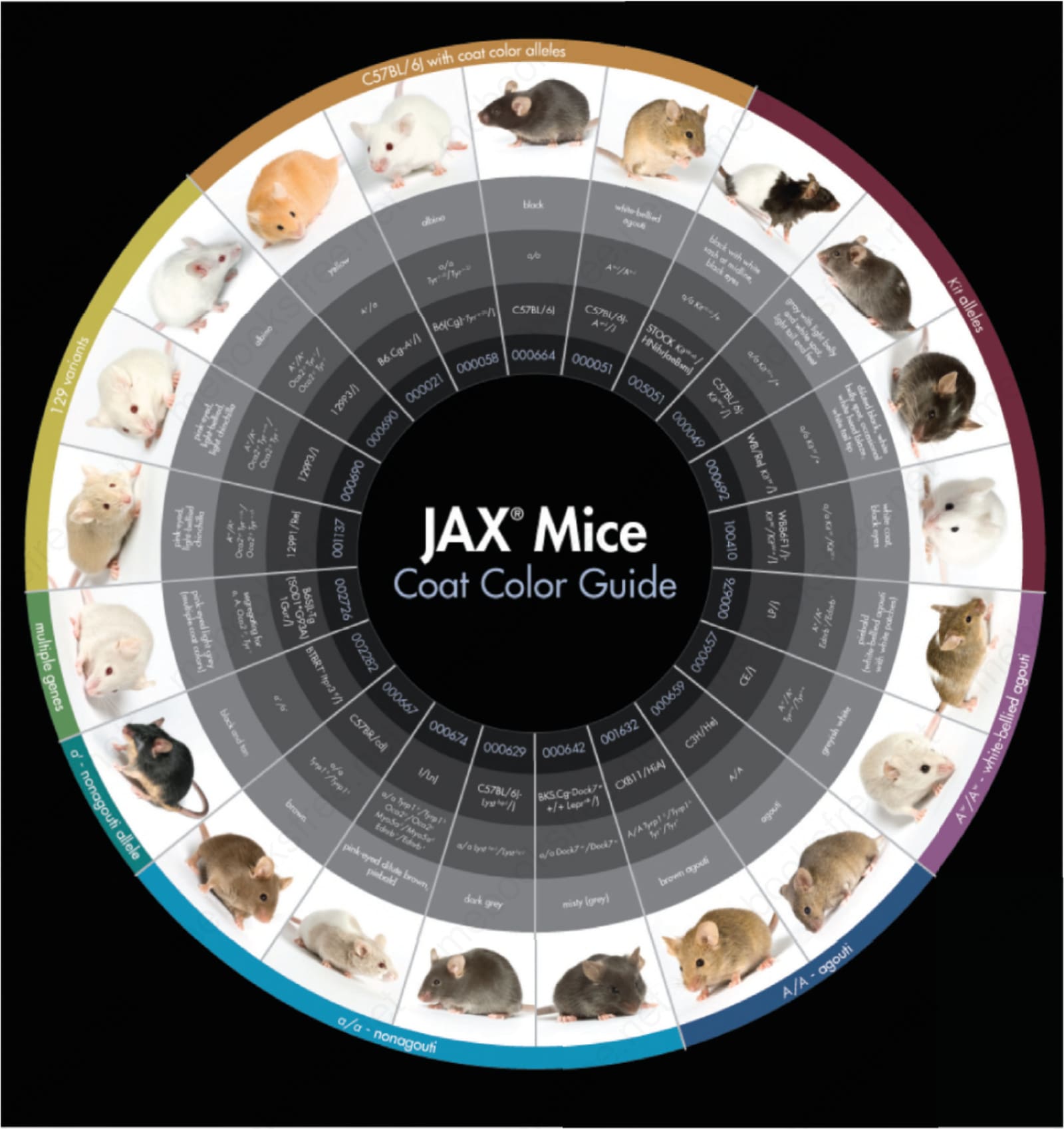
圖 36-9:實驗室小鼠的毛色變異 (coat color variations) 及其不同顏色背後對應的基因突變。感謝 Stanton Short 與 Jennifer Torrance(JAX Creative Department, The Jackson Laboratory)提供圖片與版面設計。
Fig. 36.9 Coat color variations in laboratory mice and the corresponding genetic mutations underlying the different colors. Stanton Short and Jennifer Torrance (JAX Creative Department, The Jackson Laboratory) are thanked for the figures and layout.
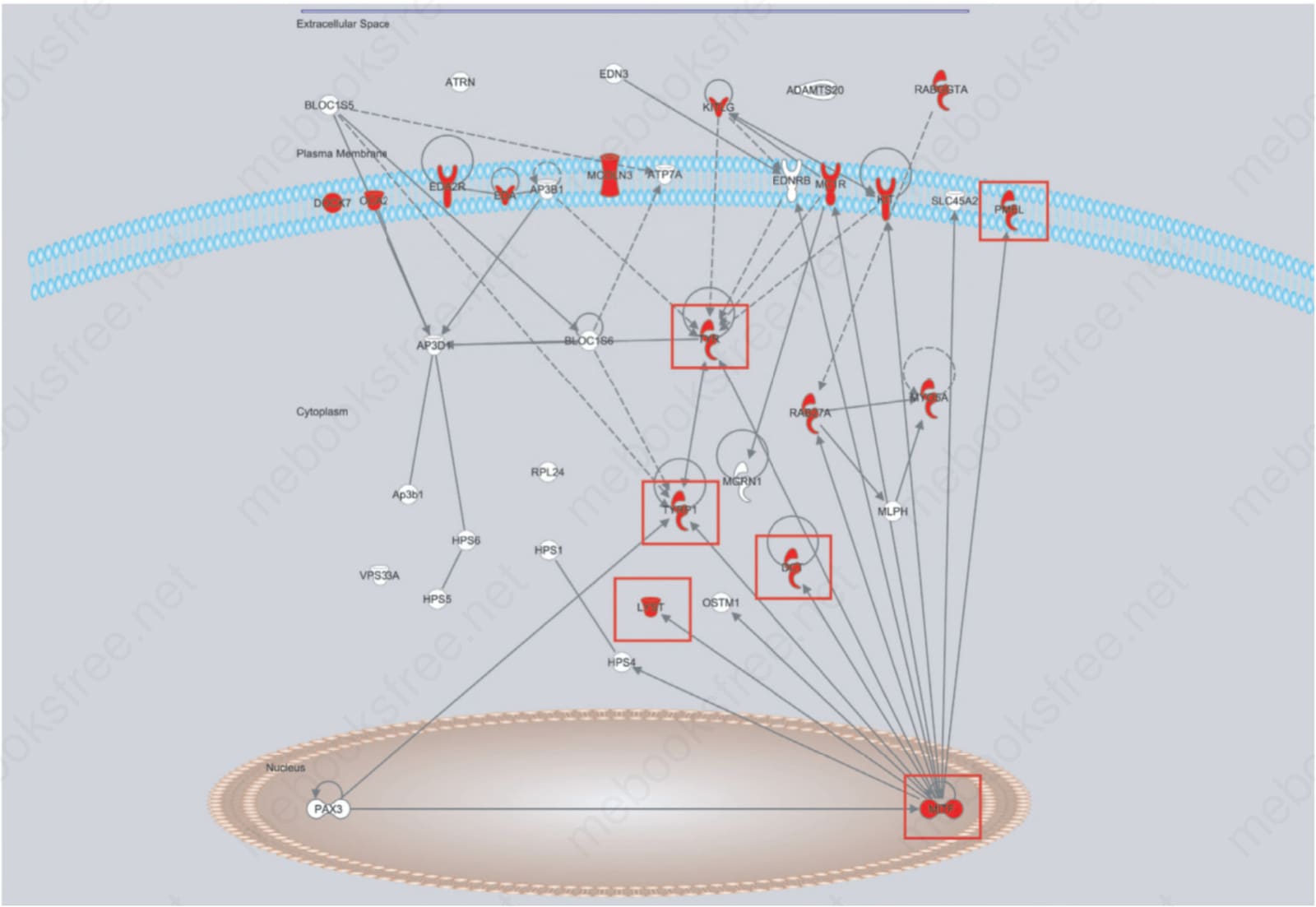
圖 36-10:以 Ingenuity Pathway Analysis Software® (http://www.ingenuity.com/) 繪製的分子路徑圖,顯示毛色路徑 (coat color pathway) 中相互作用的基因。Fig. 36.9 中許多突變小鼠的突變即位於此路徑的基因上(紅色框)。此圖闡明了某一共同性狀(毛色)的變異如何有助於定義一條分子路徑。它同時也呈現出眾多不在此路徑中、但與毛色相關的其他基因,這些將是未來整合的目標。
Fig. 36.10 Ingenuity Pathway Analysis Software® (http://www.ingenuity.com/) molecular pathway diagram for genes that interact in the coat color pathway. Many of the mutant mice in Fig. 36.9 have mutations in the genes in this pathway (red boxes). This illustrates how variations on a common trait, coat color, help to define a molecular pathway. It also illustrates the number of other genes involved with coat color not in this pathway, which will be future goals to integrate.