太田母斑 (Nevus of Ota)
太田母斑 (nevus of Ota)
臨床特徵 (Clinical Features)
太田母斑 (nevus of Ota,又稱 oculodermal melanosis、nevus fuscoceruleus ophthalmomaxillaris) 在日本人並不少見,但在白種人 (Caucasians) 與有色人種中僅偶爾可見。它是一種界線不清、板岩藍色 (slate blue)、通常
1294 黑色素細胞母斑
伊藤母斑 (nevus of Ito)、前述兩種病灶以及藍色母斑 (blue nevus,見下文) 的藍色臨床外觀,是一種人造現象 (artifact),源於光線在通過相對混濁的真皮時發生散射,並吸收了其他所有的光譜成分。
組織病理特徵 (Histopathology)
此病灶在組織學上與 nevus of Ota 無法區分。
表皮可能顯示色素增加 (hyperpigmentation) 與黑色素細胞 (melanocytes) 數目增加,但無交界活性 (junctional activity)。在真皮上層與中層,可見聚集的、含大量色素的、紡錘狀 (spindle-shaped)、雙極 (bipolar) 或樹突狀 (dendritic) 黑色素細胞 (Figs 25.221 and 25.222)。1,3 大多數平行於皮膚表面排列,但有時也可見其環繞表皮附屬器 (epidermal appendages)。1 纖維母細胞 (fibroblastic) 成分極少。
近期報告一例在 nevus of Ito 背景上發生的黑色素瘤 (melanoma),帶有 GNAQ 與 BAP1 基因的突變。10
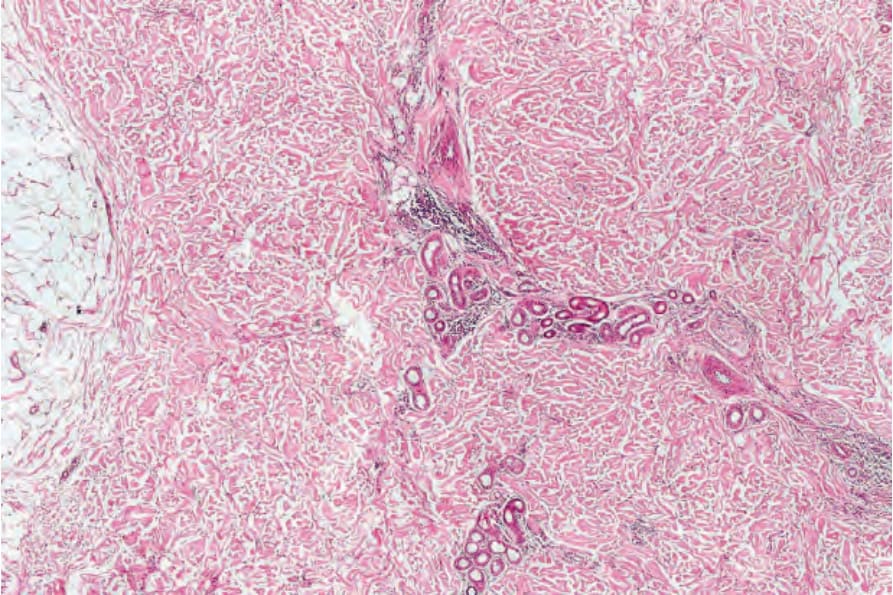
圖 25-218:蒙古藍斑 (Mongolian blue spot):在低倍率檢查下,特徵不明顯,主要為真皮深層細胞密度增加 (increased cellularity)。
Fig. 25.218 Mongolian blue spot: at low-power examination, the features are subtle, comprising increased cellularity in the deeper dermis.
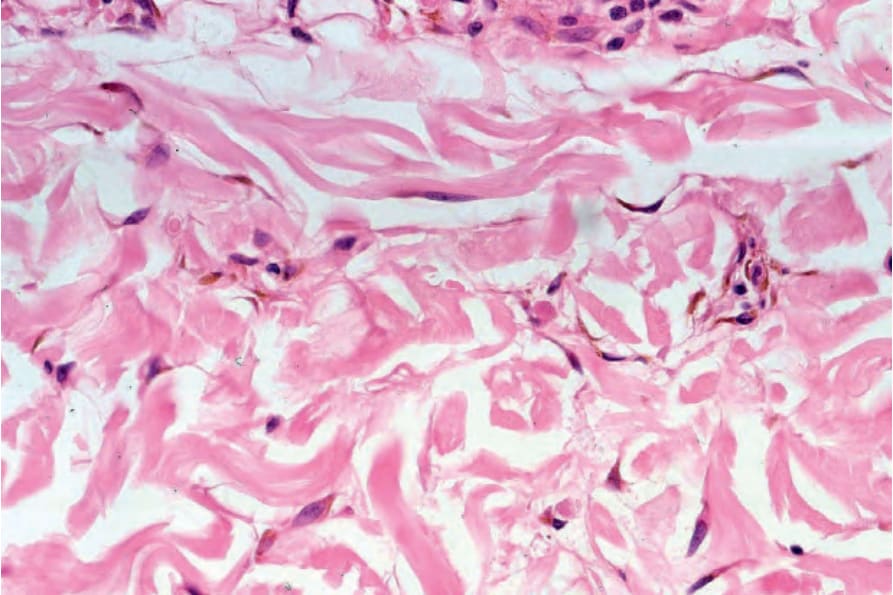
圖 25-219:蒙古藍斑 (Mongolian blue spot):可見散在的雙極與樹突狀細胞 (bipolar and dendritic cells)。
Fig. 25.219 Mongolian blue spot: scattered bipolar and dendritic cells are present.
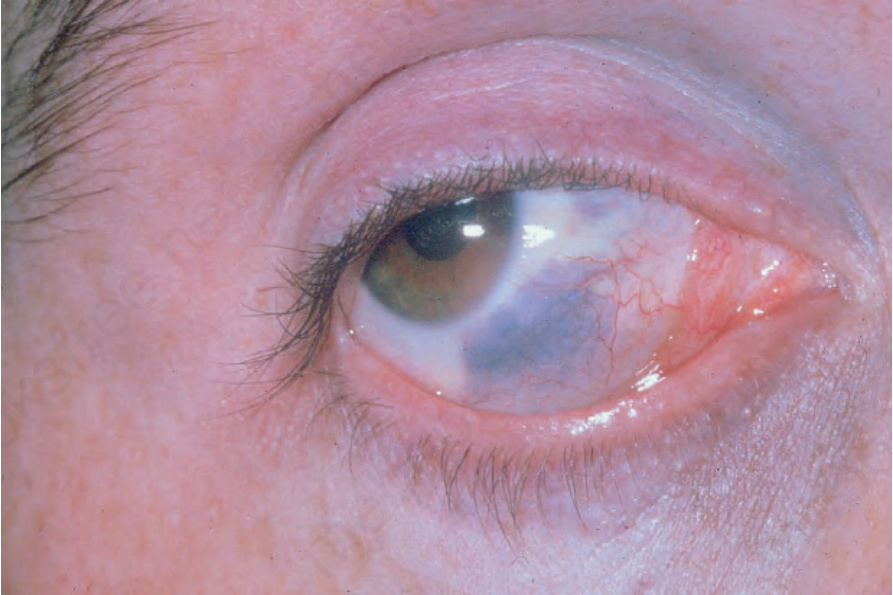
圖 25-220:太田母斑 (Nevus of Ota):有鞏膜侵犯 (scleral involvement),並可見明顯的眼周藍色變色 (periocular bluish discoloration)。承蒙英國倫敦皮膚科研究所 (Institute of Dermatology, London, UK) 提供。
Fig. 25.220 Nevus of Ota: there is scleral involvement and a periocular bluish discoloration is evident. By courtesy of the Institute of Dermatology, London, UK.
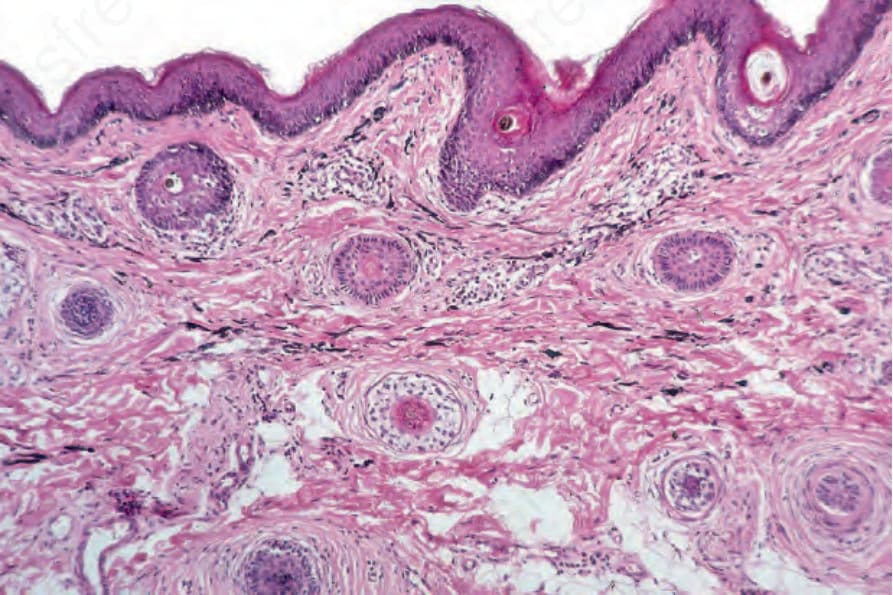
圖 25-221:太田母斑 (Nevus of Ota):可見少量雙極與樹突狀細胞 (bipolar and dendritic cells)(hematoxylin and eosin 與 Masson-Fontana 染色)。
Fig. 25.221 Nevus of Ota: small numbers of bipolar and dendritic cells are present (hematoxylin and eosin and Masson-Fontana stain).
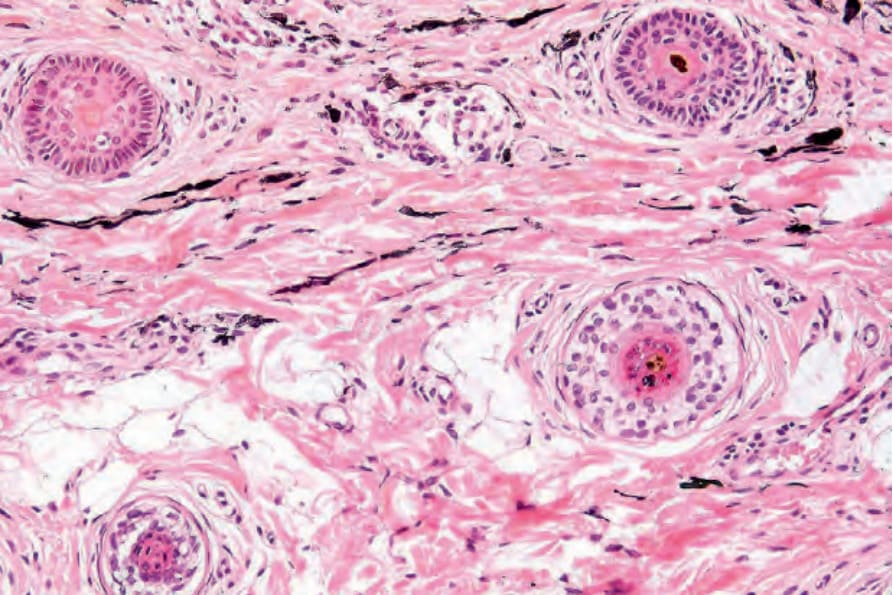
圖 25-222:太田母斑 (Nevus of Ota):高倍率視野。
Fig. 25.222 Nevus of Ota: high-power view.
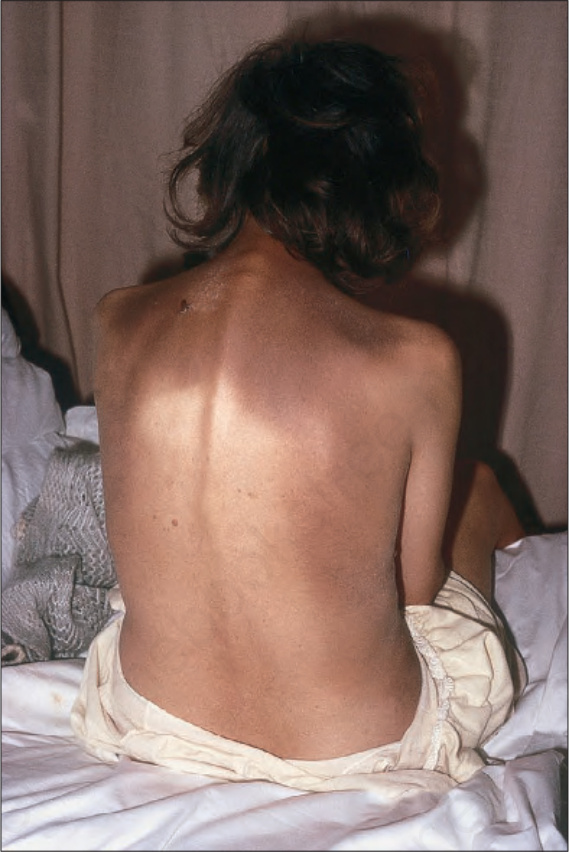
圖 25-223:伊藤母斑 (Nevus of Ito):特徵性的變色侵犯肩部與肩胛區 (shoulder and scapular regions)。承蒙 M.M. Black, MD, St Thomas’ Hospital, London, UK 提供。
Fig. 25.223 Nevus of Ito: characteristic discoloration involving the shoulder and scapular regions. By courtesy of M.M. Black, MD, St Thomas’ Hospital, London, UK.