毛髮橫裂與毛髮折斷 (Trichoschisis and Trichoclasis)
毛髮橫裂與毛髮折斷 (Trichoschisis and trichoclasis)
毛髮橫裂 (trichoschisis) 是指毛幹 (hair shaft) 發生橫向的乾淨斷裂,同時侵犯毛小皮 (cuticle) 與毛皮質 (cortex)(圖 22.176)。1 它是因毛小皮細胞 (cuticular cells) 流失而發生,且常與 TTD 相關。2,3 它也曾在毛髮正常的病人身上被觀察到。4
毛髮折斷 (trichoclasis) 是指毛幹的青枝骨折樣 (greenstick) 斷裂。因此它是一種斜向或橫向的不完全斷裂,侵犯毛皮質但
1113 毛幹的斷裂 (Fractures of the hair shaft)
以全身性脫屑性紅皮症 (generalized desquamative erythroderma) 為特徵。毛幹的缺陷在生命早期即出現,並侵犯全身所有毛髮。在少數病人中,其表現非常輕微。然而在典型病例中,毛髮短、乾、無光澤且易斷。睫毛 (eyelashes) 與眉毛 (eyebrows) 稀少或缺如。眉毛比頭皮更常受到侵犯且更為嚴重,因此代表進行切片的最佳部位。2 雖然 Netherton 症候群 (Netherton syndrome) 曾與胺基酸尿症 (aminoaciduria) 相關聯,但此並非恆定的發現。
其他曾被報導的臨床特徵包括神經學缺損、智能不足 (mental retardation)、身材矮小、生長遲緩、反覆感染,以及低或高丙種球蛋白血症 (hypo- or hypergammaglobulinemia)。3,4
致病機轉與組織學特徵 (Pathogenesis and histologic features) Netherton syndrome 是由位於染色體 5q32 之 SPINK5 基因突變所引起,該基因編碼一種稱為 LEKT1 (lymphoepithelial Kazal-type related inhibitor) 的絲胺酸蛋白酶抑制劑 (inhibitor of serine protease),是一種參與皮膚屏障形成 (skin barrier formation) 與免疫調節的新型絲胺酸蛋白酶抑制劑。一般認為,表皮中 LEKT1 表現的改變會導致角質層 (stratum corneum) 中蛋白水解酶 (proteolytic enzymes) 過早活化,並使角質細胞 (corneocytes) 分離。5–7 SPINK5 檢測可作為診斷 Netherton syndrome 的輔助,方法是以對抗 LETK1 的抗體對皮膚切片進行免疫組織化學染色 (immunohistochemistry)。8
留下毛小皮完整。1 毛小皮與毛皮質中的硫含量 (sulfur content) 正常。它不是一個特異性的徵象,且可見於多種毛幹疾病 (hair shaft disorders)(圖 22.177)。
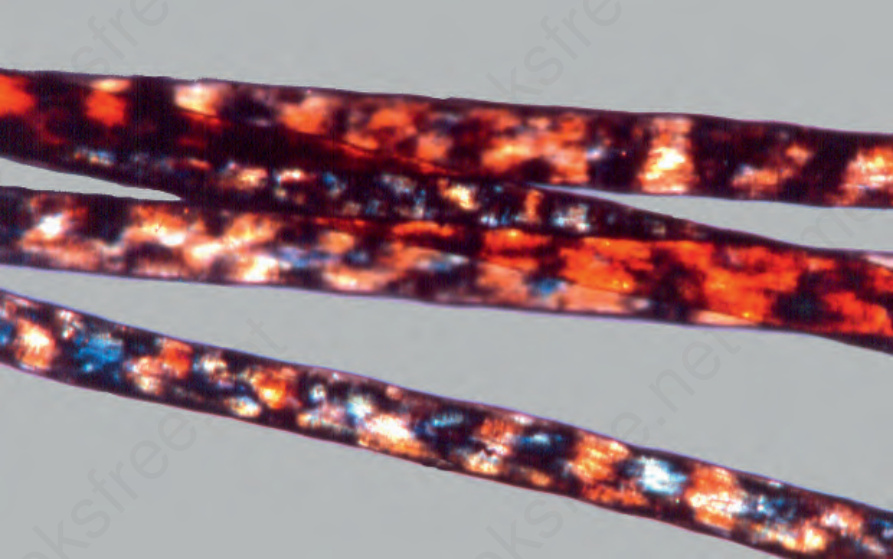
圖 22.175:毛髮硫營養不良 (Trichothiodystrophy):偏振光 (polarized light) 下毛幹呈現典型的虎尾紋外觀 (tiger tail appearance)。承蒙 P. Reygagne 醫師提供,Centre Sabouraud, Paris, France。
Fig. 22.175 Trichothiodystrophy: typical tiger tail appearance in hair shafts under polarized light. Courtesy of P. Reygagne, MD, Centre Sabouraud, Paris, France.
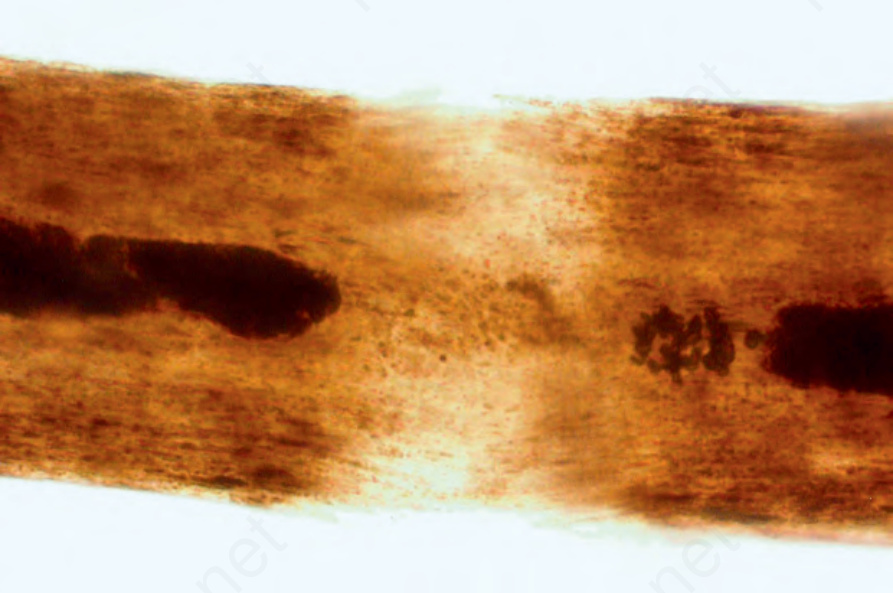
圖 22.176:毛髮橫裂 (Trichoschisis):注意毛小皮中有一道垂直於毛纖維 (hair fiber) 軸向的裂縫;毛皮質纖維 (cortical fibers) 並未突出。
Fig. 22.176 Trichoschisis: note a crack in the cuticle that is perpendicular to the axis of the hair fiber; the cortical fibers do not protrude.
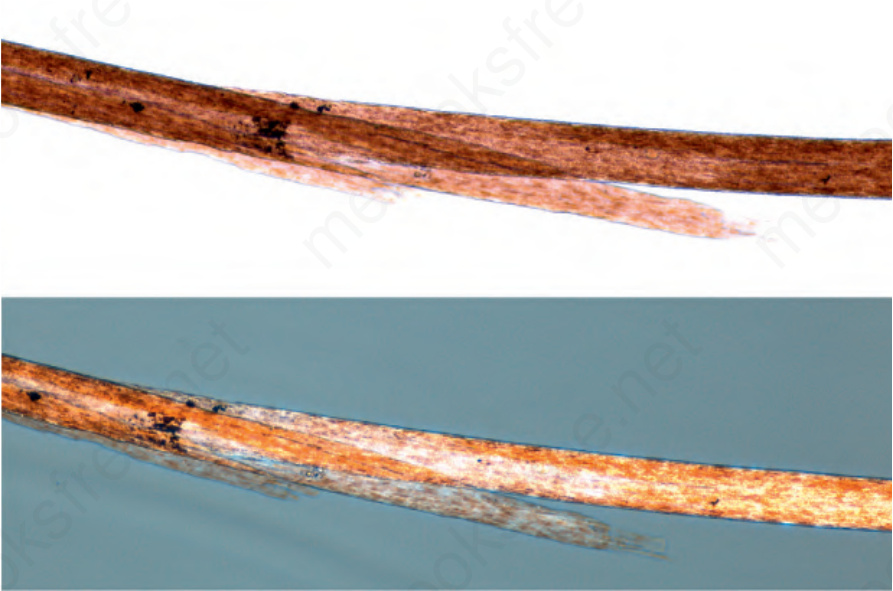
圖 22.177:毛髮折斷 (Trichoclasis):毛幹的「青枝」骨折樣 (Greenstick) 斷裂,由一道被完整毛小皮 (intact cuticle) 夾持的斜向斷裂所構成,在偏振光 (polarized light) 下易於辨識(下圖)。
Fig. 22.177 Trichoclasis ‘Greenstick’ fracture of the hair shaft, consisting of an oblique fracture splinted by an intact cuticle, easily visible with polarized light (bottom).