Mucinous syringometaplasia
Mucinous syringometaplasia
Clinical features Mucinous syringometaplasia (acral mucinous syringometaplasia, mucinous metaplasia, muciparous epidermal tumor) is a rare condition which most commonly presents on the soles of the feet or palmar aspect of the fingers as a 0.5- to 1.5-cm verrucous nodule, often diagnosed clinically as a viral wart.1–8 Sometimes a central dell or sinus is present and occasionally a history of drainage of clear fluid is given.7 Lesions occur less often at a variety of other sites including the neck, chin, chest, buttock, knee, and penis, when the appearance varies from a small plaque to a nodule.6–8 Males are affected more often than females. The age at presentation is very variable, ranging from 15 to 66 years.6 Duration of the lesion ranges from months to decades. The lesion is almost certainly reactive and does not recur following complete excision.5–7
1696 Cutaneous cysts
Immunohistochemically, the mucin-containing cells express pankeratin, CAM 5.2, CEA, and EMA.6–8 They are GCDPF-15 and S100 protein negative.6,7
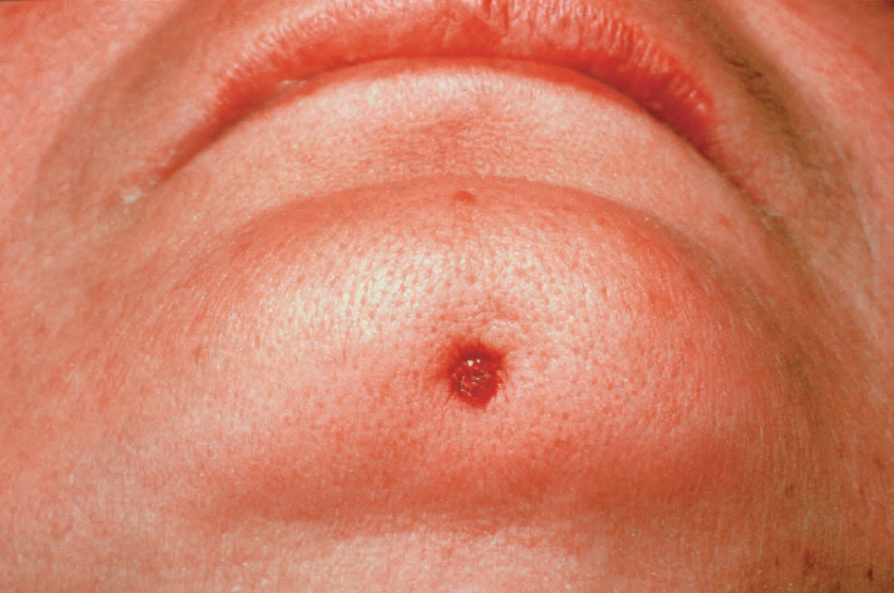
Fig. 34.41 Dental sinus: the chin is a commonly affected site. By courtesy of the Institute of Dermatology, London, UK.
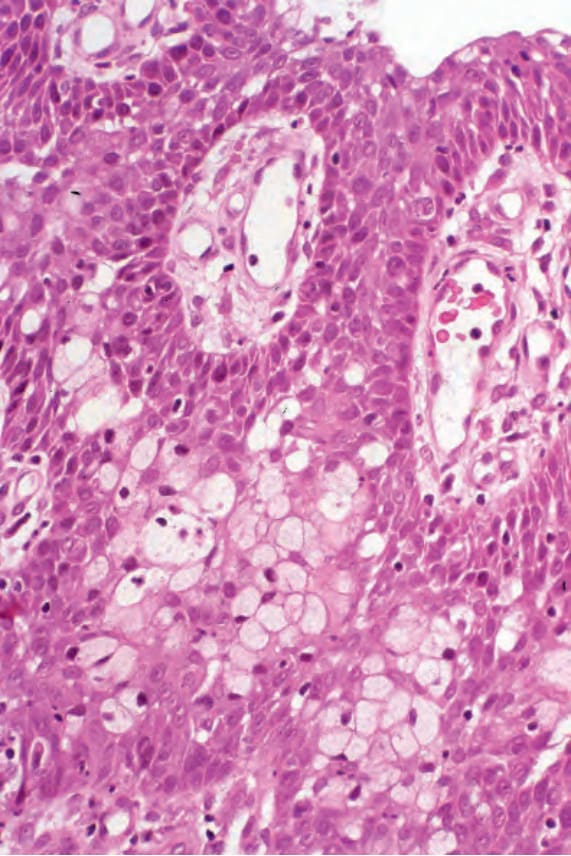
Fig. 34.43 Mucinous syringometaplasia: the epithelial lining contains numerous mucinsecreting cells. By courtesy of J. Grant, MD, Worthing Hospital, Worthing, UK.