Cutaneous cysts
Cutaneous cysts
CHAPTER 34
for references and additional material
Follicular cysts 1680 Epidermoid cyst 1680 Proliferating epidermoid cyst 1683 Hybrid cyst 1684 Verrucous cyst 1684 Epidermoid cyst of the sole 1684 Comedonal cyst 1684 Milia 1685 Trichilemmal cyst 1687 Vellus hair cysts 1688
Cutaneous metaplastic synovial cyst 1694 Pilonidal sinus 1694 Dental sinus 1695 Mucinous syringometaplasia 1695 Umbilical polyp and granuloma 1696 Pseudocyst of the auricle 1697
Dermoid cyst 1689 Cutaneous mature cystic teratoma 1691 Glandular cysts 1691 Bronchogenic cyst 1691 Thyroglossal duct cyst 1691 Branchial cyst 1692 Cervical thymic cyst 1692 Cutaneous ciliated cyst 1692 Median raphe cyst 1693
Although a wide variety of cysts may present in the skin, usually these turn out to be epidermoid (infundibular), trichilemmal, or glandular in nature (Table 34.1). It can sometimes be difficult to determine whether a structure is a true cyst, a sinus, a comedone, or an obliquely sectioned dilated hair follicle. Usually, the clinical information or further sections provide the answer, but the alternatives should always be borne in mind. The majority of cutaneous cysts are recognized as such clinically. However, a significant proportion of misdiagnoses do occur; therefore, it is advisable that all lesions are submitted for histologic confirmation.1,2
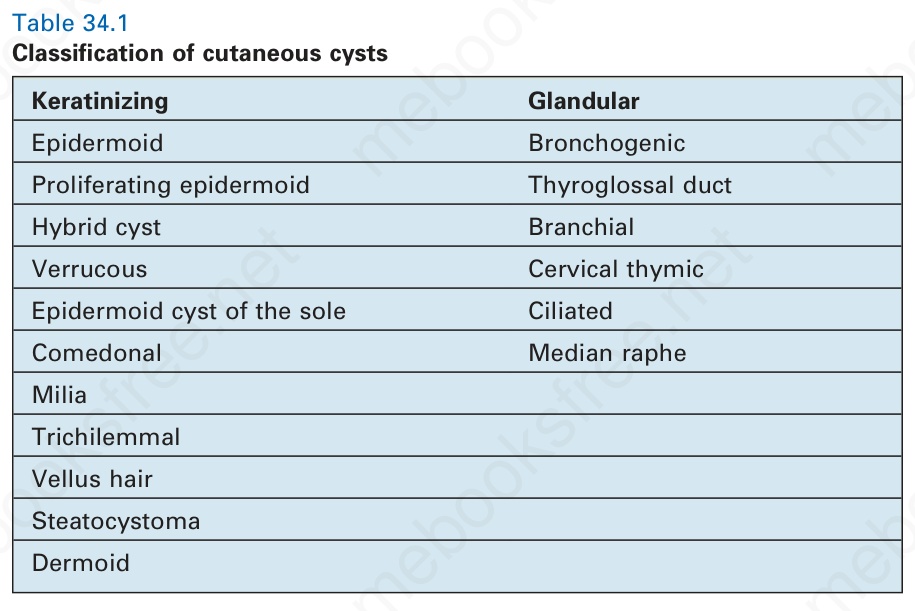
Table 34.1 Classification of cutaneous cysts