Compound blue nevus
Compound blue nevus
Clinical features Compound blue nevus (superficial blue nevus with prominent intraepidermal dendritic melanocytes) is a rarely documented variant of blue nevus that presents as blue-gray to blue or black papules or nodules measuring from 2 to 4 mm in greatest dimension.1–3 Compound blue nevus shows predilection for the trunk, followed by extremities and head and neck area.1–3 The lesion shows female predominance.
Histologic features Histologically, the compound blue nevus is a symmetrical, well-delineated, and dome-shaped proliferation combining the features of a common blue nevus with epidermal hyperpigmentation and an intraepidermal dendritic cell population (Fig. 25.232).1 Junctional nesting is usually absent.
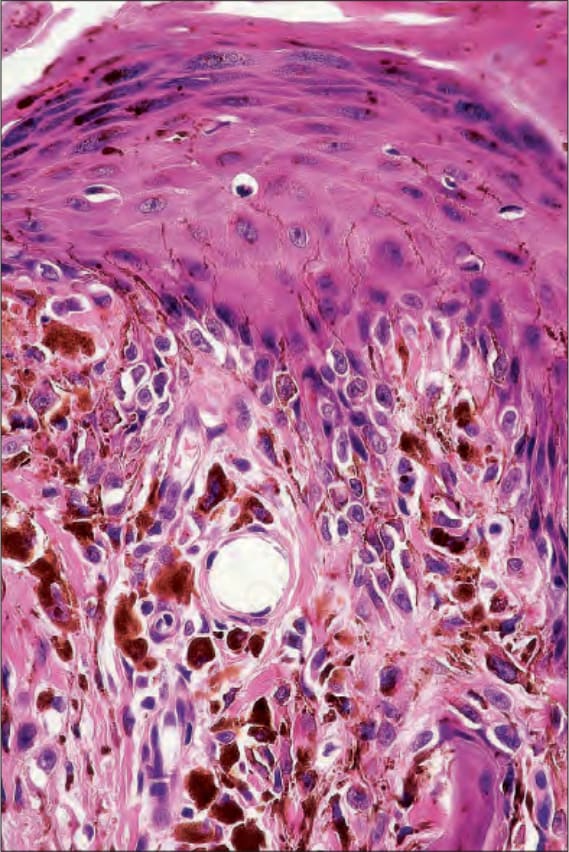
Fig. 25.232 Compound blue nevus: in addition to a dermal component, dendritic cells are apparent in the epidermis.
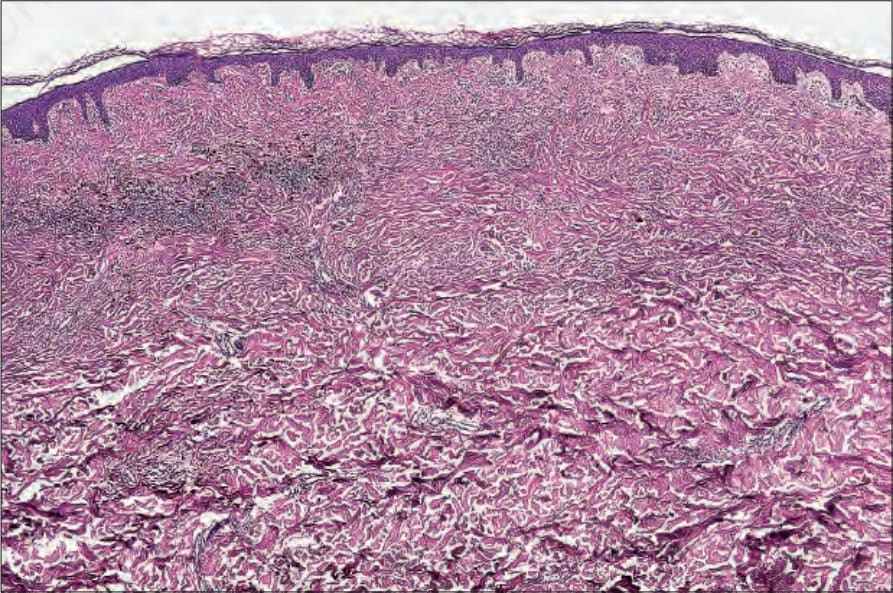
Fig. 25.233 Hypopigmented blue nevus: residual pigmentation is seen on the left side of the field. On the right, there is a paucicellular sclerosing component.