Cockarde nevus
Cockarde nevus
Clinical features The Cockarde (Cockade, rosette-like, target-like) nevus is a very rare variant of banal nevus. It presents as a central pigmented papule separated by an intervening border of normal or flesh-colored skin from a hyperpigmented border (Fig. 25.87).1–3 Multiple nevi have been associated with meningomyelocele and vertebral dysplasia.4
Histologic features The central pigmented papule in the Cockarde nevus consists of a compound melanocytic lesion, whereas the peripheral aspect is composed of a junctional nevus.1 The nonpigmented middle zone lacks melanocytes.
Combined nevus (melanocytic nevus with phenotypic heterogeneity)
Combined nevus is characterized by the occurrence of two or more different populations of melanocytes, i.e., different melanocytic nevus variants within the single lesion.1–4 Combined nevi can thus be composed of any combination of common nevi (common acquired nevus, dysplastic nevus, congenital nevus), Spitz nevus, and blue nevus.4–8 The most frequent combination represents a common acquired nevus and a deep penetrating nevus.5 A combined BRAFV600E/BAPloss melanocytic nevus (Wiesner nevus) and ordinary (conventional) melanocytic nevus has gained increasing attention in the recent literature.9 It has been demonstrated that a subset of a so-called atypical Spitz tumors is characterized genetically by the presence of BAP1 and BRAFV600E mutation occurring in either familial or sporadic setting, the former being associated with development of diverse malignancies, thus representing a cutaneous marker of a cancer syndrome (see corresponding section).10
1257 Recurrent and sclerosing nevus
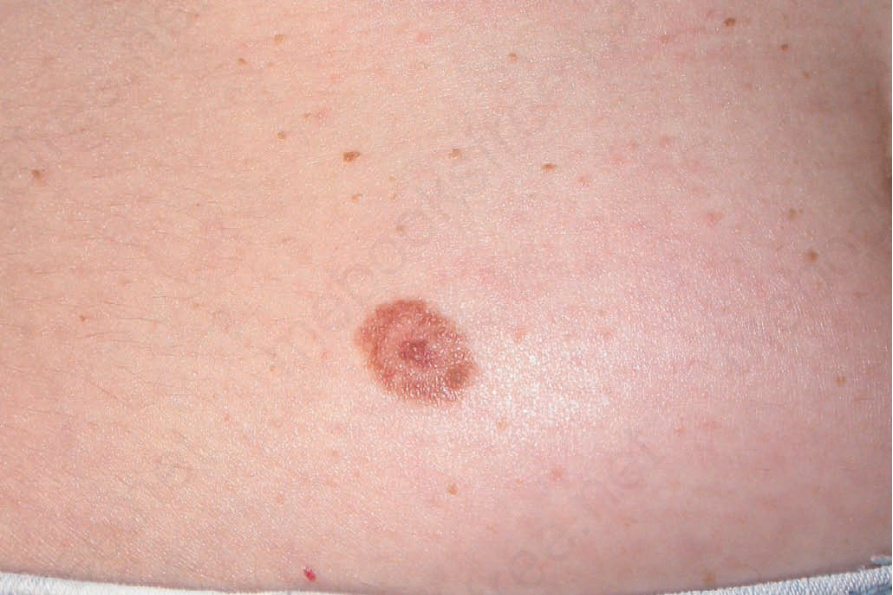
Fig. 25.87 Cockarde nevus: note the characteristic targetoid appearance. By courtesy of J.C. Pascual, MD, Alicante, Spain.