HAIR SHAFT DISEASES
HAIR SHAFT DISEASES
Hair shaft disorders refer to the spectrum of hair shaft alterations varying from changes secondary to normal weathering to primary conditions presenting with hair shaft changes. As a consequence of the latter, the hair is more susceptible to injury by chemical and physical agents. Primary hair shaft disorders are frequently hereditary and until recently, many of the genes causing hair shaft defects had not been identified (Table 22.5).1
irregularities, coiling or twisting abnormalities, and extraneous matter on the hair shaft (Box 22.2). Many of these basic morphological alterations are present in a single disorder and this makes characterization of individual conditions difficult (Fig. 22.170).5,6
Since the hair shafts in these conditions are very fragile, alopecia is a common mode of presentation. Alterations can also be seen in other hair-bearing sites including the eyebrows, eyelashes, and beard area.2,3 Scalp manifestations vary from mild to severe. In the latter setting, the hair is dark, fragile, and easy to break, with areas of focal or generalized alopecia.4 According to the particular entity, various other clinical manifestations and associated metabolic disorders are present.
Hair samples must be carefully evaluated to see whether the hair shafts are narrowed or broken (see hair examination at the beginning of the chapter).
Hair shaft defects are classified according to three parameters: whether the alopecia is diffuse or localized, the presence or absence of hair shaft fragility, and the morphology of the hair.
From the histopathological point of view, morphology is of particular importance, and changes to be evaluated include hair shaft fractures,
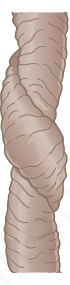
Fig. 22.170 Hair shaft defects.
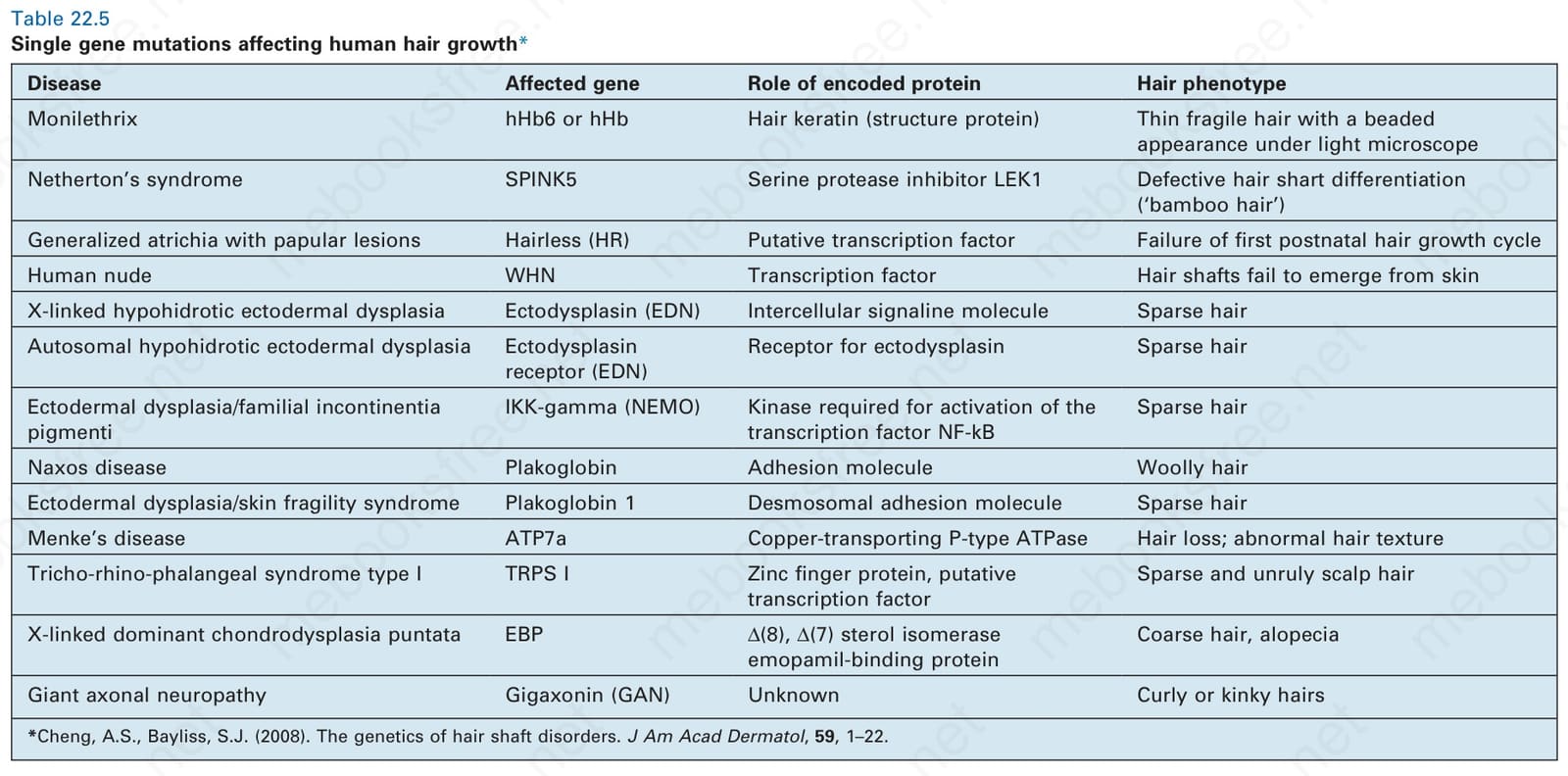
Table 22.5 Single gene mutations affecting human hair growth*